
Barrier Support Cream for Dry Skin: 6 Best Options Compared
Table of Contents
- What Are Ceramides and Why Do They Matter for Dry Skin
- Understanding the Skin Barrier and Transepidermal Water Loss
- Quick Comparison: Top Barrier Support Creams for Dry Skin
- 1. Aeran Ceramide Barrier Night Cream: Best for Overnight Repair
- 2. Skinfix Barrier+ Triple Lipid-Peptide Cream: Best Comprehensive Formula
- 3. Vanicream Moisturizing Cream: Best Budget-Friendly Barrier Support
- 4. Aveeno Eczema Therapy Daily Moisturizing Cream: Best for Sensitive Dry Skin
- 5. Dermalogica Barrier Repair: Best Anhydrous Ceramide Cream Dry Skin Formula
Barrier Support Cream for Dry Skin: 6 Best Options Compared
Last Updated: July 29, 2026
When your skin barrier is compromised, the wrong moisturizer can make everything worse. A barrier support cream for dry skin isn't just another hydrating product, it's a targeted intervention designed to repair the lipid layer that protects your skin from water loss and environmental irritants. This guide breaks down the top barrier support creams available today, focusing on ceramides, fatty acids, and cholesterol, the three lipids your skin barrier needs to repair itself.
What Are Ceramides and Why Do They Matter for Dry Skin
Ceramides are lipid molecules that naturally comprise about 50% of your skin's barrier. When your barrier is damaged, ceramide levels drop significantly, accelerating transepidermal water loss (TEWL) and leaving you with perpetually dehydrated, uncomfortable skin.
According to Journal of Cosmetic Dermatology studies on barrier repair, topical ceramide application directly reduces TEWL and improves skin hydration within 2-4 weeks of consistent use. Ceramides fill gaps in your stratum corneum, creating a functional seal that prevents water evaporation.
The most effective ceramides in skincare are ceramides 1, 3, and 6-II. A barrier support cream should list at least two of these in the first five ingredients. If you see "ceramide complex" without specification, the formulation likely contains lower-quality ceramides.
Understanding the Skin Barrier and Transepidermal Water Loss
Your skin barrier functions as a selective gatekeeper, keeping beneficial moisture in and harmful substances out. A healthy barrier loses about 5-10 grams of water per square meter per hour. A compromised barrier can lose 10 times that amount.
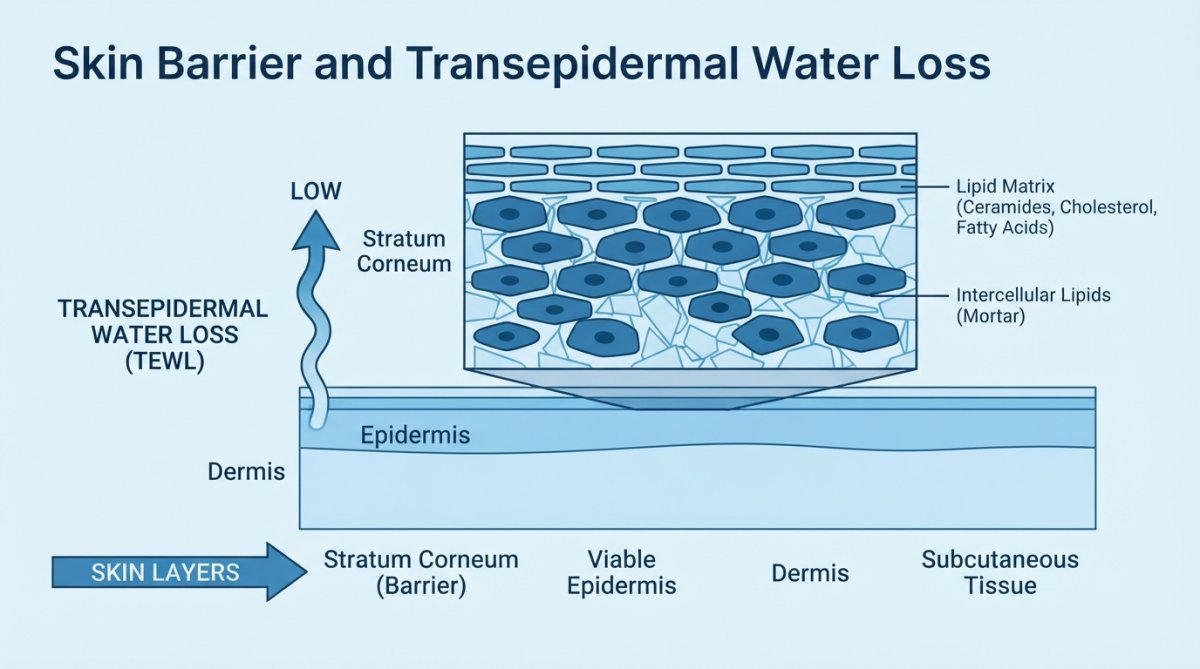
The barrier consists of three components: ceramides (50%), cholesterol (25%), and fatty acids (15%). This precise lipid composition allows your skin to function. When any component drops below optimal levels, the entire system becomes compromised.
TEWL accelerates due to harsh cleansers, physical exfoliation, frequent chemical exfoliants, environmental stress, and certain actives like retinoids. Once TEWL increases, your skin becomes increasingly sensitive because the barrier can't filter out irritants effectively. The good news is that barrier repair is measurable: studies show that using a ceramide-rich barrier support cream consistently for 3-4 weeks reduces TEWL by 20-30% and visibly improves skin texture.
Quick Comparison: Top Barrier Support Creams for Dry Skin
The six products below represent the best current options across different priorities: overnight repair, comprehensive formulation, budget-conscious choice, eczema-specific benefits, and professional-grade anhydrous formulas.
Feature Comparison Table
| Product | Price | Best For | Ceramides | Key Differentiator |
|---|---|---|---|---|
| Aeran Ceramide Barrier Night Cream | $36.00 | Overnight intensive repair | Ceramides 3 & 6-II | Aloe + fatty acids, Scandinavian formula |
| Skinfix Barrier+ Triple Lipid-Peptide | $54 for 1.7 oz | Comprehensive hydration | 3% complex | Peptides + 8% humectant blend |
| Vanicream Moisturizing Cream | $13-$18 for 16 oz | Extreme sensitivity | Minimal/none in original | Ultra-clean, NEA-accepted |
| Aveeno Eczema Therapy Daily | $12-$18 for 7.3 oz | Eczema + itching | Yes, with colloidal oatmeal | 1% colloidal oatmeal, FDA-approved |
| Kiehl's Ultra Facial Cream | $38 for 1.7 oz | All skin types | Squalane (plant lipid) | 24-hour hydration, lightweight |
| Dermalogica Barrier Repair | $49 for 1 fl oz | Sensitized, damaged barrier | Yes, with botanical actives | Anhydrous formula, UltraCalming Complex |
1. Aeran Ceramide Barrier Night Cream: Best for Overnight Intensive Repair
Aeran Skincare's Ceramide Barrier Night Cream is purpose-built for barrier repair. The formula delivers ceramides 3 and 6-II, along with fatty acids and aloe juice, creating a lipid-rich environment that works overnight to restore your barrier's structural integrity.
At $36, the concentration of ceramides and inclusion of fatty acids makes this a legitimate barrier repair tool. The Scandinavian formulation is minimalist and clean, introducing no irritants while you're healing. The aloe juice provides soothing properties without fragrance or essential oils that could further stress a compromised barrier.
The main limitation is that it's a night cream. If you need daytime barrier protection, you'll need a separate product.
2. Skinfix Barrier+ Triple Lipid-Peptide Cream: Best Comprehensive Formula
Skinfix's approach differs strategically from Aeran's. The 3% Triple Lipid Complex (ceramides, sterols, and fatty acids) matches your skin's natural lipid ratio, while peptides address hydration retention. The 8% Humectant Blend pulls water into the skin while the lipids lock it in.
At $54 for 1.7 oz, this premium option works as both day and night cream, making it more versatile than single-purpose options. Users with dry, sensitive, and eczema-prone skin report visible improvements in texture and reduced redness within 3 weeks.
The trade-off is texture. The rich formula can feel heavy in humid climates or on oily skin. Also, the inclusion of PHA means this isn't ideal immediately after using strong actives, wait 2-3 days before introducing this product to freshly-sensitized skin.
3. Vanicream Moisturizing Cream: Best Budget-Friendly Barrier Support
Vanicream takes a radically different approach: minimal ingredients, maximum safety. The formula contains no dyes, fragrance, parabens, formaldehyde, or common irritants. For someone with extreme sensitivity, this is often the only option that doesn't trigger additional irritation.
The formula relies on petrolatum as the primary occlusive agent. At $13-$18 for a 16 oz tub, the cost-per-use is unbeatable. The National Eczema Association accepts this product, and it's dermatologist-tested for safety. You can use it on face, hands, feet, and body.
The main limitation is the lack of active barrier-supporting ingredients like ceramides. This is a containment strategy, not a repair strategy. It works best as a short-term solution during acute barrier damage.
4. Aveeno Eczema Therapy Daily Moisturizing Cream: Best for Sensitive Dry Skin
Aveeno's formula combines 1% colloidal oatmeal (an FDA-approved skin protectant) and ceramides. The colloidal oatmeal reduces itching and irritation while the ceramides address underlying barrier dysfunction. This dual approach is particularly effective for eczema-prone skin.
At $12-$18 for 7.3 oz, it's affordable and widely available. The National Eczema Association acceptance adds credibility. Clinical testing shows this reduces eczema symptoms and improves hydration within 2-3 weeks.
The limitation is that it's a maintenance product more than an intensive repair tool. If your barrier is severely compromised, you may need something richer initially.
5. Kiehl's Ultra Facial Cream: Best for Balanced Hydration and Barrier Support
Kiehl's Ultra Facial Cream uses squalane, a plant-derived lipid that mimics skin's natural oils, combined with glycerin for hydration. At $38 for 1.7 oz, the lightweight texture makes it accessible to people who find traditional barrier creams too heavy. It absorbs quickly and provides a smooth base for makeup.
The squalane is an excellent emollient, but it's not a ceramide replacement. This cream works better as a preventive barrier support product for healthy skin than as an intensive repair tool for compromised barriers.
6. Dermalogica Barrier Repair: Best Anhydrous Ceramide Cream
Dermalogica's Barrier Repair is unique in its anhydrous (waterless) formulation. By eliminating water, every ingredient serves a barrier-supporting function with no need for preservatives, further reducing irritation risk.
The formula contains Oil of Evening Primrose, Borage Seed Oil, and vitamins C and E alongside ceramides. This combination addresses both barrier repair and oxidative stress. At $49 for 1 fl oz, the anhydrous formula is highly concentrated, a little goes a long way.
The limitation is the premium price and small package size. Also, the anhydrous formula is less hydrating than water-based options; if your skin is dehydrated alongside barrier damage, you may need to layer this with a hydrating serum.
How to Choose a Barrier Support Cream for Dry Skin
Your choice depends on three factors: barrier damage severity, skin sensitivity level, and whether you need daytime or nighttime support.
For severe barrier damage with extreme sensitivity: Start with Vanicream Moisturizing Cream. Once your barrier stabilizes (2-3 weeks), introduce a ceramide product like Aeran's Ceramide Barrier Night Cream.
For moderate barrier damage with eczema: Aveeno Eczema Therapy combines barrier repair with anti-inflammatory benefits.
For comprehensive barrier repair with versatility: Skinfix Barrier+ Triple Lipid-Peptide works as both day and night cream.
For budget-conscious barrier support: Vanicream offers the best value at significantly lower cost-per-application.
For daytime barrier support: Kiehl's Ultra Facial Cream or Skinfix work better than heavy night creams.
For intensive overnight repair: Aeran Ceramide Barrier Night Cream or Dermalogica Barrier Repair are designed specifically for evening use.
Key Ingredients to Look for Alongside Ceramides
A truly effective barrier support cream includes more than just ceramides. The most effective formulas combine three lipid types: ceramides, cholesterol, and fatty acids, mimicking your skin's natural lipid profile.
Hyaluronic acid and glycerin serve as humectants, drawing water into the skin. These should appear alongside ceramides, not instead of them.
Niacinamide strengthens barrier function by supporting ceramide synthesis. Studies show that niacinamide increases ceramide production in your skin.
Colloidal oatmeal reduces inflammation and itching while providing mild barrier support, especially valuable if your barrier damage comes with sensitivity or eczema.
Fatty acids like linoleic acid and palmitic acid are essential components of your barrier. Look for these specifically listed rather than generic "botanical extracts."
Cholesterol comprises about 25% of your barrier's lipid profile. Some formulas include plant-derived cholesterol alternatives that serve the same function.
Avoid fragrance, essential oils, and alcohol in barrier repair products. Look for "fragrance-free" formulations, not "unscented," which can still contain masking fragrances.
Ingredients to Avoid for Sensitive and Compromised Skin
When your barrier is damaged, certain common skincare ingredients become liabilities.
Denatured alcohol (listed as "alcohol" or "SD alcohol") is a penetration enhancer that strips your barrier further. Avoid it entirely during barrier repair.
Fragrance and essential oils trigger irritation in sensitive skin, even "natural" ones like lavender or tea tree.
Sulfates (SLS and SLES) are harsh cleansing agents that strip natural oils. Ensure your cleanser is sulfate-free as well.
Retinoids and strong chemical exfoliants should be paused during active barrier repair. Resume them only after your barrier has stabilized.
Salicylic acid and benzoyl peroxide are effective for acne but are drying and irritating to compromised barriers. Address the barrier first.
High concentrations of vitamin C can be irritating to sensitive skin. Look for gentler options like vitamin E or niacinamide.
Patch Testing Protocols for Sensitive Skin
Before committing to a barrier support cream, proper patch testing prevents introducing another irritant to already-compromised skin.
Day 1: Apply a pea-sized amount to the inside of your wrist or behind your ear. Leave it for 24 hours without washing.
Days 2-3: If no reaction occurs, apply a small amount to a small facial area (temple or jawline) in the evening. Use only this product for 2-3 nights.
Days 4-7: If still no reaction, gradually expand usage to your full face. Continue using only this product.
Reaction indicators: Increased redness, burning, stinging, itching, or visible rash means stop immediately. A new product isn't worth triggering a barrier flare.
Adjustment period vs. reaction: Some products cause mild tingling or slight redness that resolves within 3-5 minutes. If discomfort persists beyond 10 minutes or worsens over successive applications, it's a reaction.
Document results: Keep a simple log of which products you tested, when, and any reactions. This prevents repeating mistakes and helps identify patterns in what your skin tolerates.
Choosing the right barrier support cream for dry skin requires understanding your specific barrier damage level and selecting a formula that addresses it appropriately. Aeran Skincare's Ceramide Barrier Night Cream delivers the ceramides, fatty acids, and aloe your barrier needs to repair itself, backed by the clean Scandinavian formulation approach that doesn't introduce new irritants while you're healing. Start with consistent nightly use, give your barrier 3-4 weeks to stabilize, and you'll see visible improvements in texture, sensitivity, and that uncomfortable tight feeling that compromised barriers create.
Frequently Asked Questions
What is a barrier support cream and how does it help dry skin?
A barrier support cream is a moisturizer formulated with lipid-replenishing ingredients, primarily ceramides, cholesterol, and fatty acids, that mimic your skin's natural barrier structure. These creams reduce transepidermal water loss (TEWL), locking hydration into the stratum corneum. For dry skin, they provide occlusive and humectant benefits, delivering both immediate hydration and long-term barrier reinforcement. Unlike basic moisturizers, barrier support creams are specifically designed to repair compromised or damaged barriers caused by environmental stress, harsh products, or skin conditions like eczema.
What ingredients should I look for in a ceramide cream for dry skin?
Look for ceramides (especially ceramide NP, AP, and EOP), cholesterol, and free fatty acids in a 3:1:1 ratio, which mirrors your skin's natural lipid composition. Pair these with humectants like hyaluronic acid and glycerin to draw moisture into the skin, plus soothing actives like niacinamide and colloidal oatmeal to calm irritation. Ensure the formula is fragrance-free, pH-balanced (4.5-5.5), and dermatologist-tested. Avoid common irritants like alcohol denat, essential oils, and heavy fragrance if you have sensitive or compromised skin.
Can I use a barrier support cream if I have oily skin with dry patches?
Yes, but choose a lightweight, non-comedogenic barrier cream. Products with ceramides and niacinamide work well for combination skin because they strengthen the barrier without clogging pores. Niacinamide specifically helps regulate sebum production while supporting barrier function. Start with a serum-based barrier product or a gel-cream formula rather than a heavy cream. Apply barrier support cream only to dry areas first, then assess whether you need it on oilier zones. Many people with mixed skin find that properly supporting their barrier actually reduces excess oil production over time.
How often should I use a barrier support cream for dry skin?
For severely compromised or eczema-prone skin, use a barrier support cream twice daily, morning and night. For mild to moderate dryness, once daily (typically at night) is often sufficient. Aeran's Ceramide Barrier Night Cream and similar products are designed for overnight use when your skin naturally repairs itself. If you're introducing a new barrier cream, start with nightly application and monitor your skin for 2-3 weeks before adjusting frequency. During winter or in dry climates, increase to twice daily. Always patch test first on a small area for 24-48 hours to ensure tolerance.
What makes a barrier cream dermatologist-recommended versus a standard moisturizer?
Dermatologist-recommended barrier creams contain clinically validated lipid blends (ceramides, cholesterol, fatty acids) proven to restore skin barrier function and reduce TEWL. They're formulated with specific pH levels and ingredient ratios tested for efficacy in clinical studies. Standard moisturizers may hydrate but don't necessarily repair the barrier structure. Look for products that are dermatologist-tested, accepted by organizations like the National Eczema Association, and backed by published research. Brands like Skinfix, Vanicream, and Aeran Skincare prioritize barrier science over fragrance or aesthetic appeal, making them preferred by dermatologists for compromised skin.
This article was written using GrandRanker