


Best Fragrance-Free Moisturizer for Sensitive Skin: 2026 Guide
Table of Contents
- Best Fragrance-Free Moisturizer for Sensitive Skin: Top Picks Compared
- How We Evaluated These Products
-
Dermatologist-Recommended Fragrance-Free Moisturizers for Sensitive Skin
- Vanicream Moisturizing Cream: Minimal Formula, Maximum Tolerance
- Cetaphil PRO Eczema Soothing Moisturizer: Barrier Repair + Microbiome Support
- Neutrogena Hydro Boost Water Gel: Lightweight Hydration Without the Weight
- Aveeno Calm + Restore Oat Gel Moisturizer: Soothing Prebiotic Formula
- EltaMD AM Therapy Facial Moisturizer: Oil Control Meets Sensitivity
- Ceramides for Sensitive Skin: Why This Ingredient Matters
- Ingredients to Avoid in Sensitive Skin Moisturizers
- Fragrance-Free Moisturizer Benefits for Compromised Skin Barriers
- Moisturizers for Specific Sensitive Skin Concerns
- Cost-Per-Ounce Comparison and Value Analysis
Last Updated: July 26, 2026
Finding the best fragrance free moisturizer for sensitive skin can feel like navigating a minefield. Many products labeled "gentle" still trigger irritation, redness, and that uncomfortable tight feeling. The challenge isn't just about hydration, it's about finding a formula that respects your skin's compromised barrier without hidden irritants masking themselves as "natural fragrance" or essential oils.
At Aeran Skincare, we've spent years analyzing what actually works for reactive, sensitive skin. This guide breaks down the top fragrance-free moisturizers available in 2026, explains the ingredients that matter most, and shows you exactly what to avoid. Whether you're managing eczema, rosacea, or simply dealing with a temporarily irritated barrier, the products and strategies below will help you rebuild trust with your skin.
Quick Comparison Table
| Product | Type | Best For | Key Ingredient | Price Range |
|---|---|---|---|---|
| Vanicream Moisturizing Cream | Rich Cream | Severe sensitivity, eczema | Ceramides, glycerin | Budget-friendly |
| Cetaphil PRO Eczema Soothing Moisturizer | Lotion | Eczema-prone, barrier repair | Colloidal oatmeal, Ad-Resyl | Mid-range |
| Neutrogena Hydro Boost Water Gel | Lightweight Gel | Normal to dry, non-greasy feel | Hyaluronic acid | Affordable |
| Aveeno Calm + Restore Oat Gel | Gel-Cream | Irritated, redness-prone | Prebiotic oat, feverfew | Mid-range |
| EltaMD AM Therapy Facial Moisturizer | Oil-Free Moisturizer | Oily + sensitive, acne-prone | Niacinamide, hyaluronic acid | Premium |
How We Evaluated These Products
We assessed each product across five dimensions: ingredient safety, barrier repair capability, clinical evidence, texture appropriateness, and real-world tolerability for reactive skin.
We excluded anything containing fragrance, essential oils, alcohol denat, synthetic dyes, or formaldehyde releasers, the most common culprits behind sensitivity reactions. We prioritized ceramides, hyaluronic acid, niacinamide, and soothing agents like colloidal oatmeal and panthenol, all with clinical backing for barrier repair.
A truly effective moisturizer for sensitive skin strengthens the skin's natural defense system through ceramides (which restore lipid barrier function), occlusives (which lock hydration in), and humectants (which draw moisture to the skin). According to the National Eczema Association, products with this three-part hydration system show measurable improvement in barrier function within 2-4 weeks.
We prioritized products tested on sensitive skin populations, accepted by dermatological organizations, or studied for conditions like eczema and rosacea.
Dermatologist-Recommended Fragrance-Free Moisturizers for Sensitive Skin
1. Vanicream Moisturizing Cream: Minimal Formula, Maximum Tolerance
This is the gold standard for severe sensitivity. Vanicream contains only what genuinely helps: ceramides, glycerin, petrolatum, and panthenol. No fragrance, masking fragrance, essential oils, parabens, formaldehyde releasers, dyes, or lanolin.
Ceramides repair the lipid barrier while occlusives seal hydration in. Glycerin pulls moisture into the skin, while panthenol soothes inflammation. The National Eczema Association accepts this product, meaning it's been vetted for people with severe sensitivity and eczema. The texture is thick and rich, ideal for nighttime or severely compromised barriers. One jar lasts 2-3 months with regular use.
2. Cetaphil PRO Eczema Soothing Moisturizer: Barrier Repair + Microbiome Support
This formula includes colloidal oatmeal (a clinically proven soothing agent), Ad-Resyl (designed to support skin microbiome health), and filaggrin technology that strengthens the barrier. Colloidal oatmeal reduces itching within hours for many users. Ad-Resyl works on the microbiome, the bacterial ecosystem on your skin, which plays a larger role in sensitivity than previously understood.
The lotion texture absorbs faster than a cream but provides lasting hydration. It's appropriate for face and body, layers well under sunscreen, and is paraben-free, steroid-free, and fragrance-free. Clinically, it reduces eczema flare-ups and improves hydration for 48 hours.
3. Neutrogena Hydro Boost Water Gel: Lightweight Hydration Without the Weight
For people who need serious hydration but can't tolerate heavy creams, this water gel delivers. Hyaluronic acid can hold up to 1000 times its weight in water. The formula is oil-free, dye-free, fragrance-free, and non-comedogenic, absorbing in seconds and feeling weightless.
Hyaluronic acid is a humectant that pulls moisture from the air and deeper skin layers into the epidermis. It's not occlusive, so it won't trap bacteria or clog pores. For sensitive skin that's also oily or prone to congestion, this is often the only moisturizer that works without triggering breakouts. For very dry or severely compromised skin, layer it with an occlusive product.
4. Aveeno Calm + Restore Oat Gel Moisturizer: Soothing Prebiotic Formula
This gel-cream combines prebiotic oat (which supports healthy skin bacteria) with feverfew (a traditional anti-inflammatory herb). The prebiotic oat feeds beneficial bacteria on your skin, strengthening your natural defense against irritants. Feverfew has been used for centuries to calm inflammation, backed by modern research.
The formula is hypoallergenic, non-comedogenic, and free of fragrance, parabens, alcohol, dyes, and phthalates. Users report visible redness reduction within 3-5 days. It's lighter than Vanicream or Cetaphil PRO, making it suitable for daytime use under makeup.
5. EltaMD AM Therapy Facial Moisturizer: Oil Control Meets Sensitivity
This is designed for sensitive skin that's also oily or acne-prone. EltaMD combines hyaluronic acid (hydration without heaviness) with niacinamide (which regulates sebum and reduces redness) and willow bark extract (which refines pores).
Niacinamide is key, it both hydrates and regulates oil production while strengthening the barrier and reducing redness. The formula is oil-free and non-comedogenic. A pea-sized amount covers the full face, so a 1.7 oz bottle lasts 2-3 months.
Ceramides for Sensitive Skin: Why This Ingredient Matters
Ceramides are lipid molecules that make up about 50% of your skin barrier. When your barrier is compromised, from eczema, rosacea, harsh products, or over-exfoliation, ceramide levels drop. Your skin can't hold onto water, becomes dehydrated, and reacts to irritants more easily.
The most important ceramides for barrier repair are ceramides 1, 3, and 6-II. Within 2-4 weeks of consistent use, ceramide-containing products measurably improve barrier function, making your skin less reactive, less dry, and less prone to flare-ups.
Ingredients to Avoid in Sensitive Skin Moisturizers
Fragrance and Masking Fragrance
Fragrance is the #1 allergen in skincare. Many products claim to be "fragrance-free" while using "masking fragrance", fragrant ingredients added to hide the smell of other ingredients. Look for products listing no fragrance and no essential oils. If the ingredient list includes fragrance, parfum, essential oil, linalool, limonene, geraniol, or citral, it contains fragrance.
Alcohol, Essential Oils, and Dyes
Alcohol denat strips your skin's natural oils and damages the barrier. Essential oils are marketed as "natural" and "gentle," but they're potent irritants for reactive skin. Synthetic dyes serve no purpose except aesthetics.
Parabens and Formaldehyde Releasers
While parabens aren't as dangerous as some marketing claims suggest, they can trigger sensitivity in some people. Formaldehyde releasers (DMDM hydantoin, imidazolidinyl urea, diazolidinyl urea) slowly release formaldehyde to prevent bacterial growth, avoid these entirely.
Fragrance-Free Moisturizer Benefits for Compromised Skin Barriers
A compromised skin barrier means your outermost layer has lost its ability to retain water and repel irritants. Your skin becomes hyper-reactive, even mild ingredients trigger redness, itching, and stinging.
A fragrance-free moisturizer addresses this at the source. By eliminating fragrance and other irritants, you stop adding insult to injury. By including barrier-supporting ingredients like ceramides, hyaluronic acid, and niacinamide, you actively rebuild your barrier.
Within 1-2 weeks of using a truly fragrance-free, barrier-focused moisturizer, most people notice reduced stinging and redness. Within 4-6 weeks, the barrier becomes noticeably stronger, your skin tolerates other products better, and flare-ups decrease. According to the American Academy of Dermatology, barrier repair is the foundation of treating all sensitive skin conditions.
Moisturizers for Specific Sensitive Skin Concerns
For Eczema-Prone Skin
Eczema is fundamentally a barrier disorder. The best approach combines barrier repair with itch relief and anti-inflammatory support. Vanicream Moisturizing Cream and Cetaphil PRO Eczema Soothing Moisturizer are both accepted by the National Eczema Association. Cetaphil PRO's colloidal oatmeal makes it better for active eczema (when itching is severe), while Vanicream's pure ceramide formula is better for maintenance once the acute phase passes.
Eczema-prone skin needs moisturizing at least twice daily, ideally within 3 minutes of bathing while skin is still slightly damp.
For Rosacea and Chronic Redness
Rosacea involves chronic inflammation and a reactive, easily-triggered skin barrier. The best moisturizers include niacinamide (which reduces redness and strengthens barrier function), soothing ingredients like feverfew or oat, and ceramides.
Aveeno Calm + Restore Oat Gel Moisturizer is specifically formulated for redness and includes feverfew. EltaMD AM Therapy is also excellent because niacinamide directly reduces redness and the lightweight formula won't trigger flushing.
For Acne-Prone but Dehydrated Skin
EltaMD AM Therapy is purpose-built for this situation, combining hyaluronic acid (lightweight hydration), niacinamide (oil regulation and barrier support), and willow bark extract (pore refinement). Alternatively, use Neutrogena Hydro Boost Water Gel as your base moisturizer, then layer a lightweight barrier-repair serum on top.
Cost-Per-Ounce Comparison and Value Analysis
| Product | Size | Typical Price | Cost Per Ounce | Best Value For |
|---|---|---|---|---|
| Vanicream Moisturizing Cream | 16 oz | $13.19 | $0.82/oz | Severe sensitivity, budget-conscious |
| Cetaphil PRO Eczema | 16 oz | $18.99 | $1.19/oz | Eczema, active inflammation |
| Neutrogena Hydro Boost | 1.7 oz | $19.99 | $11.76/oz | Lightweight hydration, premium per-ounce |
| Aveeno Calm + Restore | 1.7 oz | $22.99 | $13.52/oz | Redness relief, premium per-ounce |
| EltaMD AM Therapy | 1.7 oz | $37.34 | $21.96/oz | Oily sensitive skin, professional-grade |
Value isn't just about cost per ounce. Vanicream is cheapest per ounce, but you use less and it lasts longer. EltaMD is expensive per ounce, but a pea-sized amount per application means a 1.7 oz bottle lasts 2-3 months. For most people, Vanicream or Cetaphil PRO offer the best value, they're effective, affordable, and long-lasting.
How to Choose the Right Fragrance-Free Moisturizer for Your Sensitive Skin
Start by identifying your specific sensitivity profile. Severe dryness and eczema? Choose Vanicream or Cetaphil PRO. Redness your main concern? Aveeno Calm + Restore. Oily but dehydrated and sensitive? EltaMD or Neutrogena Hydro Boost.
Check the ingredient list against the "avoid" list. If it contains fragrance, masking fragrance, essential oils, alcohol denat, or formaldehyde releasers, skip it. Look for ceramides, hyaluronic acid, niacinamide, panthenol, or colloidal oatmeal. A good moisturizer will have at least 2-3 of these.
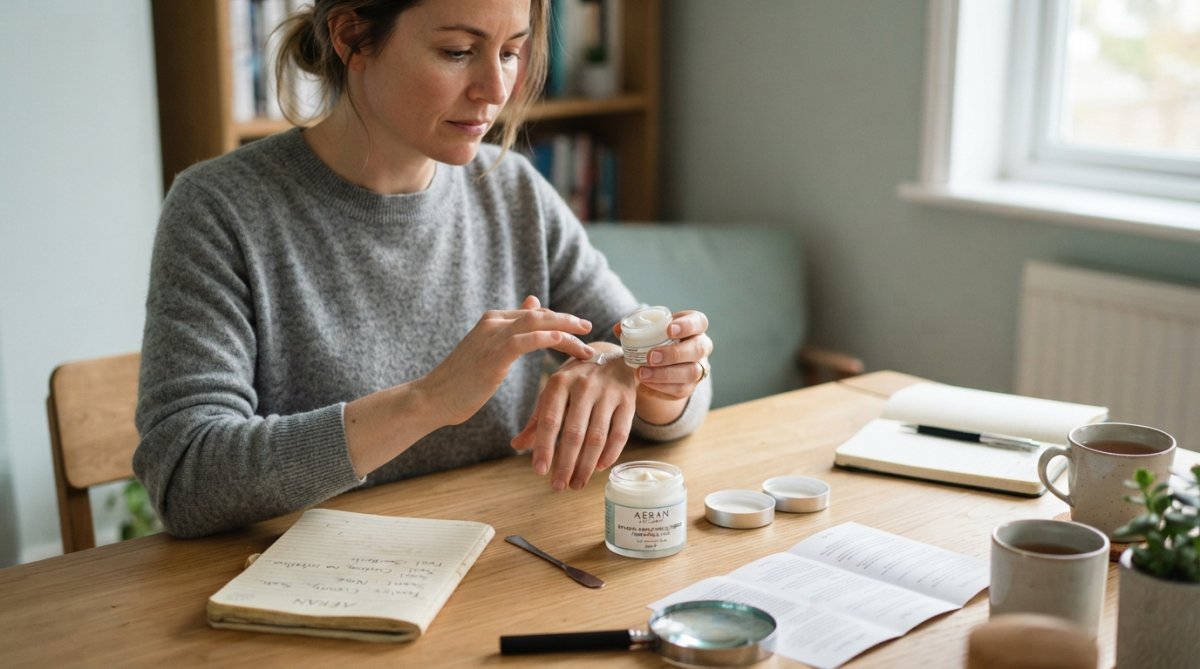
Patch test before committing. Apply a small amount to your inner arm or behind your ear and wait 24 hours. Use consistently for at least 2 weeks before deciding if it works. Barrier repair takes time. Give it 2-4 weeks of twice-daily use to assess real improvement.
The "best" moisturizer is the one your skin tolerates and that you'll actually use consistently.
If you've tried multiple "sensitive skin" products that still trigger irritation, the problem likely isn't your skin, it's the products. Aeran Skincare formulations are built on barrier-first principles, featuring ceramides and clean ingredients specifically chosen to support compromised skin without hidden irritants. Start with a barrier-repair focused moisturizer and give your skin 4 weeks to respond. You'll know quickly if you've found the right formula.
Frequently Asked Questions
What is the difference between fragrance-free and unscented moisturizers?
Fragrance-free means no fragrance ingredients were added to the formula. Unscented products may contain masking fragrances that neutralize odors but can still irritate sensitive skin. For truly sensitive skin, fragrance-free is the safer choice. Always check the ingredient list, fragrance-free moisturizers should not list fragrance, parfum, or essential oils.
Why is a fragrance-free moisturizer benefits approach important for compromised skin barriers?
Fragrance-free moisturizer benefits include reduced irritation, faster barrier recovery, and lower risk of inflammation. When your skin barrier is compromised, it cannot effectively filter irritants. Fragrance and essential oils are common triggers that delay healing. Fragrance-free formulas with ceramides and hyaluronic acid support barrier repair without adding unnecessary stressors.
What ingredients should I avoid in a sensitive skin moisturizer?
Avoid fragrance, essential oils, alcohol, dyes, parabens, and formaldehyde releasers. These ingredients to avoid sensitive skin moisturizer formulas are common irritants that trigger redness, stinging, and flare-ups. Instead, look for hypoallergenic, non-comedogenic products with soothing agents like colloidal oatmeal, niacinamide, and panthenol. Always patch test new products on a small area first.
How do ceramides for sensitive skin help repair my moisture barrier?
Ceramides for sensitive skin work as emollients that fill gaps between skin cells, strengthening the moisture barrier and locking in hydration. They're naturally present in healthy skin but deplete in sensitive, dry, or compromised skin. Ceramide-rich moisturizers restore barrier function, reduce water loss, and decrease irritation. Look for ceramides listed in the first five ingredients for maximum effectiveness.
Can I use a fragrance-free moisturizer if I have oily and dry patches?
Yes. Lightweight, fragrance-free moisturizers with hyaluronic acid and niacinamide work well for combination skin. Niacinamide balances oil production while hyaluronic acid hydrates dry areas without clogging pores. Avoid heavy creams that may worsen oiliness. Gel-based fragrance-free moisturizers absorb quickly and provide hydration without a greasy finish, making them ideal for mixed skin types.
This article was written using GrandRanker