


Best Fragrance-Free Moisturizer for Sensitive Skin: 2026 Guide
Table of Contents
- Best Fragrance-Free Moisturizer for Sensitive Skin: Quick Comparison
- What Makes a Fragrance-Free Non-Comedogenic Moisturizer Right for You
- Understanding Ceramides for Sensitive Skin Barrier Repair
-
Dermatologist-Recommended Sensitive Skin Moisturizer Options
- Aeran Sensitive Skin Overnight Cream: Barrier-First Approach
- Vanicream Moisturizing Cream: Budget-Friendly Barrier Support
- Cetaphil PRO Eczema Soothing Moisturizer: Clinical Efficacy
- Neutrogena Hydro Boost Water Gel: Lightweight Hydration
- Aveeno Calm + Restore Oat Gel: Prebiotic Oat Formula
- EltaMD AM Therapy: Professional-Grade Niacinamide Complex
- Building Your Sensitive Skin Care Routine with Fragrance-Free Moisturizers
- Key Ingredients Beyond Ceramides: What to Look For
- How to Choose the Best Fragrance-Free Moisturizer for Your Skin Type
- Sustainability & Ethical Sourcing in Ceramide Formulations
Best Fragrance-Free Moisturizer for Sensitive Skin: 2026 Guide
Last Updated: July 29, 2026
Approximately 60% of adults report having sensitive skin at some point in their lives, yet finding the right product remains challenging. The best fragrance-free moisturizer for sensitive skin must balance hydration with barrier repair while avoiding common irritants. At Aeran Skincare, we've found that ceramides, proper pH balance, and the absence of fragrance matter far more than brand recognition.
This guide covers everything you need to know about selecting fragrance-free moisturizers for compromised skin barriers, including which products deliver real results and why ingredient selection determines success.
Best Fragrance-Free Moisturizer for Sensitive Skin: Quick Comparison
Finding the best fragrance-free moisturizer requires understanding how your skin barrier functions and which ingredients genuinely support repair.
| Product | Starting Price | Best For | Key Strength | Texture |
|---|---|---|---|---|
| Aeran Sensitive Skin Overnight Cream | $28.95 | Barrier repair & overnight use | Ceramide-rich formula with algae & aloe | Rich cream |
| Vanicream Moisturizing Cream | $13.99 | Extremely dry, eczema-prone skin | Minimal ingredients, petrolatum occlusive | Thick, heavy |
| Cetaphil PRO Eczema Soothing Moisturizer | $15.99 | Eczema & clinical sensitivity | Colloidal oatmeal + ceramide technology | Lightweight cream |
| Neutrogena Hydro Boost Water Gel | $26.99 | Oily yet sensitive skin | Hyaluronic acid hydration | Fast-absorbing gel |
| Aveeno Calm + Restore Oat Gel | $21.99 | Redness & irritation | Prebiotic oat + feverfew | Lightweight gel |
| EltaMD AM Therapy | $38.00 | Texture improvement & tone evening | Niacinamide complex | Oil-free, professional-grade |
What Makes a Fragrance-Free Non-Comedogenic Moisturizer Right for You
The wrong moisturizer triggers increased transepidermal water loss (TEWL), compromised barrier function, and prolonged inflammation. An effective fragrance-free non-comedogenic moisturizer combines three critical components: humectants to draw water into the skin, emollients to smooth the stratum corneum, and occlusives to lock moisture in place.
Fragrance is one of the most common irritants for sensitive skin, triggering reactions in approximately 30-40% of people with reactive skin types. Beyond fragrance, parabens, dyes, and alcohol-based formulations often exacerbate sensitivity. The best fragrance-free moisturizer avoids these entirely and relies on clean, clinically-proven ingredients.
Non-comedogenic formulations matter equally. Many people with sensitive skin also struggle with acne or congestion because their compromised barrier is more permeable to bacteria and irritants.
Understanding Ceramides for Sensitive Skin Barrier Repair
Ceramides are lipid molecules that comprise approximately 50% of your skin barrier. When your barrier is compromised, ceramide levels drop significantly. This is why ceramide-rich moisturizers are essential for sensitive skin repair.
The skin barrier functions like a brick-and-mortar structure: skin cells are the bricks, and lipids (ceramides, cholesterol, and fatty acids) are the mortar. When this mortar weakens, water escapes and irritants penetrate. Ceramides restore this lipid matrix, reducing TEWL and strengthening your skin's natural defense system.
Not all ceramides are equal. The most effective formulations include multiple ceramide types rather than relying on a single one. Research shows that a 3:1:1 ratio of ceramides to cholesterol to fatty acids most closely mimics your skin's natural lipid composition. Formulations listing "ceramide complex" or "ceramide 1, 3, 6-II" are more effective than those mentioning ceramides vaguely.
Aeran Skincare's Sensitive Skin Overnight Cream incorporates this multi-ceramide approach alongside barrier-supporting ingredients like aloe and algae, which provide additional soothing benefits.
How Ceramides Interact with Active Ingredients
Ceramides protect your skin when using active ingredients like retinoids, vitamin C, or chemical exfoliants. When your barrier is strong, these actives perform better and cause less irritation.
However, ceramides can interfere with certain actives if not layered correctly. Apply retinoids first, wait 15-20 minutes for absorption, then layer your ceramide moisturizer. For vitamin C serums, apply them first to clean, slightly damp skin, wait 5-10 minutes, then apply your fragrance-free moisturizer. Chemical exfoliants are compatible with ceramide moisturizers, ceramides actually protect your barrier during exfoliation.
Dermatologist-Recommended Sensitive Skin Moisturizer Options
Aeran Sensitive Skin Overnight Cream: Barrier-First Approach
The Aeran Sensitive Skin Overnight Cream ($28.95) was specifically engineered for barrier repair. This fragrance-free moisturizer combines ceramides with algae extract and aloe juice, providing both hydration and anti-inflammatory support.
The formula emphasizes overnight repair, working with your skin's natural barrier restoration process during sleep. The rich texture is intentional for nighttime application. Algae provides polysaccharides that support skin hydration at a molecular level, while aloe delivers glycoproteins that calm irritation, addressing both barrier damage and active inflammation simultaneously.
Pros: Scandinavian-formulated with clean ingredients, multi-ceramide complex, suitable for all sensitive skin types.
Cons: Premium pricing, rich texture not ideal for daytime use on oily skin.
Vanicream Moisturizing Cream: Budget-Friendly Barrier Support
Vanicream Moisturizing Cream ($13.99 for 16 oz) delivers surprising value. This dense, pharmaceutical-grade formula contains only essential barrier-supporting ingredients: petrolatum, glycerin, and ceramides. Petrolatum reduces water loss by up to 99%, making it highly effective for severe dryness and eczema. The National Eczema Association accepts this product.
The trade-off is texture, this cream is heavy, doesn't blend smoothly, and leaves visible residue. For nighttime use on extremely dry skin, that's irrelevant.
Pros: Lowest price point, clinically proven for eczema, minimal ingredient list reduces irritation risk.
Cons: Extremely heavy texture, not suitable for daytime, doesn't absorb well on normal or oily skin.
Cetaphil PRO Eczema Soothing Moisturizer: Clinical Efficacy
Cetaphil PRO ($15.99 for 10 fl oz) bridges drugstore accessibility and clinical formulation. The standout ingredient is colloidal oatmeal at 1% concentration, an active ingredient providing anti-inflammatory benefits. The formula also includes patented ceramide and filaggrin technology. Filaggrin is a protein that helps your skin retain moisture; when deficient (common in eczema-prone skin), barrier function deteriorates.
This cream absorbs faster than Vanicream while maintaining serious barrier-repair capability. It's appropriate for both daytime and nighttime use and safe for infants 3 months and older.
Pros: Clinically proven for eczema relief, faster absorption, suitable for all ages, affordable and widely available.
Cons: May feel insufficient for extremely dry skin.
Neutrogena Hydro Boost Water Gel: Lightweight Hydration
For sensitive skin that's also oily or combination, Neutrogena Hydro Boost ($26.99 for 1.7 fl oz) offers hydration without heaviness. This gel-cream relies on hyaluronic acid to bind water to your skin, plus Natural Moisturizing Factors (amino acids and electrolytes) that support your skin's own hydration system.
The formula is non-comedogenic and free of fragrance, parabens, dyes, and phthalates. Clinical testing shows it strengthens the skin barrier after a single application.
Pros: Lightweight and fast-absorbing, excellent for oily or combination sensitive skin, clinically proven barrier strengthening.
Cons: Insufficient for severe dryness without layering, minimal ceramide content.
Aveeno Calm + Restore Oat Gel: Prebiotic Oat Formula
Aveeno Calm + Restore ($21.99 for 1.7 fl oz) introduces prebiotic oat, which supports your skin's natural microbiome, crucial for barrier function and inflammation control. Combined with feverfew (a traditional anti-inflammatory herb), this gel targets redness and irritation specifically.
This is the best choice if your primary concern is rosacea or reactive flushing. The lightweight gel texture makes it suitable for daytime use.
Pros: Prebiotic oat supports skin microbiome health, lightweight gel suitable for daytime, effective for redness and rosacea.
Cons: Limited barrier-repair ceramides, insufficient as sole moisturizer for severe dryness.
EltaMD AM Therapy: Professional-Grade Niacinamide Complex
EltaMD AM Therapy ($38.00 for 1.7 fl oz) is the premium option and the only moisturizer on this list designed for active ingredient compatibility. The formula centers on niacinamide (vitamin B3), which reduces redness, strengthens barrier function, and improves skin tone. Willow bark extract provides gentle cell turnover support without the irritation of chemical exfoliants, and the oil-free formula works for sensitive skin that's also acne-prone.
Pros: Compatible with active ingredients, niacinamide provides multiple benefits, oil-free for acne-prone sensitive skin, professional-strength formulation.
Cons: Highest price point, may feel insufficient for severely dry skin.
Building Your Sensitive Skin Care Routine with Fragrance-Free Moisturizers
A fragrance-free moisturizer doesn't exist in isolation. The best results come from a complete routine that supports barrier function at every step.
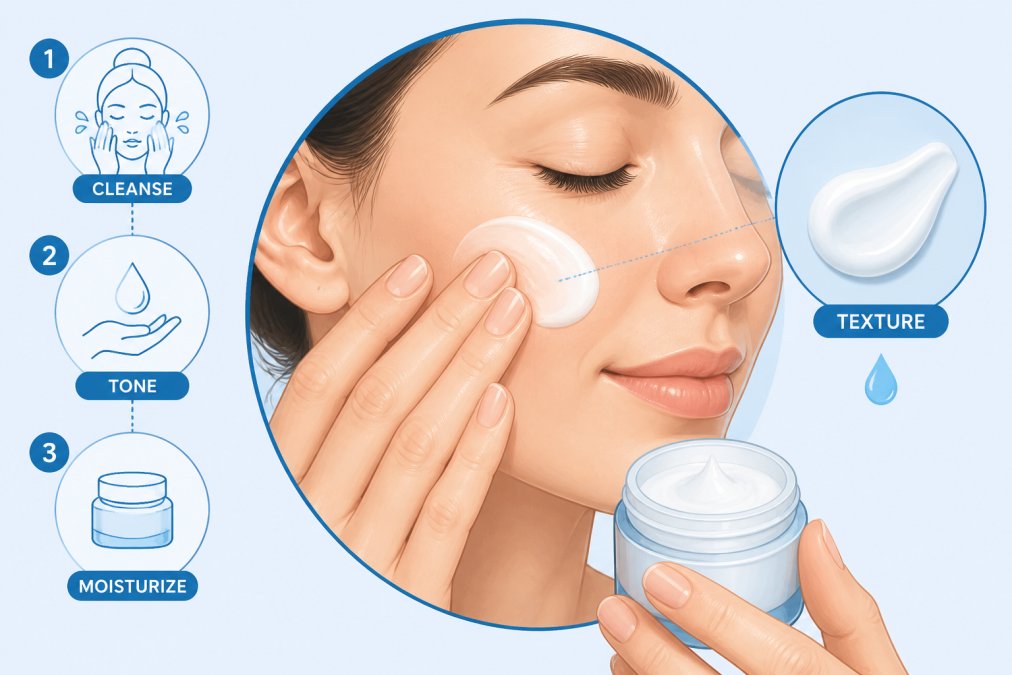
Start with a gentle, sulfate-free cleanser that doesn't strip your barrier. After cleansing, apply your moisturizer to damp skin, this allows hydrating ingredients to penetrate deeper and lock water into your skin. Pat your moisturizer in rather than rubbing, as rubbing can irritate sensitive skin.
If using multiple moisturizers, apply them in order of lightest to heaviest texture: lightweight serums first, then your main moisturizer, then any occlusive cream or oil if needed.
Patch Testing Protocol for Reactive Skin
Even the gentlest formulation can trigger a reaction in severely reactive skin. The 48-hour patch test is standard: apply a small amount to your inner arm or behind your ear and wait 48 hours. If no reaction occurs, cautiously introduce it to your face, starting with a small amount on the cheek or forehead.
For extremely reactive skin, do a 7-day patch test, applying the product daily to the same small area. If you experience any stinging, redness, swelling, or itching, stop immediately and rinse thoroughly.
Layering Moisturizers with Active Ingredients Safely
For retinoid nights, use a buffer strategy: apply your retinoid to completely dry skin, wait 15-20 minutes for absorption, then apply your fragrance-free moisturizer. This reduces irritation while maintaining efficacy.
Vitamin C serums require a different approach: apply first to clean, damp skin, wait 5-10 minutes, then layer your moisturizer. For AHA or BHA exfoliants, apply your exfoliant, wait 10-15 minutes, then apply your moisturizer. Your ceramide-rich cream protects your barrier during chemical exfoliation.
Key Ingredients Beyond Ceramides: What to Look For
Hyaluronic acid is a humectant that can hold up to 1000 times its weight in water. Look for concentrations of 0.5-2%.
Glycerin serves a similar humectant function and is particularly effective for sensitive skin. Most effective moisturizers include glycerin at 3-5% concentration.
Niacinamide (vitamin B3) reduces inflammation, strengthens barrier function, and regulates sebum production. Look for concentrations of 4-5%.
Colloidal oatmeal provides anti-inflammatory and skin-soothing benefits, particularly effective for eczema and rosacea.
Centella asiatica (cica) supports barrier repair and reduces inflammation with solid clinical backing for sensitive skin.
Aloe vera provides hydration and anti-inflammatory benefits when properly stabilized and concentrated.
Avoid these ingredients: essential oils and fragrance, alcohol denat, high-concentration retinoids in moisturizers, and strong preservatives like methylisothiazolinone.
How to Choose the Best Fragrance-Free Moisturizer for Your Skin Type
Dry & Compromised Skin
Prioritize occlusion and ceramide concentration. Vanicream Moisturizing Cream and Aeran Sensitive Skin Overnight Cream are your best options. Use these as nighttime products, and consider layering: apply a hydrating serum first, then your ceramide-rich cream. For extreme dryness, add an occlusive oil or balm over your moisturizer on nights when your skin feels particularly compromised.
Oily Yet Sensitive Skin
Oily sensitive skin often results from a compromised barrier: your skin overproduces sebum to compensate for moisture loss. Choose lightweight hydrating moisturizers: Neutrogena Hydro Boost Water Gel, Aveeno Calm + Restore Oat Gel, or EltaMD AM Therapy. Apply to damp skin using a light hand. Many people benefit from using a hydrating essence or toner before their moisturizer.
Eczema & Rosacea-Prone Skin
For eczema, prioritize ceramide concentration and occlusion. Cetaphil PRO Eczema Soothing Moisturizer is specifically formulated for eczema with clinically proven colloidal oatmeal. For rosacea, anti-inflammatory ingredients matter more than heavy occlusion. Aveeno Calm + Restore Oat Gel with feverfew provides targeted redness relief. Both conditions benefit from consistent moisturization.
Sustainability & Ethical Sourcing in Ceramide Formulations
Most ceramides are synthetic, which is beneficial: they're consistent, stable, and don't require animal sourcing. When evaluating sustainability, look beyond marketing claims. Ask whether the brand publishes information about ingredient sourcing, manufacturing practices, and packaging materials.
The most sustainable moisturizer is one that actually works for your skin. An ineffective "eco-friendly" product you discard after two weeks is far less sustainable than a highly effective formula you use completely.
Choosing the best fragrance-free moisturizer for sensitive skin means prioritizing barrier repair, avoiding common irritants, and understanding your skin's specific needs. Whether you need heavy occlusion for severe dryness, lightweight hydration for oily sensitivity, or targeted anti-inflammatory support for eczema or rosacea, the products on this list deliver real results. Aeran Skincare's Sensitive Skin Overnight Cream stands out for its multi-ceramide complex, barrier-supporting algae and aloe, and Scandinavian formulation philosophy. Start with a patch test, commit to consistent use, and give your barrier 4-6 weeks to show measurable improvement.
Frequently Asked Questions
What ingredients should I look for in a fragrance-free moisturizer for sensitive skin?
Look for ceramides, hyaluronic acid, glycerin, and niacinamide to support skin barrier repair and hydration. Colloidal oatmeal and cholesterol are also beneficial for sensitive skin. Avoid alcohol, essential oils, and synthetic fragrances. Choose products labeled dermatologist-tested, hypoallergenic, and non-comedogenic. Ceramide-based formulas help restore the stratum corneum and reduce transepidermal water loss (TEWL) for compromised skin.
What is the difference between 'fragrance-free' and 'unscented' moisturizers for sensitive skin?
Fragrance-free means no fragrance ingredients have been added, while unscented may contain fragrance masking agents that can still irritate sensitive skin. For truly sensitive skin, always choose fragrance-free products. Check ingredient lists for terms like 'parfum' or 'fragrance' to ensure complete absence. Fragrance-free formulations minimize the risk of skin irritation and are better suited for barrier-compromised skin types.
How do ceramides in moisturizers help repair a compromised skin barrier?
Ceramides are lipid molecules that fill gaps in the stratum corneum, the skin's outermost protective layer. They work alongside cholesterol and fatty acids to restore the skin barrier's integrity and reduce transepidermal water loss (TEWL). This lipid replenishment strengthens moisture retention and helps calm irritation. Dermatologist-recommended ceramide moisturizers are especially effective for eczema-prone and sensitive skin because they address the root cause of barrier dysfunction rather than just masking symptoms.
Can I use a fragrance-free moisturizer with active ingredients like retinol or vitamin C?
Yes, but timing and formulation matter. Use actives at night and fragrance-free moisturizers in the morning, or apply moisturizer after actives have dried to buffer irritation. Ceramide-rich moisturizers are ideal for pairing with actives because they support the skin barrier while it adjusts. Avoid mixing actives and moisturizers in the same step unless the moisturizer is specifically formulated to stabilize the active. Always patch test new combinations on sensitive skin.
Which fragrance-free moisturizer is best for oily yet sensitive skin?
Look for lightweight, gel-based or water-gel formulas like Neutrogena Hydro Boost Water Gel Fragrance-Free or EltaMD AM Therapy Facial Moisturizer. These provide hydration without heavy emollients and won't clog pores. Niacinamide-containing options help balance oil production while supporting the skin barrier. Avoid thick creams and petrolatum-heavy formulas if you have oily skin, even if you're sensitive. Non-comedogenic labels ensure the product won't trigger breakouts.
This article was written using GrandRanker