


Best Non-Comedogenic Moisturizer for Sensitive Skin
Table of Contents
- What Makes a Moisturizer Non-Comedogenic for Sensitive Skin
- Benefits of Ceramides for Sensitive Skin and Barrier Repair
- Building a Skincare Routine for a Compromised Skin Barrier
- Frequently Asked Questions
Last Updated: September 10, 2026
What Makes a Moisturizer Non-Comedogenic for Sensitive Skin
A non-comedogenic moisturizer avoids pore-clogging ingredients while staying gentle enough for reactive skin. This guide from Aeran Skincare shows how to read a label, which ingredients help, and how to support a compromised barrier.
The best non-comedogenic moisturizer for sensitive skin clears two bars: it won't block pores and won't provoke inflammation from fragrance or alcohol. The American Academy of Dermatology's guidance on sensitive skin care notes that people with sensitive skin often react to fragrances, certain preservatives, and harsh surfactants rather than to the base moisturizing ingredients themselves.
Three things determine safety for reactive, breakout-prone skin: the ingredient list (not the front-of-tube claim), a lightweight, oil-free or low-comedogenic base, and no fragrance, drying alcohols, or essential oils.
How to Identify Pore-Clogging Ingredients
The comedogenicity scale rates ingredients 0 to 5; 0-2 is low risk, and 3 and above is worth avoiding if you're acne-prone. Commonly flagged pore-cloggers include coconut oil and butter, wheat germ oil, cocoa butter, isopropyl myristate and palmitate, high-concentration algae extracts, and lanolin.
Hydration vs. Moisture: Why the Distinction Matters
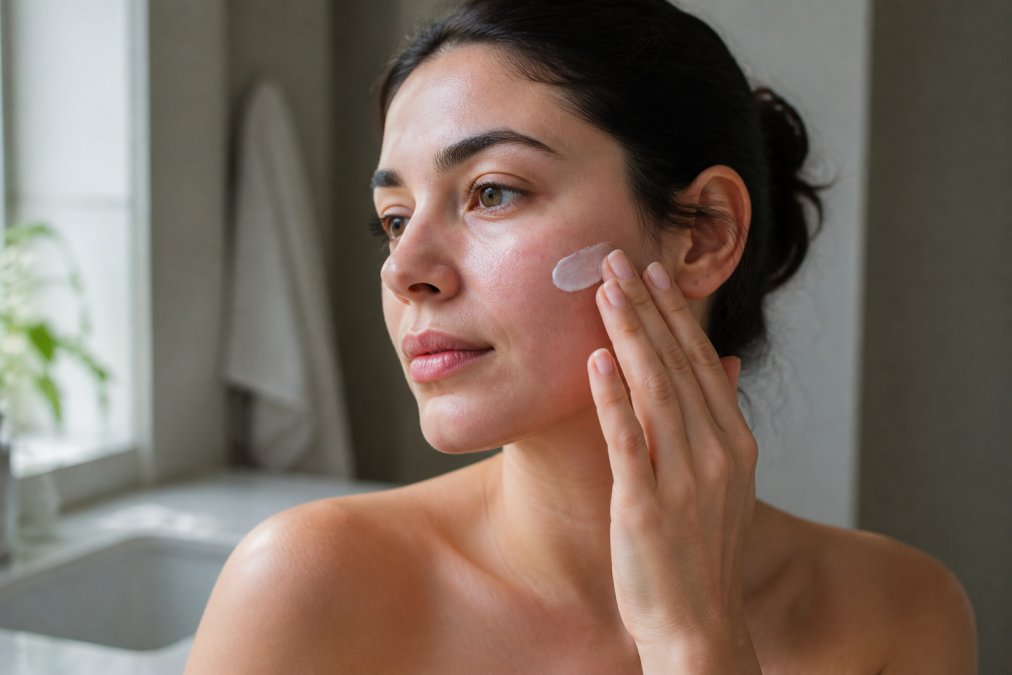
Hydration is water content, delivered by humectants like hyaluronic acid, glycerin, and sodium PCA; moisture is oil and lipid content, delivered by emollients and occlusives that seal water in. Sensitive skin needs both in proportion: humectant-only formulas can pull water out of skin in dry climates, while heavy occlusives may congest oily skin. A gel-cream combines humectants with lightweight emollients, often the only texture that works for combination skin.
Understanding Pore-Clogging Potential by Skin Type
Pore-clogging potential is a relationship between ingredient and skin: sebum production, pore size, and cell turnover shift the equation, so the same formula that keeps one person clear can congest another.
| Skin Type | Main Risk | Texture to Prioritize | Ingredients to Watch |
|---|---|---|---|
| Oily, acne-prone | Congestion, blackheads | Oil-free gel or gel-cream | Coconut oil, isopropyl myristate |
| Dry, sensitive | Barrier damage, stinging | Cream with ceramides | Fragrance, drying alcohols |
| Combination | Mixed congestion and tightness | Lightweight lotion or gel-cream | Heavy butters, essential oils |
Match texture to skin type first, then filter the ingredient list. A rich "gentle" cream on oily skin will cause breakouts no matter how clean the formula is.
Benefits of Ceramides for Sensitive Skin and Barrier Repair
The benefits of ceramides for sensitive skin come down to one job: rebuilding the lipid layer that keeps irritants out and water in. These fats work alongside cholesterol and fatty acids as the mortar between skin cells; when it breaks down, moisture escapes and skin turns red, tight, and reactive.
What Ceramides Actually Do for a Compromised Barrier
Applied consistently, ceramides reduce trans-epidermal water loss, meaning less tightness, flaking, and reactivity over time. The National Institutes of Health overview of skin barrier function explains that the stratum corneum depends on a healthy lipid matrix to function as a barrier, and ceramides are a primary component of that matrix. Pair them with fatty acids and cholesterol, plus supporting shea butter, sodium PCA, and hyaluronic acid.
Ingredients to Look For and Ingredients to Avoid
Building a barrier-friendly routine is about subtraction before addition: removing triggers does more than stacking on new products.
Look for: ceramides, hyaluronic acid, sodium PCA, aloe juice, shea butter, vitamins C and E, and Bidens Pilosa extract (a gentler retinol alternative). Avoid: added fragrance and essential oils, drying alcohols, physical scrubs, harsh exfoliants, and daily high-concentration acids.
Ingredient Interactions That Change Everything
Retinol plus exfoliating acids irritates sensitive skin even when each is gentle alone, and high-concentration vitamin C under a strong acid causes stinging neither would produce alone. Some pairings amplify results: ceramides with fatty acids and cholesterol mirror the skin's natural lipid ratio, and hyaluronic acid under an occlusive holds hydration in place. Introduce one active at a time and wait two to three weeks before adding another, alternating a retinol alternative with acids rather than stacking them. The FDA's consumer information on cosmetic ingredients is worth reviewing if you want to understand how active ingredients are regulated in cosmetic formulas.

Building a Skincare Routine for a Compromised Skin Barrier
A skincare routine for a compromised skin barrier should cleanse without stripping, hydrate with humectants, repair with ceramides, and protect with sunscreen. Reactive skin needs fewer steps, not more.
Morning: rinse or gentle pH-balanced cleanser; hydrating serum on damp skin; lightweight moisturizer; broad-spectrum sunscreen. Evening: gentle cleanser; hydrating layers; barrier-repair moisturizer last; alternate actives on separate nights. No alcohol toners, no daily exfoliation.
Routine Integration: Where Moisturizer Fits
Moisturizer is always the last step before sunscreen in the morning and the last step at night, because it seals in everything beneath it. Order goes thinnest to thickest: cleanser, hydrating serum, treatment, moisturizer, sunscreen; facial oil goes after moisturizer. Overnight is when barrier rebuilding is most active, so a ceramide-rich night cream does more than the same formula applied in the morning.

Environmental Impact on Skin Sensitivity
Season and climate change what skin needs: winter cold and indoor heating increase water loss, while heavy occlusive creams that felt perfect in January cause congestion in July. Adjust texture and layering instead of buying a new lineup: winter, richer cream, facial oil last, humidifier; summer, gel-cream, fewer occlusive layers, lightweight sunscreen; year-round, keep ceramides, since barrier support isn't seasonal. Pollution and hard water also disrupt the barrier, so use a gentle, pH-balanced cleanser.
Cost-Per-Ounce: What You're Actually Paying For
A larger bottle at a higher sticker price is often cheaper per ounce, but cost per ounce only matters alongside how long it lasts and whether it works. Here's how the three barrier-focused options from Aeran Skincare compare:
| Product | Price | Best For | Key Ingredients | When to Use |
|---|---|---|---|---|
| Calm Night Cream | $28.95 | Sensitive, reactive, redness-prone skin | Aloe juice, hyaluronic acid, marine algae | Evening, last step |
| Renewal Moisturiser | $23.75 | Fine lines and texture without irritation | Bidens Pilosa, hyaluronic acid, vitamin C and E, sodium PCA | Morning and evening |
| Ceramide Barrier Night Cream | $42.00 | Dry, compromised barrier, normal to dry skin | Ceramides, shea butter, aloe juice, hyaluronic acid | Evening, last step |
The Renewal Moisturiser addresses fine lines without retinol's irritation. The Calm Night Cream supports reactive, redness-prone skin. The Ceramide Barrier Night Cream is for a compromised barrier needing lipid replenishment.

Patch Testing and Introducing New Products Safely
Patch testing prevents the most reactions: apply a small amount to your inner forearm or behind your ear twice daily for two to three days, watching for redness, itching, or stinging. If nothing happens, introduce it to your face. Introduce one new product at a time and wait a week before adding another.
What to Do When Your Barrier Is Already Compromised
Strip back to cleanser, moisturizer, and sunscreen for one to two weeks, no exfoliants, retinol, vitamin C, or masks, and let the barrier rebuild before reintroducing actives. Once stinging stops and redness settles, add products back one at a time, gentlest first.
Sensitive skin that reacts to everything usually has a barrier that needs support, not more products. Aeran Skincare builds barrier-first formulas with ceramides, hyaluronic acid, and clean, fragrance-free ingredients. The Ceramide Barrier Night Cream delivers ceramides and fatty acids into the lipid layer overnight, while the Calm Night Cream soothes reactive, redness-prone skin with aloe juice and marine algae. Get started with Aeran Skincare and give your skin the barrier support it's been missing.
Frequently Asked Questions
What is a good non-comedogenic moisturizer for sensitive skin?
Look for a fragrance-free, non-comedogenic moisturizer built around ceramides, hyaluronic acid, and soothing botanicals like aloe. These ingredients support the skin barrier without feeding sebum production or triggering inflammation. A ceramide-rich night cream works well for dry or compromised skin, while a lightweight gel-cream suits oily, acne-prone types. Patch testing on your inner forearm for two nights before applying to your face helps confirm your skin tolerates it.
How can you tell if a moisturizer is truly non-comedogenic?
Check the ingredient list for known pore-clogging offenders such as coconut oil, isopropyl myristate, and heavy lanolin. A product labeled non-comedogenic has been formulated to avoid these. Ratings on the comedogenicity scale, which ranks ingredients from 0 to 5, help you judge risk. Terms like oil-free, fragrance-free, and dermatologist-tested add confidence, but the ingredient list is still the most reliable signal.
Do non-comedogenic moisturizers provide enough hydration for dry skin?
Yes, when they rely on humectants, emollients, and occlusives rather than heavy oils. Hyaluronic acid pulls water into the skin, ceramides and fatty acids rebuild the lipid barrier, and ingredients like shea butter seal in moisture without clogging pores. For very dry or compromised skin, a ceramide barrier night cream applied as the last step of your evening routine delivers lasting hydration while reducing trans-epidermal water loss.