


Ceramides vs Hyaluronic Acid for Sensitive Skin
Table of Contents
- Ceramides vs Hyaluronic Acid: Key Differences
- How to Repair Damaged Skin Barrier with These Ingredients
- Ceramide vs Hyaluronic Acid Order of Application
- Ingredients to Avoid for Sensitive Skin
Last Updated: August 19, 2026
Ceramides vs Hyaluronic Acid: Key Differences
When your skin barrier is compromised, every product feels like a gamble. Ceramides and hyaluronic acid are the two ingredients most dermatologists recommend for barrier repair, but they work in fundamentally different ways.
Ceramides are lipids (fatty molecules) that form the structural foundation of your skin barrier. They're one of three critical components of the lipid barrier, alongside cholesterol and fatty acids. When your barrier is damaged, ceramides are depleted first. They act as an occlusive, sealing moisture into the skin and preventing transepidermal water loss.
Hyaluronic acid is a humectant that draws water from the air and deeper skin layers into the epidermis. A single molecule can hold up to 1,000 times its weight in water, making it exceptionally effective at plumping the skin. However, it does nothing to repair the structural damage to your lipid barrier.
The key insight: hyaluronic acid hydrates the skin, but ceramides repair it. You need both, but they're solving different problems. Hyaluronic acid works best when your barrier is intact. Ceramides are what you reach for when your barrier is actually broken, when your skin is reactive or losing moisture rapidly. At Aeran Skincare, we've found that barrier-compromised skin needs ceramide support first, then hyaluronic acid layered on top.

How to Repair Damaged Skin Barrier with These Ingredients
A damaged skin barrier needs the right building blocks, delivered consistently, in the right sequence.
Ceramides rebuild the lipid barrier by replacing the fatty acids lost through damage, over-exfoliation, harsh cleansers, or environmental stress. When you apply a ceramide-rich product, you're literally restocking the mortar between your skin cells. The Ceramide Barrier Night Cream from Aeran Skincare delivers ceramides directly into the lipid layer, working while your skin naturally repairs itself overnight.

Hyaluronic acid supports this process by ensuring the newly repaired barrier stays hydrated. A compromised barrier loses water rapidly, which is why sensitive skin often feels tight even after moisturizing. Hyaluronic acid reverses this by drawing moisture deep into the skin and holding it there. The Barrier Mist with hyaluronic acid works as both a hydrating toner and a midday refresh.
The real power comes when you combine them strategically. Your barrier needs both structural repair (ceramides) and hydration (hyaluronic acid). Using them together addresses the root cause of sensitivity: a compromised lipid barrier that can't retain moisture or protect against irritants. A common mistake is assuming more hydration equals more repair. Without ceramides to seal it in and rebuild the structural damage, that hydration will evaporate within hours. Ceramides come first. Hydration comes second.
Ceramide vs Hyaluronic Acid Order of Application
Application order determines whether these ingredients work or fight each other.
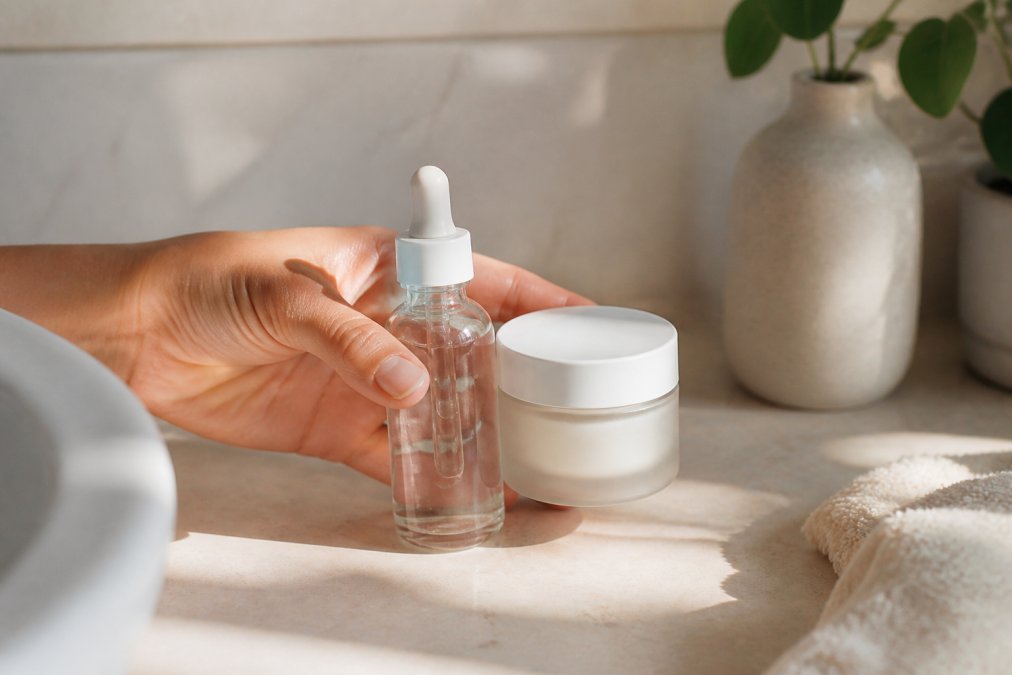
The rule is simple: lightest to heaviest, hydration first, then occlusion. This means hyaluronic acid always goes on before ceramides.
Start with a hydrating toner or mist containing hyaluronic acid. The Barrier Mist delivers hyaluronic acid in a weightless formula that preps your skin to receive heavier actives. Apply it to damp skin, this is critical, as hyaluronic acid works by drawing moisture into the skin. Let it absorb for 30-60 seconds.

Next, apply your serum if using one. The Barrier Biome Serum with prebiotics and hyaluronic acid can layer additional hydration and support your skin's microbiome. Wait for it to absorb before moving to the next step.
Finally, seal everything in with your ceramide-rich moisturizer. The Ceramide Barrier Night Cream goes last because it's an occlusive that locks in all the hydration you've just applied. This is why it's perfect as a final step before bed.
Molecular weight matters too. Hyaluronic acid molecules vary in size, smaller molecules penetrate deeper; larger molecules sit on the surface and plump the skin. Most effective formulas use a blend of both. Wait 30-60 seconds between layers to allow each product to absorb fully before applying the next.
Ingredients to Avoid for Sensitive Skin
Barrier-compromised skin is reactive skin. Even ingredients that work for other skin types can trigger irritation when your barrier is damaged.
Avoid anything that disrupts the skin barrier further:
Harsh actives: Retinoids, vitamin C, niacinamide (in high concentrations), and chemical exfoliants are all irritating to barrier-compromised skin. Your barrier needs to heal first.
Fragrance and essential oils: Even "natural" fragrance can trigger sensitivity. The Sensitive Skin Overnight Cream from Aeran Skincare is fragrance-free specifically because fragrance molecules can irritate reactive skin.
Denatured alcohols: Alcohol strips the skin and damages the lipid barrier. Look for products that avoid SD alcohol and denatured alcohol. Fatty alcohols (like cetyl alcohol) are beneficial for barrier repair.
Sulfates and harsh surfactants: Your cleanser matters as much as your moisturizer. Sulfates strip natural oils and disrupt the lipid barrier. Switch to a gentle, creamy cleanser that doesn't foam aggressively.
Over-exfoliation: Physical scrubs and frequent chemical exfoliation are barrier killers. Stop exfoliating entirely until your barrier is repaired. Most people see improvement in sensitivity within 2-3 weeks of eliminating exfoliation.
Heavy silicones: While some silicones are fine, heavy silicone-based products can trap bacteria and prevent your barrier from breathing.
The counterintuitive truth: sensitive skin needs fewer products, not more. Focus on a simple routine: gentle cleanser, hydrating toner with hyaluronic acid, serum (optional), and a ceramide-rich moisturizer. That's enough to repair and maintain a healthy barrier.
A compromised skin barrier is the root cause of most sensitivity issues. The Ceramide Barrier Night Cream and Barrier Mist from Aeran Skincare work together to rebuild that barrier with ceramides and hyaluronic acid, giving your skin the structural support and hydration it needs to heal. Start with these two, use them in the right order, and avoid the irritants that break barriers down. Within weeks, you'll notice the difference.
Frequently Asked Questions
Can I use ceramides and hyaluronic acid together?
Yes, ceramides and hyaluronic acid work synergistically for sensitive skin. Hyaluronic acid draws moisture into the skin, while ceramides seal that hydration into the lipid barrier. Apply hyaluronic acid first to damp skin, then follow with a ceramide-rich cream. This layering maximizes moisture retention and barrier repair without overwhelming reactive skin. Many people with compromised barriers see the best results using both ingredients together.
Which is better for dry, sensitive skin: ceramides or hyaluronic acid?
For dry, sensitive skin, both ingredients serve different purposes. Ceramides directly repair the lipid barrier and reduce transepidermal water loss, making them essential for barrier damage. Hyaluronic acid hydrates by binding water to the skin, supporting moisture retention. Neither is 'better' alone, sensitive skin typically needs both. Start with a ceramide product like the Ceramide Barrier Night Cream ($36.00) for barrier repair, then layer a hyaluronic acid serum underneath for hydration support.
Do ceramides help with skin barrier repair?
Ceramides are among the most effective ingredients for repairing a damaged skin barrier. They are lipid molecules that naturally exist in your skin's stratum corneum and help maintain the barrier's integrity. When the barrier is compromised, ceramides replenish the lipid layer, reducing redness, sensitivity, and inflammation. Clinical use of ceramide-containing products has been shown to improve barrier function and reduce symptoms of dermatitis-prone skin over consistent use.
Should I apply hyaluronic acid before or after ceramide cream?
Apply hyaluronic acid first, while your skin is still slightly damp from cleansing. Hyaluronic acid works best on wet skin and has a lower molecular weight, allowing it to penetrate before heavier creams. Follow with your ceramide cream to seal in the hydration. This order maximizes the water-binding capacity of hyaluronic acid and ensures ceramides form an effective occlusive barrier on top. Reverse layering can trap moisture unevenly and reduce effectiveness for sensitive skin.