
How to Fix Dry Flaky Skin on Face Step by Step
Table of Contents
- Step 1: Identify the Causes of Facial Skin Flaking
- Step 2: How to Repair a Damaged Skin Barrier with a Gentle Routine
- Step 3: Best Ingredients for Dry Flaky Skin (and What to Avoid)
- When to See a Dermatologist
- Frequently Asked Questions
Last Updated: September 17, 2026
Step 1: Identify the Causes of Facial Skin Flaking
Facial skin flaking happens when your barrier breaks down and loses water faster than it can hold it, transepidermal water loss, the root of most dry flaky skin on face problems. At Aeran Skincare, we see this most in people who cleanse too hard, skip moisturizer, or live in dry indoor air.
Triggers include harsh cleansers, hot showers, dry winter air, over-exfoliating, and conditions like eczema or dermatitis. When the barrier is damaged, water escapes and dead skin cells pile up instead of shedding evenly.
Treating flakes with more scrubbing makes it worse, the fix is repair, not removal.
Step 2: How to Repair a Damaged Skin Barrier with a Gentle Routine
Repairing a damaged skin barrier means cleansing gently, adding water back, and sealing it in, morning and night.
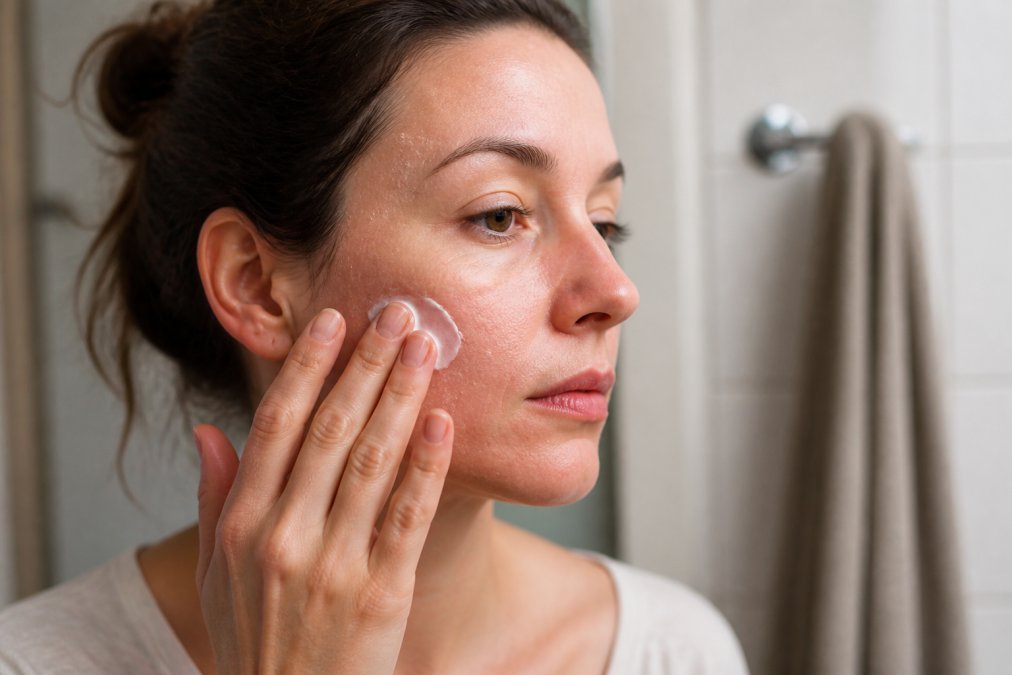
Morning: rinse with lukewarm water or a gentle cleanser, apply hydrating toner while damp, add a hyaluronic acid serum, then seal with moisturizer and sunscreen. Evening: cleanse with a silky oil cleanser, press in toner, apply serum, and finish with a ceramide night cream. Order matters: thin products first, thick ones last.

Water temperature is the step most people ignore, hot water strips lipids fast, so keep it lukewarm.
Aeran Skincare builds its whole line around this barrier-first approach: the Ceramide Barrier Night Cream delivers ceramides and fatty acids overnight, the Silky Oil Cleanser melts makeup without stripping, and the Rose Toner restores pH balance after washing.
Ceramide Barrier Night Cream →


Step 3: Best Ingredients for Dry Flaky Skin (and What to Avoid)
The best ingredients for dry flaky skin fall into three groups: humectants like hyaluronic acid pull water in, emollients smooth rough texture, and occlusives like ceramides seal moisture in and rebuild the lipid barrier. Look for ceramides, hyaluronic acid, glycerin, sodium PCA, and fragrance-free, hypoallergenic formulas.
Avoid alcohol-based toners, physical scrubs, and heavily fragranced products, which trigger sensitivity and slow repair. Choose non-comedogenic options if you also get oily patches. The Hyaluronic Acid Firm Serum pairs hyaluronic acid with sodium PCA to plump fine lines without grease.
For exfoliation, less is more: once the barrier is calm, use a gentle chemical exfoliant once a week at most, and stop at the first sign of stinging.
When to See a Dermatologist
See a dermatologist if flaking lasts more than a few weeks, spreads, or comes with redness, cracking, or bleeding, it can signal eczema, dermatitis, or another condition needing medical care. Patch test new products on your inner arm for 24 hours, and stop if a product burns.
Frequently Asked Questions
How can I quickly get rid of dry, flaky skin on my face?
Start by cleansing with a gentle, pH-balanced cleanser and lukewarm water to avoid stripping your lipid barrier. While skin is damp, apply a hyaluronic acid serum to draw in moisture, then seal it with a ceramide-rich moisturizer. Avoid exfoliating until the flaking subsides, and use a humidifier at night. Most people see improvement within a week if they stick to this routine and avoid harsh scrubs or hot water.
What ingredients should I avoid if I have dry, flaky skin?
Skip alcohol-based toners, physical scrubs with rough particles, and cleansers containing sulfates, which strip natural oils. Also avoid high concentrations of alpha-hydroxy acids (AHAs) and beta-hydroxy acids (BHAs) until your barrier heals. Fragrances and essential oils can trigger sensitivity. Instead, look for fragrance-free, hypoallergenic formulas with ceramides, hyaluronic acid, and glycerin to support moisture retention.
When should I see a dermatologist for dry skin?
See a dermatologist if flaking persists after two to three weeks of consistent barrier-repair care, or if you notice redness, swelling, cracking, or bleeding. These signs may indicate eczema, dermatitis, or another condition that needs prescription treatment. A dermatologist can also check for underlying issues like thyroid disorders or nutritional deficiencies that contribute to dry flaky skin on face.