


How to Soothe Extremely Dry Sensitive Skin After Showering
Table of Contents
- Why Your Skin Feels Tight and Itchy After a Shower
- A Post-Shower Routine to Soothe Dry Sensitive Skin
- How to Repair a Damaged Skin Barrier After Showering
- Choosing the Right Cleanser and Moisturizer
- The Details Most People Skip
- When to See a Dermatologist
- Frequently Asked Questions
Last Updated: September 16, 2026
Why Your Skin Feels Tight and Itchy After a Shower
That tight, itchy feeling means your barrier lost water: hot water and harsh cleansers strip the lipids that hold moisture in.
For dry sensitive skin, the shower is often the trigger, not the cure: hot water dissolves protective oils, strong soaps strip more, and evaporation takes your skin's moisture with it.
The tightness is transepidermal water loss: a weakened lipid barrier of ceramides, fatty acids, and cholesterol lets moisture escape and irritants in. It worsens with long hot showers, fragranced or antibacterial gels, aggressive towel rubbing, and skipping moisturizer on damp skin.
A Post-Shower Routine to Soothe Dry Sensitive Skin
The single most effective habit: moisturize within three minutes of stepping out, while skin is still damp, to lock in water before it evaporates.
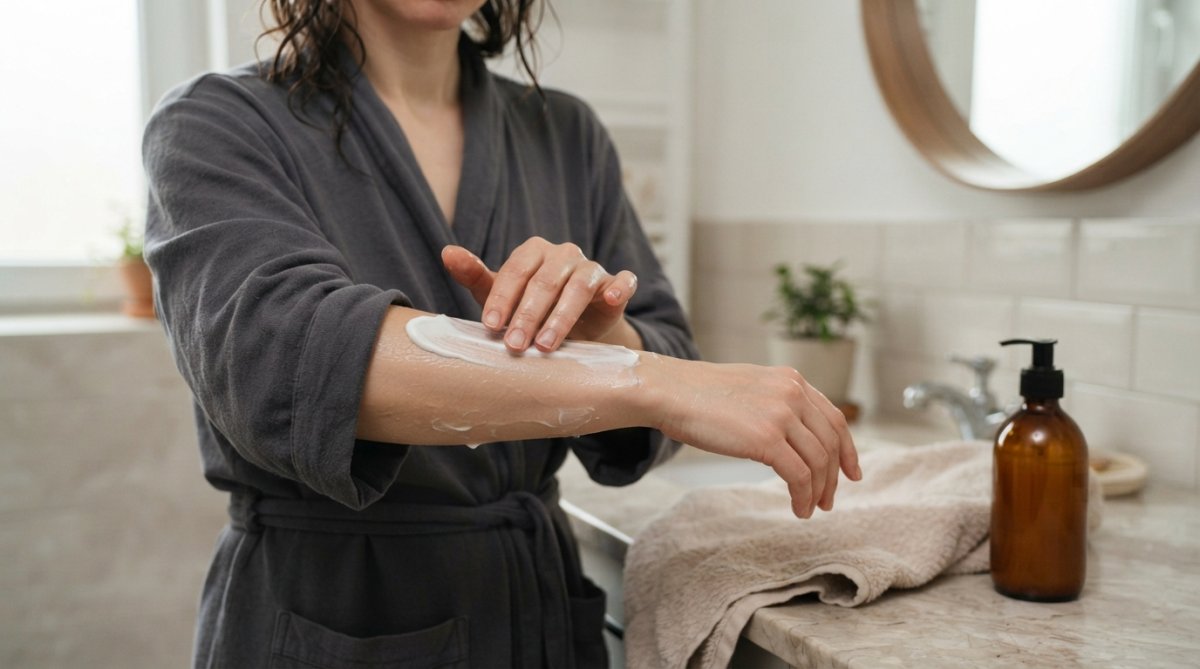
The order that works for dry sensitive skin: pat dry gently, mist damp skin, seal with a ceramide-rich moisturizer while still slightly wet, then add a body serum or petroleum jelly on very dry areas. Waiting until skin feels tight is a mistake, the water is already gone. Use a lightweight ceramide cream by day and a richer formula at night; Aeran Skincare's Ceramide Barrier Night Cream delivers ceramides and fatty acids into the lipid layer overnight.

How to Repair a Damaged Skin Barrier After Showering
Repairing a damaged skin barrier means replacing what the shower stripped away through a consistent, gentle routine.
The ingredients that matter most: ceramides to rebuild the lipid barrier, hyaluronic acid and glycerin as humectants, occlusives like petroleum jelly to slow water loss, and emollients like cocoa butter and betaine. Avoid fragrance, harsh sulfates, and alcohol-based toners.
What causes post-shower skin irritation?
Post-shower irritation usually comes from water that is too hot, barrier-stripping cleansers, and aggressive drying. Hard water adds a fourth: minerals left on the skin increase sensitivity and block moisturizer absorption, so rule it out with a filter if your skin stings after every shower.
How long should a shower be for sensitive skin?
Keep showers to five to ten minutes in lukewarm water; longer or hotter showers pull more oil from the barrier. Follow immediately with a ceramide moisturizer on damp skin.
Should you moisturize before or after drying off?
Moisturize before skin fully dries: pat off excess water, leave it slightly damp, then apply within three minutes to trap water in instead of letting it evaporate.
Choosing the Right Cleanser and Moisturizer
The best cleanser for dry sensitive skin is a fragrance-free, pH-balanced cleansing cream or gentle shower gel, not bar soap, which has a higher pH that disrupts the acid mantle and leaves skin tight. Look for hypoallergenic formulas and soothing agents like aloe and algae.
Ceramide Barrier Night Cream →
The best moisturizer for sensitive skin pairs humectants with occlusives and ceramides; a fragrance-free overnight cream like Aeran Skincare's Calm Night Cream suits reactive skin because it calms redness while you sleep.
| Skin Concern | Ingredient to Look For | Ingredient to Avoid |
|---|---|---|
| Tightness after shower | Ceramides, hyaluronic acid | Fragrance, alcohol |
| Itchiness and redness | Aloe, algae, prebiotics | Harsh sulfates |
| Flaking and dryness | Occlusives, cocoa butter | Antibacterial soaps |
The Details Most People Skip
Two things quietly sabotage a good routine: what you wear and how your water behaves. Tight synthetic fabrics trap heat and friction against dry skin, so wear loose cotton or breathable natural fibers. Hard water leaves a mineral residue that irritates sensitive skin and blocks moisturizers; a shower filter is a low-cost fix worth trying.
A warm shower is soothing; adjust temperature and timing so your skin gets the calm without the moisture loss.
When to See a Dermatologist
If skin stays red, itchy, or cracked despite a consistent barrier-repair routine, see a board-certified dermatologist; persistent symptoms can point to eczema, contact dermatitis, or another condition needing dermatological care.
For most people the fix is simple: shorter lukewarm showers, a gentle fragrance-free cleanser, and moisturizer on damp skin within three minutes, repairing the lipid barrier, reducing transepidermal water loss, and stopping tightness before it starts.
Extremely dry sensitive skin after showering is a barrier problem needing a barrier-first solution.
Frequently Asked Questions
Why is my skin extremely itchy after a shower?
Hot water and harsh cleansers strip the lipid barrier that holds moisture in, so water evaporates fast and leaves skin tight and itchy. Shorter lukewarm showers, a fragrance-free cleansing cream, and moisturizing within three minutes of patting dry usually calm the itch. If itchiness persists with a rash, see a dermatologist.
How can I lock in moisture immediately after showering?
Pat dry instead of rubbing, then apply a humectant serum or mist to damp skin, followed by an occlusive cream with ceramides or petroleum jelly. This traps water before transepidermal water loss sets in. A barrier mist plus a ceramide night cream is a simple two-step layer that works well for dry sensitive skin.
Are hot showers bad for sensitive skin?
Yes. Hot water dissolves the lipids that keep your skin barrier intact, which speeds up moisture loss and triggers redness and tightness. Keep showers lukewarm, under 10 minutes, and use a pH-balanced, fragrance-free cleanser. If you love heat, save it for a bath soak and rinse cool at the end.
What ingredients should I look for in a moisturizer for sensitive skin?
Look for ceramides, hyaluronic acid, glycerin, aloe, and prebiotics. These humectants, emollients, and occlusives pull water in and seal it under a repaired lipid barrier. Skip fragrance, drying alcohols, and harsh soaps. Dermatologist-recommended formulas are usually fragrance-free and hypoallergenic, which matters most for reactive skin.