


How to Soothe Reactive Skin Naturally
Table of Contents
- Signs of a Damaged Skin Barrier and Reactive Skin
- Natural Ingredients That Calm Reactive Skin
- Skincare Routine for Reactive Skin
- Best Skincare for Redness and Irritation
- Frequently Asked Questions
Last Updated: August 31, 2026
Signs of a Damaged Skin Barrier and Reactive Skin
A damaged skin barrier is your skin's compromised outer layer, unable to retain moisture or defend against environmental stressors. You'll notice persistent redness, burning sensations, tightness, and irritation disproportionate to what triggered it. Reactive skin shows sudden flare-ups, sensitivity to previously tolerated products, and stinging when applying water or moisturizer. The barrier becomes compromised through harsh products, excessive exfoliation, environmental exposure, or dehydration. Without intervention, reactivity worsens because each irritant triggers more inflammation, further weakening the barrier.
Natural Ingredients That Calm Reactive Skin
The most effective natural ingredients reduce inflammation and support barrier repair. Aloe vera calms irritation and hydrates without heaviness. Chamomile eases redness and burning sensations. Colloidal oatmeal soothes irritation while supporting the skin's natural pH balance (peer-reviewed research). Centella asiatica strengthens the barrier by promoting collagen production and reducing inflammation (peer-reviewed research). Green tea extract provides antioxidant support while calming reactive responses.
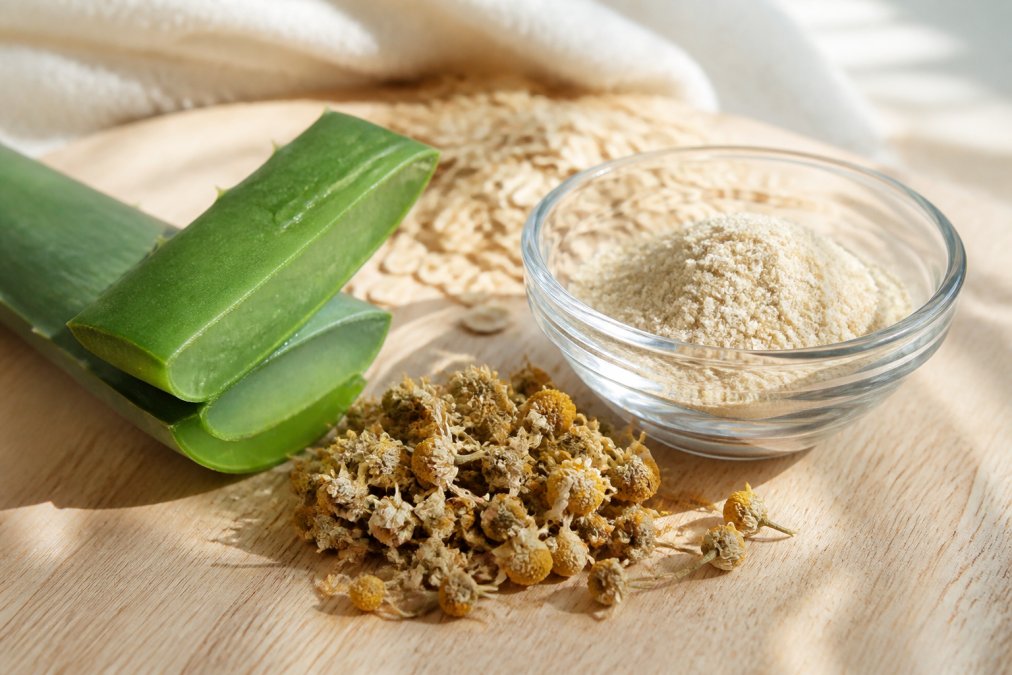
Hyaluronic acid holds moisture without triggering sensitivity, providing hydration reactive skin needs without trapping bacteria or heat. Prebiotics support your skin's microbiome, which directly affects barrier health and reactivity. Use these ingredients in formulations specifically designed for reactive skin, free of fragrance, alcohol, and unnecessary additives. At Aeran Skincare, our formulations combine calming actives with ceramides to repair barrier function while soothing inflammation.

Skincare Routine for Reactive Skin
Prioritize simplicity and barrier support over complexity. Cleanse once daily with a gentle, non-stripping cleanser using lukewarm water, then pat skin dry gently. Apply a hydrating toner or mist to damp skin immediately after cleansing to lock in moisture. Follow with a serum containing hyaluronic acid or prebiotics, then layer a moisturizer with ceramides and calming ingredients like aloe or centella.

In the morning, repeat the cleanser and moisturizer steps, skipping the serum if adequately hydrated. Use SPF 30 or higher sunscreen, sun exposure is a common trigger for flare-ups (the American Academy of Dermatology). Avoid active exfoliants, retinoids, and vitamin C serums until your barrier stabilizes. Patch test new products on your inner arm for three days before full-face application. Give each product at least two weeks before assessing effectiveness.
Best Skincare for Redness and Irritation
For immediate relief, apply a cool compress to reduce inflammation and soothe burning sensations. Look for products containing niacinamide, which reduces redness while strengthening the barrier. Products with centella asiatica visibly calm redness over days of consistent use. Avoid fragrance, essential oils, and high concentrations of acids, which trigger irritation in reactive skin.
Consistency matters more than potency. A simple routine with barrier-supporting ingredients used twice daily outperforms complex routines with irritating actives. The Calm Night Cream from Aeran Skincare combines aloe juice and hyaluronic acid to calm irritation while you sleep, allowing your barrier to repair during the body's natural renewal cycle. Products designed specifically for reactive skin deliver better results because they exclude triggers that cause flare-ups.

Reactive skin demands barrier-first formulations rather than potent actives. Aeran Skincare's ceramide-rich, fragrance-free products are engineered to support sensitive and reactive skin, delivering visible calming and hydration without irritation. Start with a simplified routine using barrier-supporting ingredients, give it consistent time to work, and watch your skin's reactivity decrease as your barrier strengthens.
Frequently Asked Questions
How do I know if my skin barrier is damaged?
A damaged skin barrier shows visible signs including persistent redness, tightness, and burning or stinging sensations. Your skin may feel dry despite moisturizing, or react intensely to products that never bothered you before. Transepidermal water loss increases, causing dehydration and sensitivity. If your skin barrier is compromised, you'll notice it becomes reactive to almost everything, even gentle cleansers may trigger irritation. Look for flaking, increased sensitivity to temperature changes, and a weakened ability to heal from minor irritation.
What natural ingredients work best for soothing reactive skin?
Aloe vera, colloidal oatmeal, chamomile, and centella asiatica are proven natural ingredients for reactive skin. Aloe vera reduces inflammation and supports skin repair. Colloidal oatmeal calms itching and strengthens the skin barrier. Chamomile has anti-inflammatory properties that reduce redness. Centella asiatica (also called cica) accelerates barrier healing and reduces irritation. Green tea extract provides antioxidant protection. When building a skincare routine for reactive skin, choose products featuring these ingredients in alcohol-free formulations to avoid further irritation.
How should I patch test new skincare products on reactive skin?
Apply a small amount of the new product to a discreet area like your inner forearm or behind your ear. Wait 24 to 48 hours before introducing it to your face. Watch for redness, itching, burning, or any sign of irritation. If no reaction occurs, apply a tiny amount to one small facial area and wait another 24 hours. Only after passing this step should you incorporate it into your full skincare routine for reactive skin. This step-by-step approach prevents triggering severe reactions and helps identify which ingredients your skin tolerates.