
How to Tell Over-Exfoliated Skin vs Acne Breakouts
Last Updated: November 2, 2026
Quick Summary
Over-exfoliated skin shows up as redness, stinging, tightness, and flaking rather than a glow, with a shiny, tight, sandpapery texture and stinging when you apply anything, even water. The tell is timing and distribution: irritation appears across treated areas within hours to a couple of days, while acne develops gradually over 1-2 weeks in oil-prone zones.
- Stop all exfoliating acids and actives for a week if bumps arrived fast and skin stings.
- Recovery typically takes one to four weeks of strict gentleness, with stinging and redness settling first.
- Stop all exfoliants and actives for at least 7 to 10 days, then reintroduce one active at a time.
- Purging clears in roughly four to six weeks and stays in your usual breakout zones.
- See a dermatologist if nothing improves after two weeks of gentleness or you develop swelling or a spreading rash.
Table of Contents
- What Does Over-Exfoliated Skin Look Like?
- Over-Exfoliated Skin vs Acne Breakouts: Side-by-Side
- How to Fix Over-Exfoliated Skin and How Long Healing Takes
- Frequently Asked Questions
What Does Over-Exfoliated Skin Look Like?
Over-exfoliated skin is skin stripped of too much of its outer layer through acids, scrubs, or retinoids, showing up as redness, stinging, tightness, and flaking rather than a glow. The tell is a shiny, tight, sandpapery texture plus stinging when you apply anything, even water.
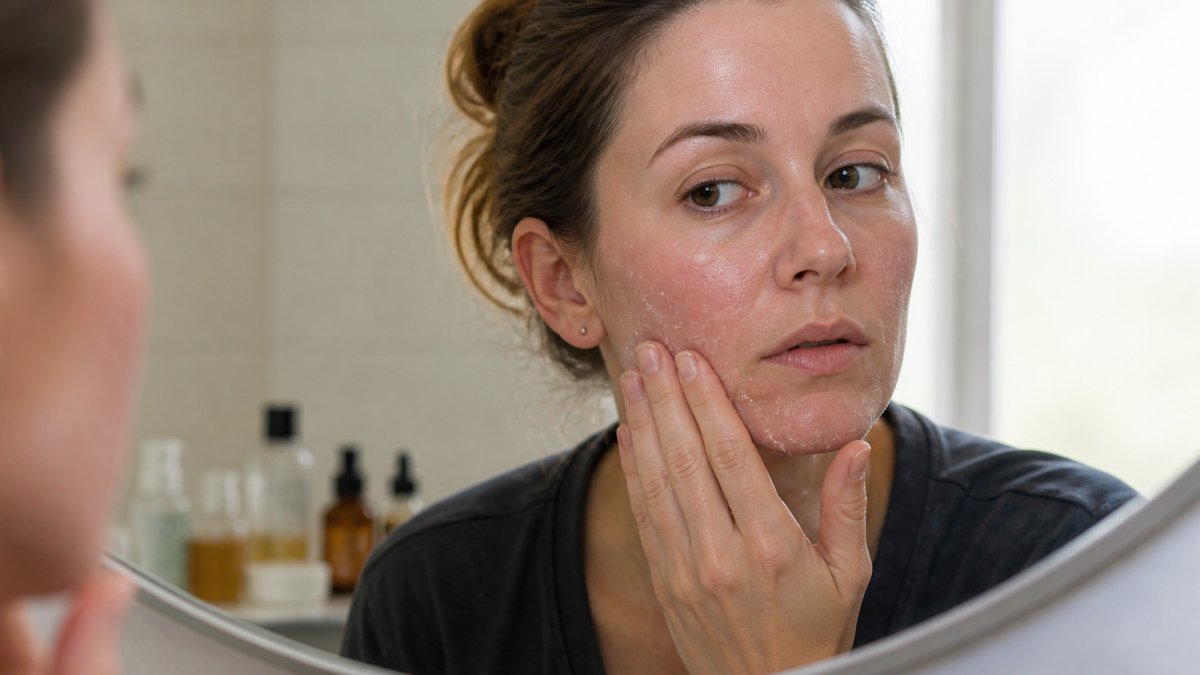
The most common signs of over-exfoliated skin vs acne breakouts come down to how skin feels before it looks: redness across whole zones, stinging from products that used to feel fine, and small uniform pimples in clusters. American Academy of Dermatology guidance on exfoliation notes that irritation from over-exfoliation is a signal to cut back, not push through.
Over-Exfoliated Skin vs Acne Breakouts: Side-by-Side
The fastest way to tell them apart is timing and distribution: acne clusters in oil-prone zones and evolves over days, while over-exfoliation irritation appears across treated areas within hours to a couple of days.
| Feature | Over-Exfoliated Skin | Acne Breakouts |
|---|---|---|
| Timing | Appears 1-3 days after a new or stronger active | Develops gradually over 1-2 weeks |
| Distribution | Everywhere the product touched, often cheeks and jaw | T-zone, chin, jawline, back |
| Sensation | Burning, stinging, itching | Tender or painless, rarely stinging |
If bumps arrived fast and skin stings, stop all exfoliating acids and actives for a week and switch to gentle cleansing plus barrier repair. If bumps are slow-building and confined to oily zones, it is likely acne or purging, treat with targeted salicylic acid rather than a full stop.
Skin purging vs acne breakouts is the third possibility people miss. Purging clears in roughly four to six weeks and stays in your usual breakout zones; over-exfoliation irritation does not improve while you keep exfoliating. An allergic reaction brings swelling, hives, or a spreading rash, that needs medical care.
How to Fix Over-Exfoliated Skin and How Long Healing Takes
Recovery typically takes one to four weeks of strict gentleness; stinging and redness settle first, while texture and breakouts take longer. Stop all exfoliants and actives for at least 7 to 10 days, cleanse gently with lukewarm water, layer hydration under a barrier-supporting moisturizer, skip fragrance and alcohol, then reintroduce one active at a time once skin feels calm for a full week.
A Barrier Biome Serum with prebiotics layers well underneath for soothing hydration. At night, a Ceramide Barrier Night Cream helps lock in moisture while skin recovers.


Once your barrier is calm, do not go back to your old frequency. Our guide on how to reintroduce retinol after skin barrier damage walks through the ramp-up, and these diet changes that can strengthen your skin barrier are worth reading. If nothing improves after two weeks of gentleness, or if you develop swelling or spreading rash, see a dermatologist. Cleveland Clinic overview of skin barrier damage is a useful reference, and the FDA guidance on cosmetic product reactions explains when a reaction should be reported rather than treated at home.
The hardest part is resisting the urge to fix irritated skin with more products. Start with one gentle cleanser and one barrier-supporting moisturizer, then add a prebiotic serum once stinging stops. Aeran Skincare offers barrier-first, Scandinavian-formulated products, and the Ceramide Barrier Night Cream contains ceramides.
Frequently Asked Questions
Can over-exfoliated skin cause breakouts?
Yes. When exfoliating acids strip the skin barrier, moisture escapes and irritation sets in. That inflammation can trigger small pimples, rough texture, and increased oiliness as the skin tries to compensate. The bumps usually cluster on cheeks and areas you exfoliate most, and they arrive alongside redness, stinging, or tightness rather than on their own. If breakouts show up together with those irritation signs, over-exfoliated skin is the more likely cause than a new acne cycle.
How can I tell if my skin is over-exfoliated or just purging?
Purging brings breakouts in the same spots you normally get them, and it settles within roughly four to six weeks of starting an active. Over-exfoliated skin behaves differently: stinging when you apply products, tightness after cleansing, flaking, and small pimples in new areas. Purging improves as you continue; over-exfoliation worsens with each additional treatment. Stop exfoliating for one to two weeks and watch which direction the symptoms move.
How long does over-exfoliated skin take to heal?
Mild irritation often calms within three to seven days once you stop the exfoliant and focus on gentle cleansing and moisturizing. Barrier damage from stronger acids or daily use can take two to four weeks, and visible redness may linger longer. Improvement should look like less stinging, less tightness, and fewer new bumps each week. If symptoms are unchanged after four weeks, or you see swelling, oozing, or spreading rash, see a dermatologist.
