


Treat Dry Patches on Oily Skin: A Step-by-Step Guide
Table of Contents
- Understanding Dry Patches on Oily Skin
- Dehydrated Oily Skin Symptoms and What They Mean
- How to Repair Skin Barrier Damage
- Skincare Routine for Oily Skin with Dry Patches
Last Updated: August 7, 2026
Understanding Dry Patches on Oily Skin
Dry patches on oily skin occur when your skin barrier becomes compromised, even though your skin produces excess sebum. Your T-zone stays slick while your cheeks, forehead, or jawline flake and feel tight. The problem isn't that you need more oil, your skin's protective barrier has weakened, allowing moisture to escape faster than it can be replenished.
This condition is common, especially for people in their 30s and beyond. As skin ages, the lipid barrier naturally becomes less efficient at retaining water. Over-cleansing, harsh products, or environmental stress compound this, causing your skin to overproduce oil in some areas while becoming dehydrated in others. Understanding these mechanics is the first step toward fixing them with a targeted approach that addresses both concerns simultaneously.
Dehydrated Oily Skin Symptoms and What They Mean
Dehydrated oily skin manifests distinctly: your skin feels tight after cleansing, yet your T-zone becomes shiny within hours. Flaking or rough texture appears on the cheeks, around the nose, or along the jawline, while your forehead and chin remain oily.
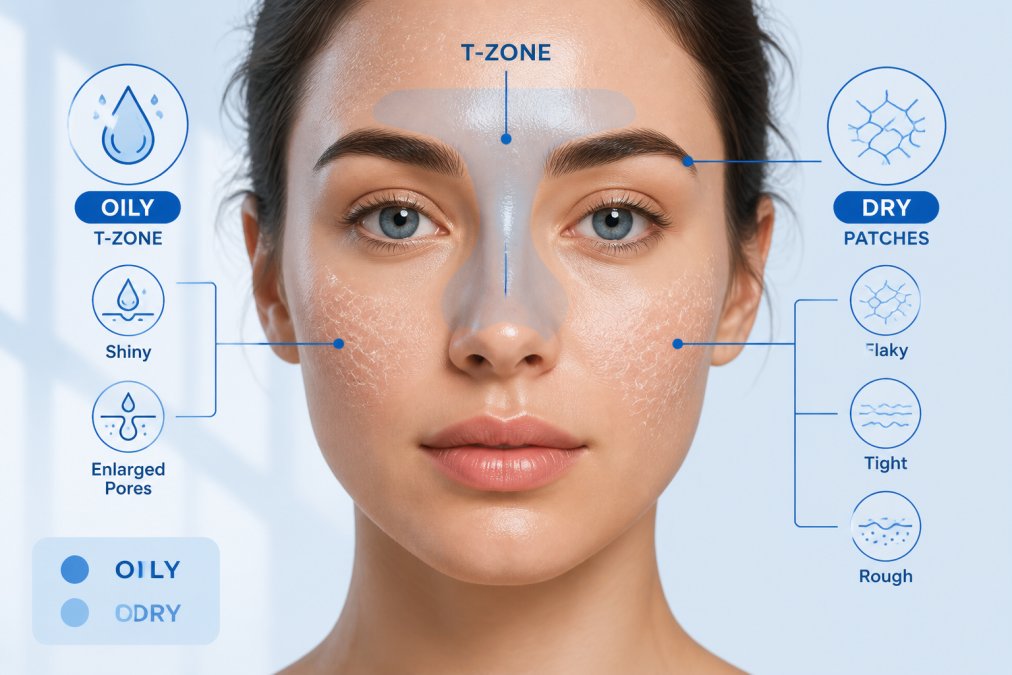
The key distinction: dehydrated oily skin is about water loss, not oil deficiency. Your skin produces plenty of sebum but doesn't retain moisture beneath that oil layer because ceramides and other lipids that form your skin barrier have become depleted. When the barrier weakens, transepidermal water loss increases, and your skin compensates by producing even more oil.
Common signs include rough or sandpaper-like texture, visible flaking that doesn't improve with basic moisturizer, sensitivity to previously tolerated products, redness or irritation alongside oiliness, and a tight, uncomfortable feeling despite oily appearance.
Hormonal fluctuations also play a role. Many people notice dehydrated oily skin worsens during certain times of their cycle or during stress, when cortisol spikes and disrupts the skin barrier. Understanding that your dry patches are a barrier issue, not a skin type issue, changes how you treat them.
How to Repair Skin Barrier Damage
Repairing your skin barrier requires three core elements: ceramides, humectants, and occlusives.
Ceramides are the structural lipids your skin naturally produces. When your barrier is compromised, these become depleted. Apply ceramide-rich products containing ceramide NP, ceramide AP, or ceramide EOP, the forms your skin recognizes most effectively.
Humectants like hyaluronic acid and glycerin draw moisture into the skin's upper layers. Apply them to damp skin right after cleansing so they have water to bind to. Applying humectants to completely dry skin actually pulls moisture from deeper layers instead of adding it.
Occlusives seal everything in. Lightweight options like squalane, jojoba oil, or petrolatum create a protective layer without the greasy feeling heavy creams provide.
Layering order matters: apply products from thinnest to thickest consistency, water-based toner or essence, then serum, then lightweight moisturizer, then optional occlusive. This allows each product to absorb properly.
Over-cleansing is a major barrier-damaging habit. If you're washing your face more than twice daily or using hot water, you're stripping away natural oils faster than your skin can replace them. Switch to lukewarm water and a gentle, fragrance-free cleanser. Use the double cleanse at night (oil-based cleanser first, then water-based) and a single gentle wash in the morning.
Skincare Routine for Oily Skin with Dry Patches
Building an effective routine means choosing products that address both concerns without triggering sensitivity or excessive oiliness.
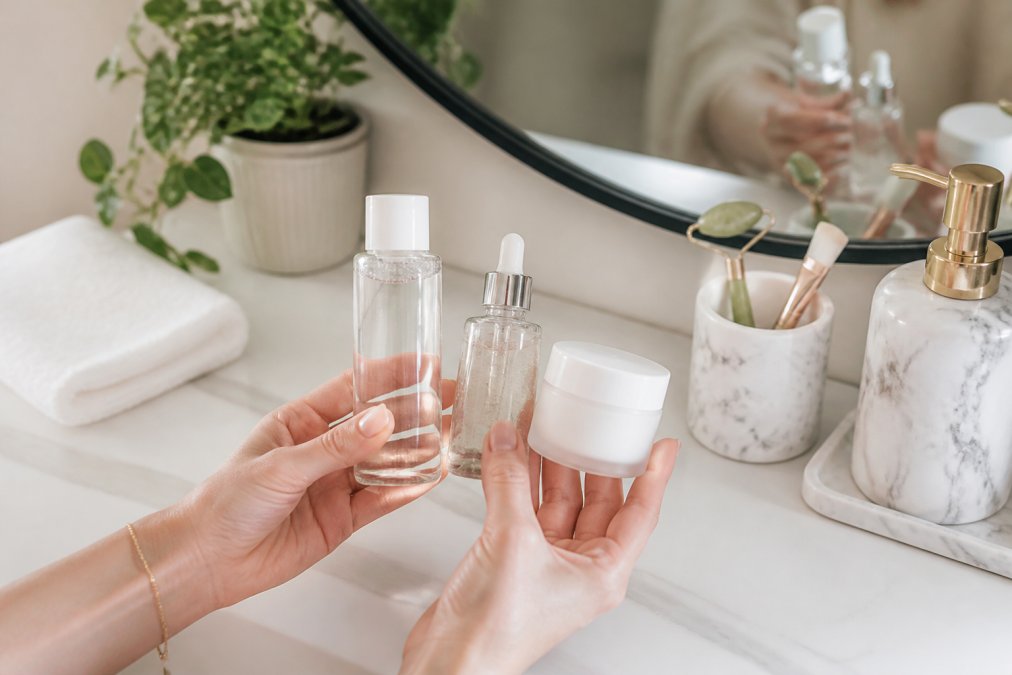
Morning Routine:
Cleanse with a gentle, fragrance-free cleanser and rinse with lukewarm water. Pat (don't rub) your skin dry. Apply a water-based toner or essence to damp skin to prep absorption of subsequent products.
Follow with a lightweight serum. The Aeran Skincare Bioactive Prebiotics Jelly Serum nourishes your skin's microbiome without adding heaviness. Your skin's microbiome is your first line of defense against irritation, so supporting it helps stabilize your barrier.

Apply a lightweight, non-comedogenic moisturizer with ceramides and hyaluronic acid. Finish with broad-spectrum SPF 30 or higher, sun damage accelerates barrier breakdown.
Evening Routine:
Cleanse with your gentle cleanser. Optionally use an oil-based cleanser first to dissolve makeup and sebum, then follow with your water-based cleanser.
Apply your water-based toner or essence to damp skin. The Aeran Skincare Glycolic Acid Exfoliating Toner removes dead skin cells that can trap bacteria and impede barrier repair. Use 2-3 times per week initially. Exfoliation helps other products penetrate more effectively, but over-exfoliating damages the barrier further.
Layer your serum next, then apply your moisturizer. Consider adding a lightweight occlusive like squalane on your driest areas, even a few drops pressed into damp skin provides significant occlusive benefits without greasiness.
Weekly Additions:
For oily areas alongside dry patches, the Aeran Skincare Purifying Toner with Salicylic Acid can be used 1-2 times weekly on your T-zone only. Salicylic acid is oil-soluble and penetrates pores effectively without irritating your compromised barrier. Avoid applying it to dry patches.
Use a hydrating sheet mask 1-2 times weekly for a hydration boost. These deliver concentrated doses of humectants and accelerate barrier repair when used consistently.
What to Avoid:
Fragrance, essential oils, and alcohol-based products irritate your compromised barrier. Read ingredient lists carefully, "fragrance" or "parfum" can hide dozens of irritating compounds. Fragrance-free products are non-negotiable when your barrier is damaged.
Avoid over-exfoliating. Physical scrubs are too harsh for barrier-compromised skin. If you exfoliate, stick to chemical exfoliants like AHAs or BHAs used 1-3 times weekly maximum.
Skip heavy silicones and dimethicone-heavy products temporarily. While silicones aren't inherently bad, they can sit on top of a weakened barrier and prevent repair products from working effectively.
Patch-test any new product on a small area first. Introduce one product at a time, waiting 1-2 weeks between additions, to identify what works and what triggers irritation.
Treating dry patches on oily skin requires patience and the right product combination. Most people see meaningful improvement within 4-6 weeks of consistent barrier-focused care. At Aeran Skincare, we've formulated our products specifically for this challenge: barrier-first, clean ingredients, and ceramide-rich formulations designed to support sensitive, compromised skin. Start with a gentle routine, introduce barrier-repair products like our Bioactive Prebiotics Jelly Serum, and resist adding too many actives at once. Your skin will thank you with clearer texture, reduced irritation, and that balanced, healthy appearance you're after.
Frequently Asked Questions
Is it possible to have oily skin with dry patches?
Yes. Oily skin with dry patches occurs when your skin barrier is compromised. Your skin may overproduce sebum to compensate for dehydration, while certain areas lack the ceramides and lipids needed to retain moisture. This creates a frustrating mix: oiliness in some zones and flakiness or tightness in others. The root cause is often over-cleansing, dehydration, or using products that disrupt your skin barrier.
What causes dry patches on an oily face?
Dry patches on oily skin usually result from a damaged moisture barrier. Over-washing, harsh exfoliants, or fragrance-based products strip away ceramides and lipids that protect your skin. Environmental stress, hormonal fluctuations, and dehydration also weaken the skin barrier. When your barrier is compromised, transepidermal water loss increases, leaving some areas parched while oil production spikes elsewhere to compensate.
How to repair skin barrier damage?
Repair your skin barrier by using gentle cleansing, avoiding harsh chemicals, and applying products rich in ceramides and humectants like hyaluronic acid and glycerin. Limit exfoliation to once or twice weekly. Focus on non-comedogenic, fragrance-free moisturizers that support lipid production. The Bioactive Prebiotics Jelly Serum nourishes your skin's microbiome, which strengthens barrier function. Avoid over-cleansing and allow your skin 2-4 weeks to recover.
Should I moisturize oily skin with dry patches?
Yes, absolutely. Oily skin with dry patches needs lightweight, oil-free moisturizers that hydrate without clogging pores. Skip heavy creams and choose water-based formulas with humectants and occlusives. Non-comedogenic moisturizers help restore your moisture barrier while keeping your T-zone balanced. Many people with oily skin skip moisturizer, which worsens dehydration and triggers more sebum production, a cycle that creates both oiliness and dryness.
This article was written using GrandRanker