
Repair Skin Barrier Without Clogging Pores: A Step-by-Step Guide
Table of Contents
- Signs of a Damaged Skin Barrier
- Why Your Skin Barrier Gets Compromised
- Non-Comedogenic Barrier Repair Cream: What Actually Works
- Step-by-Step Protocol for Repairing Skin Barrier Without Clogging Pores
- How Long to Heal Skin Barrier: Recovery Timeline
- Non-Comedogenic Oil Alternatives for Barrier Repair
- Transitioning Back to Actives Safely
- Common Mistakes That Delay Barrier Recovery
Repair Skin Barrier Without Clogging Pores: A Step-by-Step Guide
Last Updated: August 3, 2026
When your skin barrier is compromised, every product feels threatening. The stinging, redness, and flaking all point to one problem: a weakened protective layer that can't hold moisture or keep irritants out. Yet most barrier-repair creams are thick enough to suffocate your skin, trapping bacteria and triggering breakouts. This guide from Aeran Skincare covers the exact science of repairing skin barrier without clogging pores, showing you how to rebuild that crucial lipid barrier while keeping your complexion clear.
The challenge is finding formulations that repair the stratum corneum without introducing occlusive ingredients that compromise pore health.
Signs of a Damaged Skin Barrier
Your skin tells you when its barrier is failing through specific, visible signals.
Persistent redness, especially around cheeks and forehead, signals inflammation and irritants penetrating deeper. Flaking and tight patches appear because your skin can't retain moisture. Stinging sensations when applying even gentle products indicate micro-tears exposing nerve endings. Sensitivity that wasn't there before, products you've used for years suddenly sting, means the barrier can't filter what gets through. Some people experience increased breakouts alongside dryness: a damaged barrier allows bacteria to penetrate more easily while losing moisture that keeps skin healthy.
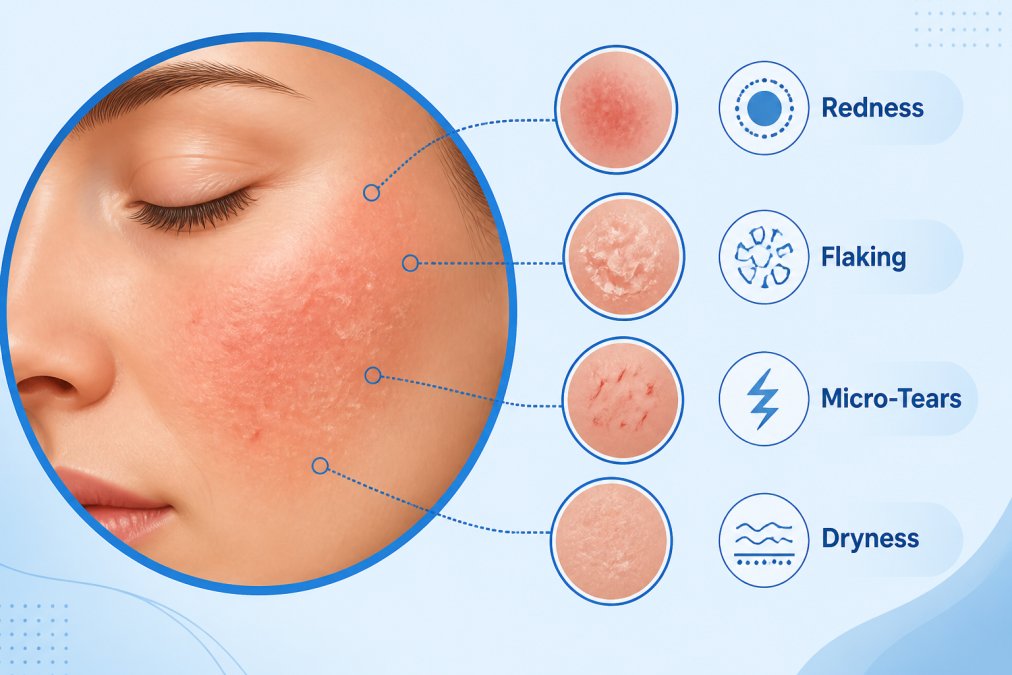
The combination of redness, flaking, and sensitivity is your skin's signal that the barrier needs immediate support.
Why Your Skin Barrier Gets Compromised
Causes of barrier dysfunction
Over-exfoliation is the most common culprit. Using physical scrubs, chemical exfoliants, or both simultaneously removes the lipids and keratinocytes that form your protective barrier. Daily use of AHAs, BHAs, retinoids, and vitamin C serums accelerates barrier breakdown faster than your skin can repair itself.
Harsh cleansers strip away ceramides and natural oils your barrier needs. Hot water compounds this problem by opening pores and increasing transepidermal water loss.
Environmental stressors play a significant role: cold, dry air pulls moisture from skin; UV exposure damages the lipid barrier directly; wind and pollution contribute to breakdown over time.
Certain skin conditions create predisposition to barrier damage. Eczema, rosacea, and acne-prone skin have naturally compromised barriers and are more vulnerable to damage from over-treatment.
Dietary and lifestyle triggers
High-sugar diets and processed foods trigger systemic inflammation, weakening your skin's barrier function. Alcohol dehydrates you at the cellular level, showing up first in your skin barrier.
Sleep deprivation impairs your skin's natural repair cycle. Your barrier repairs itself most actively during sleep; fewer than 6-7 hours means it never gets adequate recovery time.
Stress elevates cortisol, triggering inflammation and compromising barrier function. Chronic stress literally weakens your skin's protective layer. Smoking and vaping accelerate barrier aging through oxidative stress.
Systemic dehydration directly impacts barrier health. If you're not drinking enough water, your skin can't maintain the hydration levels needed to keep the stratum corneum functional.
Non-Comedogenic Barrier Repair Cream: What Actually Works
The right barrier-repair formulation combines specific ingredients that rebuild your lipid barrier without trapping bacteria or clogging pores.
Key ingredients for barrier repair
Ceramides are the foundation of any effective barrier-repair product. Your stratum corneum is made of ceramides, cholesterol, and fatty acids in a specific ratio. Ceramide 1, Ceramide 3, and Ceramide 6-II are most effective because they match what your skin naturally produces. Aeran Skincare's [Ceramide Barrier Night Cream](https://aeranskincare.com/products/ceramide-barrier-night-cream) ($36.00) focuses on ceramide delivery during the repair window when your skin is most receptive.

Niacinamide supports barrier repair by increasing ceramide and fatty acid production. It also reduces inflammation and helps regulate sebum production, making it ideal for compromised and acne-prone skin without clogging pores.
Hyaluronic acid draws water into the stratum corneum, plumping it and reducing flaking. It works best on damp skin and doesn't clog pores because it's a water-binding molecule, not an occlusive oil.
Oat extract soothes irritation and supports barrier repair through compounds that reduce inflammation and restore pH balance. It's gentle enough for sensitive, compromised skin.
Aloe juice reduces inflammation and provides hydration without heaviness. The Sensitive Skin Overnight Cream, Fragrance-Free ($28.95) from Aeran Skincare includes aloe juice for this reason.

Prebiotic ingredients like fermented plant extracts support your skin microbiome. When your barrier is damaged, this microbiome is disrupted. Products containing prebiotics help restore this protective ecosystem. The Bioactive Prebiotics Jelly Serum ($58.00) nourishes the microbiome directly.

Ingredients to avoid during recovery
Heavy occlusive oils like mineral oil, petrolatum, and coconut oil trap bacteria and trigger breakouts in acne-prone skin. Coconut oil has a comedogenic rating of 4 out of 5.
Fragrance and essential oils irritate compromised skin. Fragrance-free products are non-negotiable during barrier recovery. The Hydrating Toner ($25.75) from Aeran Skincare is formulated without fragrance because barrier repair requires eliminating unnecessary irritants.
Alcohol dehydrates your skin and disrupts barrier function. Avoid toners, serums, and creams with alcohol denat or SD alcohol.
Silicones like dimethicone can trap bacteria if your barrier is compromised. During barrier recovery, stick to silicone-free products.
Sulfates strip away natural oils and ceramides. Avoid them during barrier recovery.
Step-by-Step Protocol for Repairing Skin Barrier Without Clogging Pores
This protocol rebuilds your barrier while keeping pores clear.
Step 1: Simplify your cleansing routine
Use a gentle, non-comedogenic cleanser with lukewarm water. Hot water opens pores and increases transepidermal water loss. Use your fingertips or soft cloth, never a brush.
Cleanse once in the evening and rinse with water only in the morning. Pat your skin dry gently, never rub. Pat until slightly damp, leaving moisture for the next step.
Duration: 2 weeks minimum. This gives your barrier time to stop losing excessive moisture.
Step 2: Apply hydrating and occlusive layers
Within 60 seconds of cleansing, apply a hydrating toner or essence to damp skin. The Hydrating Toner ($25.75) restores pH balance while delivering hydration without heaviness.
Follow with a lightweight, non-comedogenic serum containing hyaluronic acid or glycerin.
Apply a barrier-repair cream while your skin is still slightly damp. This helps absorption and reduces pilling. Use a ceramide-rich formulation.
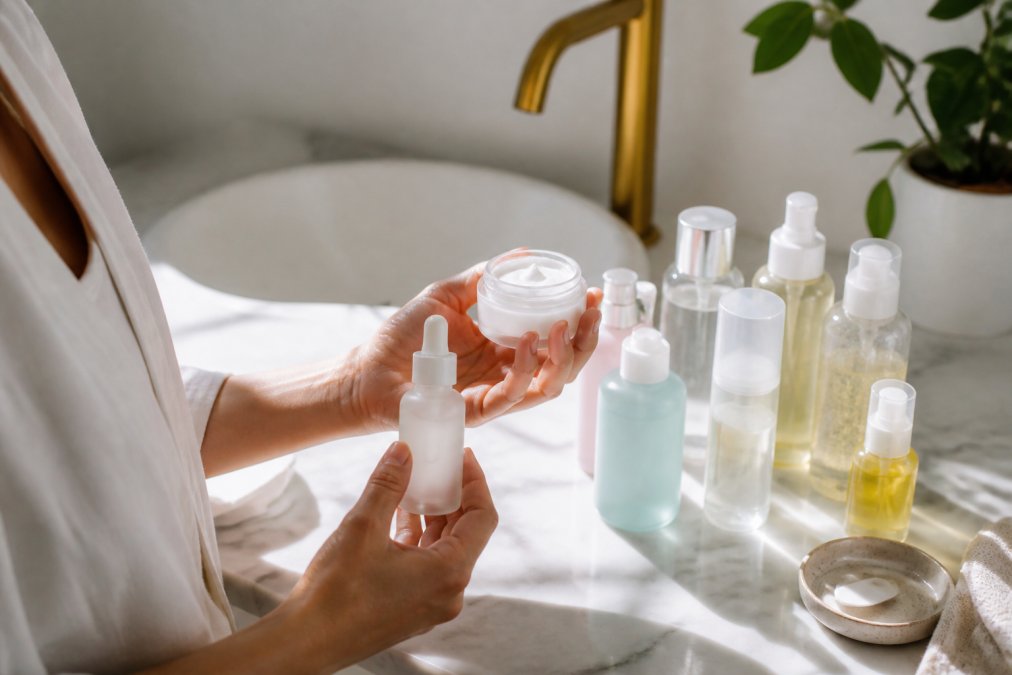
At night, use a richer cream designed for barrier repair. The Ceramide Barrier Night Cream ($36.00) is specifically formulated for the repair window.
Duration: 4-6 weeks. This allows your stratum corneum to regenerate.
Step 3: Support your skin microbiome
Introduce a prebiotic serum or essence after your hydrating toner but before your cream. The [Bioactive Prebiotics Jelly Serum](https://aeranskincare.com/products/bioactive-prebiotics-jelly-serum) ($58.00) nourishes this ecosystem without introducing irritants.
Avoid products with high concentrations of antimicrobial ingredients like benzoyl peroxide or salicylic acid during barrier recovery, as these disrupt your skin microbiome.
Duration: Ongoing. Your skin microbiome needs continuous support.
Step 4: Protect against transepidermal water loss
Use sunscreen with at least SPF 30 every morning, even indoors. UV exposure damages the lipid barrier directly. Mineral sunscreen is preferable during barrier recovery.
At night, consider a barrier-repair mask over your cream if your skin is extremely damaged. This should only be used short-term (1-2 weeks).
Duration: Throughout recovery and permanently after.
How Long to Heal Skin Barrier: Recovery Timeline
Barrier recovery follows a predictable timeline, though individual timelines vary based on damage severity.
Weeks 1-2: Initial stabilization. Your skin stops losing excessive moisture. Redness may persist, but stinging should decrease. Flaking may temporarily increase as dead skin cells shed.
Weeks 2-4: Active repair. The stratum corneum regenerates and your barrier begins rebuilding. Redness fades noticeably. Flaking decreases. Your skin feels less tight.
Weeks 4-6: Barrier strengthening. Your barrier is functionally repaired but not at full strength. Continue your barrier-repair routine for the full 6 weeks before introducing actives.
Week 6+: Maintenance and reintroduction. Your barrier is healed. Begin slowly reintroducing actives like retinoids or vitamin C at low concentrations, used no more than twice weekly initially.
Most people see significant improvement by week 3, which tempts them to reintroduce actives. Resist this urge. The barrier still needs 3-4 more weeks to reach full strength.
Non-Comedogenic Oil Alternatives for Barrier Repair
If you need additional hydration without heavy oils, these non-comedogenic alternatives work better for acne-prone skin.
Squalane is a lightweight, non-comedogenic oil with a comedogenic rating of 1-2. It mimics your skin's natural sebum, absorbs quickly, and doesn't leave a greasy residue.
Jojoba oil has a comedogenic rating of 2 and closely matches your skin's sebum composition. However, some acne-prone individuals still react to it, so patch-test first.
Plant-derived ceramides and fatty acids from safflower or sunflower seed oil provide barrier-repair benefits without the occlusive heaviness of mineral oil or petrolatum.
Glycerin is a humectant that provides hydration without any occlusive properties. It's non-comedogenic and works well for all skin types.
Avoid coconut oil, argan oil, and marula oil during barrier recovery if you have acne-prone skin, as these have higher comedogenic ratings.
Transitioning Back to Actives Safely
Once your barrier is fully healed at the 6-week mark, reintroduction requires careful protocol.
Start with the gentlest active: a low-concentration retinol (0.25-0.3%) or mild AHA (5-8%). Use it once weekly for two weeks. If tolerated, increase to twice weekly for two weeks, then increase concentration or frequency.
Wait at least 2-3 weeks after introducing one active before adding a second. Your barrier needs time to adjust.
Avoid combining multiple actives in the same routine for at least 4 weeks after barrier recovery.
Monitor your barrier carefully. If you see redness, flaking, or stinging, pause actives immediately and return to your simplified barrier-repair routine for 1-2 weeks.
Vitamin C serums and niacinamide can be reintroduced earlier (around week 4) because they support barrier function rather than compromise it.
Common Mistakes That Delay Barrier Recovery
Continuing to use actives while claiming to repair your barrier extends your healing timeline by 1-2 weeks per active used. Pause everything for 6 weeks and heal completely.
Over-moisturizing is another trap. Applying multiple heavy creams layers occlusive ingredients that trap bacteria. Stick to one lightweight hydrating layer and one barrier-repair cream.
Introducing too many new products at once makes it impossible to identify what's helping or hurting. Introduce one product every 3-5 days.
Skipping sunscreen directly damages the lipid barrier, undoing your repair work. Use SPF 30+ daily.
Using hot water and harsh cleansers contradicts the entire repair process. Every hot shower strips away the ceramides you're rebuilding.
Expecting results in 2 weeks is unrealistic. Your stratum corneum takes 4-6 weeks to regenerate. Compliance with the protocol matters more than specific products.
A compromised skin barrier feels like you're trapped between two impossible choices: accept redness and sensitivity, or use heavy products that trigger breakouts. The protocol above breaks this false choice by showing you how to rebuild your barrier with lightweight, non-comedogenic formulations. At Aeran Skincare, we've designed our ceramide-rich creams and prebiotic serums specifically to address this gap, barrier repair that works for acne-prone skin. Start with the Ceramide Barrier Night Cream and the Bioactive Prebiotics Jelly Serum to rebuild your barrier in 4-6 weeks without sacrificing your skin's clarity.
Frequently Asked Questions
What are the best non-comedogenic ingredients for skin barrier repair?
Ceramides, niacinamide, oat extract, and hyaluronic acid are top choices for barrier repair without clogging pores. Ceramides restore the lipid barrier by filling micro-tears in the stratum corneum. Niacinamide reduces inflammation and supports skin microbiome health. Oat extract soothes irritation and redness. Hyaluronic acid acts as a humectant, drawing moisture into the skin without leaving a greasy residue. Avoid heavy silicones, fragrance, and essential oils during recovery.
How long does it take to heal a damaged skin barrier?
Most people see visible improvement in 2-4 weeks with consistent care, though full barrier recovery typically takes 4-8 weeks. Timeline depends on severity: mild barrier damage (slight redness, slight dryness) heals faster than severe damage (persistent stinging, flaking, sensitivity to water). Consistent use of non-comedogenic moisturizers, ceramide-rich products, and sun protection accelerates healing. Avoid disrupting your barrier with actives, harsh cleansers, or over-exfoliation during this period.
Can a damaged barrier cause clogged pores?
Yes. A compromised barrier increases transepidermal water loss, forcing your skin to overproduce sebum to compensate. This excess oil, combined with dead skin cells and inflammation, clogs pores. Additionally, a weakened barrier allows bacteria to proliferate, worsening acne. Repairing your barrier with gentle cleansing, pH-balanced hydration, and non-comedogenic ingredients reduces both sensitivity and breakouts. This is why barrier repair often improves acne-prone skin without needing actives.
Should I stop using acne treatments while repairing my skin barrier?
Yes, pause actives like retinoids, acids, and benzoyl peroxide during the initial 2-4 week recovery phase. These ingredients increase inflammation and transepidermal water loss, which delays barrier healing. Once your barrier shows signs of recovery (reduced redness, no stinging, improved hydration), you can slowly reintroduce one active at a time, starting with the lowest concentration. Begin with once or twice weekly, then gradually increase frequency. Always patch-test first.
This article was written using GrandRanker