
Why Does My Skin Sting When Applying Moisturizer?
Table of Contents
- Why Does My Skin Sting When Applying Moisturizer: The Root Causes
- Damaged Skin Barrier Symptoms You Should Recognize
- Sensitive Skin Moisturizer Ingredients to Avoid
- Allergic Reaction to Moisturizer Symptoms vs. Barrier Irritation
- How to Repair Skin Barrier: A Step-by-Step Recovery Protocol
- When to See a Dermatologist About Stinging Skin
- Conclusion: Moving Beyond Stinging to Healthy Skin
Last Updated: July 31, 2026
When your skin stings while applying moisturizer, it's not a sign that the product is working, it's a red flag that something is wrong with your skin barrier. If you've ever wondered "why does my skin sting when applying moisturizer," you're not alone. This guide from Aeran Skincare covers the most common causes, from damaged barriers to ingredient sensitivities, and shows you exactly how to stop the stinging and rebuild healthy skin. Understanding the root cause is essential because the wrong response can make things worse.
The sensation of stinging, burning, or tightness when applying moisturizer typically signals one of three problems: a compromised skin barrier, an allergic reaction to a specific ingredient, or irritation from active ingredients you've used recently. Each requires a different solution. According to dermatological research, transepidermal water loss (TEWL) increases significantly when the skin barrier is damaged, which means your skin loses moisture faster and becomes hypersensitive to even gentle products.
Below, we'll walk you through exactly what causes the stinging, how to tell the difference between barrier damage and an allergic reaction, and a step-by-step protocol to repair your skin and stop the pain.
Why Does My Skin Sting When Applying Moisturizer: The Root Causes
The stinging sensation you feel isn't random, it's your skin's way of signaling distress. When your skin barrier is compromised, the protective lipid layer that normally shields your skin from irritants becomes weakened or damaged. This allows moisturizer ingredients (even gentle ones) to penetrate too deeply or trigger inflammation in exposed nerve endings.
The Compromised Skin Barrier and Transepidermal Water Loss
Your skin barrier, also called the stratum corneum, is a layer of dead skin cells bound together by ceramides, cholesterol, and fatty acids. When this barrier is intact, it regulates moisture and keeps irritants out. When it's damaged, transepidermal water loss accelerates, meaning water evaporates from your skin faster than it should. This creates a vicious cycle: your skin becomes dehydrated, more sensitive, and more reactive to everything you apply.
A compromised barrier often develops from over-exfoliation, harsh cleansers, or repeated use of active ingredients like retinoids and exfoliating acids without proper spacing. The acid mantle, your skin's naturally acidic protective layer, also becomes disrupted, raising the pH of your skin surface. When pH rises above the optimal 4.5-5.5 range, your skin becomes inflamed and hypersensitive. This is why applying any moisturizer, even fragrance-free and hypoallergenic options, can trigger stinging and burning sensations.
Micro-Tears and Inflammation in the Stratum Corneum
Beyond barrier damage, your skin can develop microscopic tears in the stratum corneum, the outermost layer of dead skin cells. These micro-tears expose nerve endings and allow moisture to escape. When you apply a moisturizer, the product contacts these exposed nerve endings, triggering the stinging sensation.
Inflammation amplifies this response. When your skin barrier is compromised, your immune system activates, sending inflammatory signals to the affected area. This inflammation makes your skin hypersensitive to everything, including ingredients that normally wouldn't cause irritation. Even water can sting on severely compromised skin. The combination of micro-tears, inflammation, and barrier dysfunction creates a perfect storm for product-induced stinging.
Damaged Skin Barrier Symptoms You Should Recognize
Recognizing barrier damage early helps you stop the cycle before it worsens. A damaged skin barrier displays consistent symptoms that go beyond simple dryness.
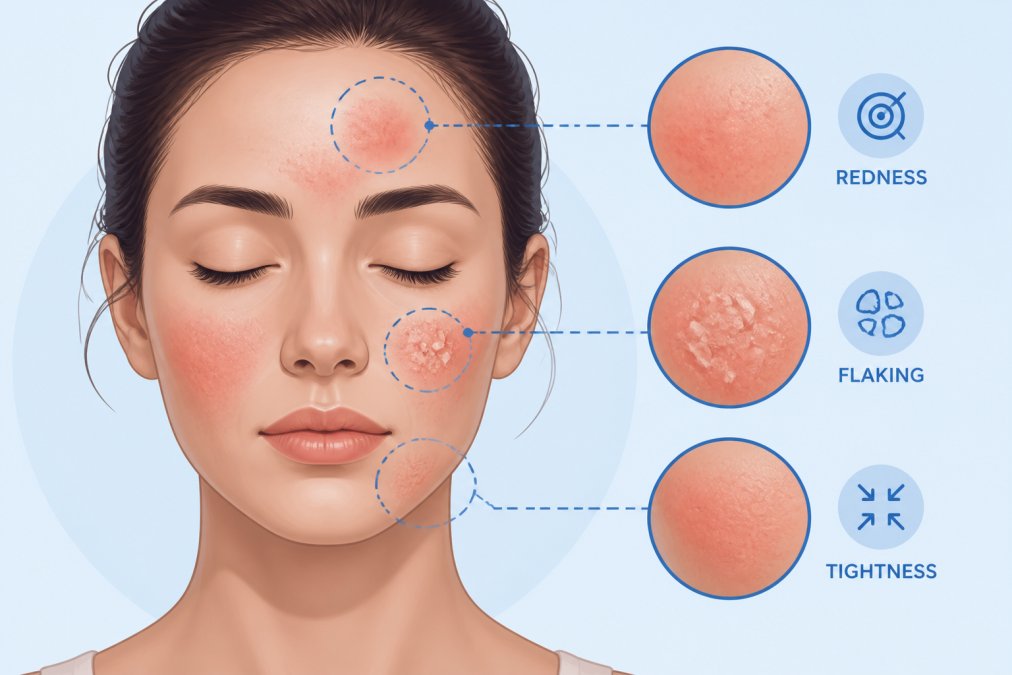
Redness and flushing appear first, often concentrated around the cheeks, forehead, or chin. Your skin may feel tight and uncomfortable, especially after cleansing or applying products. Flaking and rough texture develop as your skin loses its ability to retain moisture. Many people also experience persistent itching or a burning sensation that worsens when products are applied. Some notice their skin becomes oily in certain areas while remaining dry in others, this is your skin overcompensating by producing excess sebum to protect the damaged barrier.
Sensitivity to previously tolerated products is another key indicator. If a moisturizer or serum that worked fine for months suddenly causes stinging, your barrier has likely been compromised. Visible redness that doesn't fade quickly, increased reactivity to temperature changes, and a feeling of tightness even after moisturizing all point to barrier damage rather than a simple dry skin phase.
Sensitive Skin Moisturizer Ingredients to Avoid
Not all moisturizer ingredients are safe for compromised skin. Some common moisturizer components can trigger stinging or worsen barrier damage. Understanding which ingredients to avoid is critical when your skin barrier is already weakened.
Why Retinoids, Exfoliating Acids, and Fragrance Trigger Pain
Retinoids are vitamin A derivatives that increase cell turnover and collagen production. While beneficial for anti-aging and acne, retinoids are also highly irritating to compromised skin. They increase skin sensitivity and can cause stinging, redness, and peeling even at low concentrations. If your skin is already stinging from barrier damage, adding retinoids will make the problem worse. The same applies to exfoliating acids like glycolic acid, lactic acid, and salicylic acid. These ingredients dissolve the bonds between skin cells to promote turnover, but on a damaged barrier, they accelerate water loss and deepen inflammation.
Fragrance, whether synthetic or natural, is another major culprit. Fragrance molecules are small enough to penetrate the skin and can trigger irritation or allergic contact dermatitis. Even "fragrance-free" products sometimes contain fragrance masking agents that can cause stinging. Alcohol denat (denatured alcohol) is often included in skincare products as a preservative or to improve texture, but it disrupts the skin barrier and increases TEWL. Essential oils, despite their natural origin, are highly concentrated and can irritate sensitive or compromised skin.
Other problematic ingredients include sulfates (harsh cleansing agents), phenoxyethanol (a preservative that can trigger reactions), and high concentrations of glycerin without proper occlusive support. Glycerin is a humectant, it draws water from the environment into your skin, but on a damaged barrier, it can actually pull water from deeper skin layers if not sealed in with an occlusive ingredient like ceramides or oils.
The Double-Hit Effect: When Multiple Irritants Compound Stinging
The "double-hit" effect occurs when you combine two or more irritating ingredients or practices simultaneously. For example, using a retinoid at night and an exfoliating acid in the morning creates compounded irritation that overwhelms your barrier's ability to recover. Similarly, using a fragrance-containing moisturizer on top of freshly applied retinoid serum intensifies stinging and inflammation.
This effect also happens when you over-exfoliate (using multiple exfoliating products or exfoliating too frequently) while also using drying cleansers and skipping moisturizer. Each irritant alone might be manageable, but combined, they push your barrier past its breaking point. The stinging sensation becomes severe, and recovery takes significantly longer. Avoiding the double-hit effect means spacing active ingredients properly, using one active per day maximum, and always supporting your barrier with hydrating and occlusive ingredients.
Allergic Reaction to Moisturizer Symptoms vs. Barrier Irritation
Stinging skin can signal either a compromised barrier or an allergic reaction. Distinguishing between the two helps you choose the right solution. Barrier irritation and allergic reactions produce different symptoms and require different treatment approaches.
Barrier irritation typically develops gradually after repeated exposure to irritating ingredients or practices. Stinging is localized to areas where you applied the product and usually subsides within 30 minutes to a few hours. Redness fades, and the skin returns to normal (though still uncomfortable). Barrier irritation affects a broad area and is reproducible, applying the same product causes the same stinging response.
Allergic contact dermatitis, by contrast, often develops suddenly, even if you've used the product before. Stinging is accompanied by intense itching, hives, or a raised rash that spreads beyond the application area. Swelling may occur around the eyes or lips. Allergic reactions can worsen with repeated exposure and may cause systemic symptoms like difficulty breathing if severe. Allergic reactions are typically reproducible only with that specific ingredient, not with similar products.
To test whether you're experiencing barrier irritation or an allergic reaction, perform a patch test: apply a small amount of the suspected product to your inner arm or behind your ear and wait 24-48 hours. If redness, swelling, or itching develops, you likely have an allergic reaction. If nothing happens, the stinging is probably barrier irritation triggered by the product's irritating ingredients rather than an allergy.
How to Repair Skin Barrier: A Step-by-Step Recovery Protocol
Repairing a damaged skin barrier takes time, but following a structured protocol accelerates healing. The process involves three phases: stopping the irritation immediately, rebuilding with barrier-supporting ingredients, and maintaining skin health long-term.
Step 1: Stop the Irritation Immediately
The first step is to halt all products that could be irritating your skin. This means stopping retinoids, exfoliating acids, vitamin C serums, and any products containing fragrance, alcohol, or essential oils. Discontinue double cleansing if you're doing it, use only a gentle, pH-balanced cleanser once daily. Avoid hot water; use lukewarm water instead, as heat increases inflammation and TEWL.
Strip your routine down to the absolute essentials: a gentle cleanser, a hydrating serum or toner, and a barrier-repair moisturizer. Your goal is to create a calm, non-irritating environment where your skin can begin healing. Expect this phase to last 1-2 weeks. During this time, you may notice your skin still feels uncomfortable, but stinging should decrease noticeably. If stinging persists after a week of using only gentle products, you may have an allergic reaction, stop the suspected product immediately and consult a dermatologist.
Step 2: Rebuild With Ceramides, Hypoallergenic Ingredients, and pH Balance
Once acute stinging subsides, introduce barrier-repairing ingredients. Ceramides are the most important. These lipids are naturally present in your skin barrier and directly repair damaged areas. Look for ceramides labeled as ceramide NP, ceramide AP, or ceramide EOP. Hypoallergenic moisturizers designed for sensitive skin contain ceramides alongside other barrier-supporting ingredients like cholesterol and fatty acids.
The Aeran Skincare Ceramide Barrier Night Cream is specifically formulated to support barrier repair with ceramides and fatty acids that mimic your skin's natural lipid composition. Apply it as the final step in your routine at night, allowing it to work while you sleep. The overnight application gives the formula time to deeply penetrate and support your skin's natural repair processes.
pH balance is equally important. Your skin's optimal pH is 4.5-5.5. After barrier damage, pH rises, perpetuating inflammation. Use a pH-balanced toner or essence before your moisturizer to lower pH and reduce irritation. Glycerin is beneficial during this phase, it's a humectant that draws moisture into your skin. Apply it to damp skin, then seal it in immediately with your ceramide-rich moisturizer to prevent TEWL.
| Step | Duration | Key Action | Expected Outcome |
|---|---|---|---|
| Stop irritation | 1-2 weeks | Eliminate all irritants; use only gentle cleanser + basic moisturizer | Stinging decreases; skin feels calmer |
| Rebuild barrier | 2-4 weeks | Introduce ceramides, pH-balancing products, hydrating ingredients | Reduced sensitivity; less redness; improved texture |
| Support microbiome | Ongoing | Use prebiotic ingredients; maintain gentle routine | Skin becomes resilient; stinging stops |
Step 3: Support Your Skin Microbiome During Recovery
Your skin's microbiome, the community of bacteria, fungi, and other microorganisms living on your skin, plays a crucial role in barrier health. A damaged barrier often means a disrupted microbiome. Prebiotics feed beneficial microorganisms and help restore balance. The Aeran Skincare Bioactive Prebiotics Jelly Serum nourishes your skin microbiome while providing hydration. Apply it before your moisturizer to support microbial balance and strengthen your barrier.
The Microbiome Prebiotics Face Mist is another excellent tool for maintaining microbiome health throughout the day. A quick spritz rehydrates your skin and reinforces the microbiome-supporting ingredients. Use it whenever your skin feels tight or uncomfortable.
During this phase, continue avoiding all irritating ingredients. Introduce one new product at a time, waiting 3-5 days between additions to ensure no stinging returns. If stinging reappears, stop the new product immediately and return to your simplified routine. Recovery typically takes 4-6 weeks, though severely compromised barriers may need 8-12 weeks.
When to See a Dermatologist About Stinging Skin
While most cases of stinging skin resolve with barrier repair, some situations require professional evaluation. If stinging persists after 2 weeks of using only gentle, fragrance-free products, schedule an appointment with a dermatologist. Persistent stinging despite barrier repair efforts may indicate an underlying skin condition like rosacea, seborrheic dermatitis, or a contact allergy that requires professional diagnosis.
Seek immediate dermatological care if you experience severe swelling, difficulty breathing, widespread rash, or signs of infection (pus, warmth, fever). These symptoms suggest a severe allergic reaction or infection that needs urgent attention. Additionally, if your skin develops signs of dermatitis or eczema, intense itching, cracking, or weeping lesions, professional evaluation is necessary to rule out conditions that mimic barrier damage but require different treatment.
A dermatologist can perform patch testing to identify specific allergens, assess your barrier function, and recommend prescription-strength barrier repair products if needed. They can also rule out underlying conditions that might be causing your stinging and recommend targeted treatments.
Stinging skin when applying moisturizer is frustrating, but it's also fixable. The key is identifying the cause, barrier damage or allergic reaction, and responding appropriately. By stopping irritants, rebuilding with ceramides and pH-balanced products, and supporting your skin microbiome, you can restore comfort and resilience.
Aeran Skincare's barrier-first formulations are specifically designed for this recovery process. The Sensitive Skin Overnight Cream provides gentle hydration without irritants, the Ceramide Barrier Night Cream delivers targeted barrier repair, and the Bioactive Prebiotics Jelly Serum supports long-term skin health. Start your barrier repair journey today and experience the difference that truly supportive skincare makes.

Frequently Asked Questions
Is it normal for moisturizer to sting a little?
No, stinging is not normal and indicates a problem. A healthy skin barrier should not react painfully to moisturizer. Stinging signals either a compromised barrier with micro-tears, transepidermal water loss, or an allergic reaction to specific ingredients. Immediate action is needed to identify the cause and rebuild your acid mantle. If stinging persists after switching products, consult a dermatologist.
What ingredients in moisturizer cause stinging and should I avoid?
Common culprits include fragrance, essential oils, retinoids, exfoliating acids (AHAs/BHAs), and high concentrations of alcohol. If your skin barrier is compromised, even 'gentle' ingredients like glycerin or hyaluronic acid can sting if applied to damaged stratum corneum. Always patch test first. Look for fragrance-free, dermatologist-tested formulas with ceramides and occlusives instead, these support barrier repair without irritation.
How do I know if my skin barrier is damaged versus having an allergic reaction?
Barrier damage causes stinging, tightness, flaking, and redness that worsen with most products. Allergic contact dermatitis typically includes intense burning, hives, or swelling within minutes. Barrier issues develop gradually; allergies are sudden. Test products on a small patch first. If stinging improves when you use only fragrance-free, ceramide-rich moisturizers, your barrier is likely compromised. Severe or spreading reactions warrant a dermatologist visit.
Can over-exfoliation cause my moisturizer to sting?
Yes, over-exfoliation is one of the leading causes of barrier damage and stinging. Retinoids, acids, and physical scrubs strip the stratum corneum and acid mantle, leaving micro-tears exposed. Even gentle moisturizers will sting on over-exfoliated skin. Stop all active ingredients immediately, switch to fragrance-free, ceramide-based products, and allow 4-6 weeks for recovery. Avoid the double-hit effect by never combining multiple exfoliants.
This article was written using GrandRanker