


Why Is My Skin So Dry Even When I Moisturize?
Table of Contents
- Why Your Moisturizer Isn't Enough: The Barrier Problem
- Is My Skin Dehydrated or Dry? The Difference That Changes Everything
- How to Repair a Damaged Skin Barrier So Moisture Stays In
- What Else Keeps Your Skin Dry No Matter What You Do
- Frequently Asked Questions
Last Updated: September 14, 2026
Why Your Moisturizer Isn't Enough: The Barrier Problem
If you keep asking why is my skin so dry even when I moisturize, the answer usually isn't your moisturizer, it's your barrier. At Aeran Skincare, we see people layer on cream, feel relief for an hour, then watch tightness and flaking return by mid-afternoon.
Your skin barrier is the outermost layer of skin, made of skin cells bonded together by lipids like ceramides and fatty acids, that holds water in and keeps irritants out (Skin Lipid Barrier: Structure, Function and Metabolism). When that lipid layer breaks down, moisture escapes faster than any moisturizer can replace it, transepidermal water loss, and the real reason a good cream can feel like it's doing nothing.
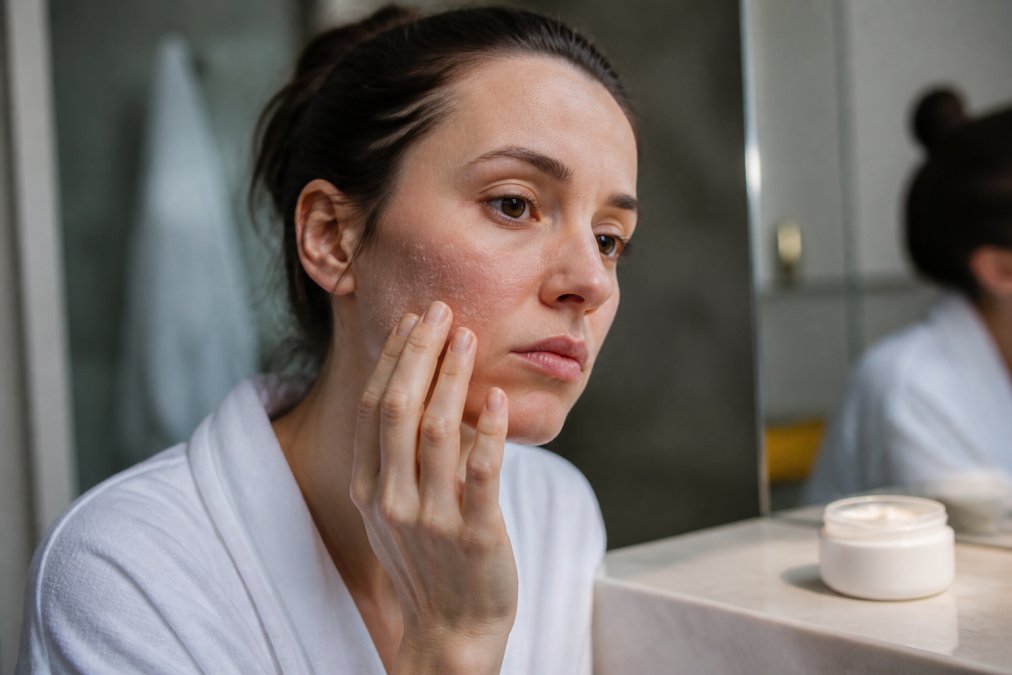
Is My Skin Dehydrated or Dry? The Difference That Changes Everything
Dehydrated skin lacks water; dry skin lacks oil (the American Academy of Dermatology). They feel similar but need different fixes, heavy occlusives on oil-dry skin can clog pores without addressing water loss underneath.
Tight but shiny skin is likely dehydrated; rough, flaky skin with no oily sheen is likely dry, and many people are both. Humectants like glycerin and hyaluronic acid pull water into the upper layers, while emollients and occlusives seal it in (Moisturizers). You need both, in the right order.
| Concern | What's Missing | Best Ingredients | Aeran Skincare Pick |
|---|---|---|---|
| Dehydrated skin | Water | Humectants, prebiotics | Barrier Mist, $18 |
| Dry skin | Oil and lipids | Ceramides, fatty acids | Ceramide Barrier Night Cream, $42 |
| Compromised barrier | Barrier lipids | Ceramides, niacin | Barrier Biome Serum, $58 |
How to Repair a Damaged Skin Barrier So Moisture Stays In
Repairing a damaged skin barrier means rebuilding its lipid layer while stopping the habits that strip it, removing what's breaking the barrier matters more than adding products.

Start here:
- Stop over-cleansing; once at night is enough for most people.
- Drop hot showers and hot water on your face.
- Pause harsh exfoliation and retinoids until tightness fades.
- Apply moisturizer to damp skin within a minute of washing, layering humectant, then emollient, then occlusive.
Technique matters: moisturizer on dry skin sits on the surface, while damp skin traps that water where it counts.
What Else Keeps Your Skin Dry No Matter What You Do
Environmental factors, hard water, and stress quietly work against your routine: low humidity pulls water from skin all day, hard water leaves mineral residue that disrupts pH and the microbiome, and chronic stress raises cortisol, slowing barrier repair.
Nutrient deficiencies in niacin, zinc, or iron can also show up as persistent dryness no cream fixes. If your routine is solid and skin still won't cooperate, raise it with a dermatologist.
Ingredient incompatibility is another hidden culprit, retinoids, acids, and some cleansers aggravate each other when layered wrong. Patch test one new product at a time rather than overhauling everything at once.
Dry, reactive skin that won't respond to moisturizer usually needs barrier repair, not more product. Aeran Skincare builds barrier-first formulas around ceramides, prebiotics, and clean, fragrance-free ingredients for sensitive, compromised skin: the Ceramide Barrier Night Cream rebuilds lipids overnight, the Barrier Biome Serum strengthens your skin's microbiome, and the Barrier Mist adds lightweight hydration. Get started with Aeran Skincare and give your barrier what it actually needs.

Frequently Asked Questions
How do I fix dry skin even after moisturizer?
If skin stays dry after moisturizing, the barrier is likely letting water escape faster than you can add it. Look at what you apply before moisturizer: harsh cleansers, alcohol-based toners, and over-exfoliation strip the lipid layer. Apply moisturizer within three minutes of washing, while skin is still damp, and layer a humectant serum underneath. Seal everything with an occlusive or facial oil at night. If tightness and flaking continue for weeks, see a dermatologist to rule out a skin condition.
What is the 3-minute rule for moisturizer?
The 3-minute rule means applying moisturizer within three minutes of washing your face or stepping out of the shower. Skin is still damp, so humectants like glycerin and hyaluronic acid pull that water in rather than pulling it from deeper layers. Wait longer and the surface dries out, so the moisturizer has less to trap. On a practical level, keep your moisturizer next to the sink so you don't skip this step.
Can over-exfoliating cause dry skin?
Yes. Exfoliating acids and scrubs remove dead cells, but use them too often and they also strip the ceramides and fatty acids that hold your barrier together. The result is skin that feels tight, stings when you apply products, and flakes no matter how much moisturizer you use. Cut back to once or twice a week, skip physical scrubs, and give your barrier two to three weeks to recover before reintroducing exfoliation.