
Common Skincare Ingredients That Cause Irritation
Table of Contents
- Common Skincare Ingredients That Cause Irritation
- Signs of Allergic Reaction to Skincare
- Skincare Patch Testing Guide
- Frequently Asked Questions
Last Updated: September 19, 2026
Common Skincare Ingredients That Cause Irritation
Contact dermatitis from cosmetics sends people to dermatologists every day, and the culprit is usually a product they trust. The common skincare ingredients that cause irritation are preservatives, surfactants, fragrance, dyes, and certain metals. At Aeran Skincare, we formulate barrier-first products because these reactions trace back to ingredients most people never check.
A reaction can show up days after you started something new, making the source hard to pin down.
Below: which ingredients cause trouble, how to spot a reaction early, and how to patch test before a full-face application.
Signs of Allergic Reaction to Skincare
An allergic reaction to skincare usually shows up as redness, itching, burning, or small bumps within hours to days. Irritant contact dermatitis stings immediately; allergic contact dermatitis develops more slowly (pubmed.ncbi.nlm.nih.gov). Watch for swelling, flaking, or a rash spreading beyond the application site.
If you notice any of these, stop using the product and let your skin barrier recover.
Skincare Patch Testing Guide
A patch test is the only reliable way to check whether a product will trigger your skin before you commit to your whole face. Apply a small amount behind your ear or on your inner forearm, cover it, and wait 48 hours. If no redness, itching, or burning appears, try it on a larger area.
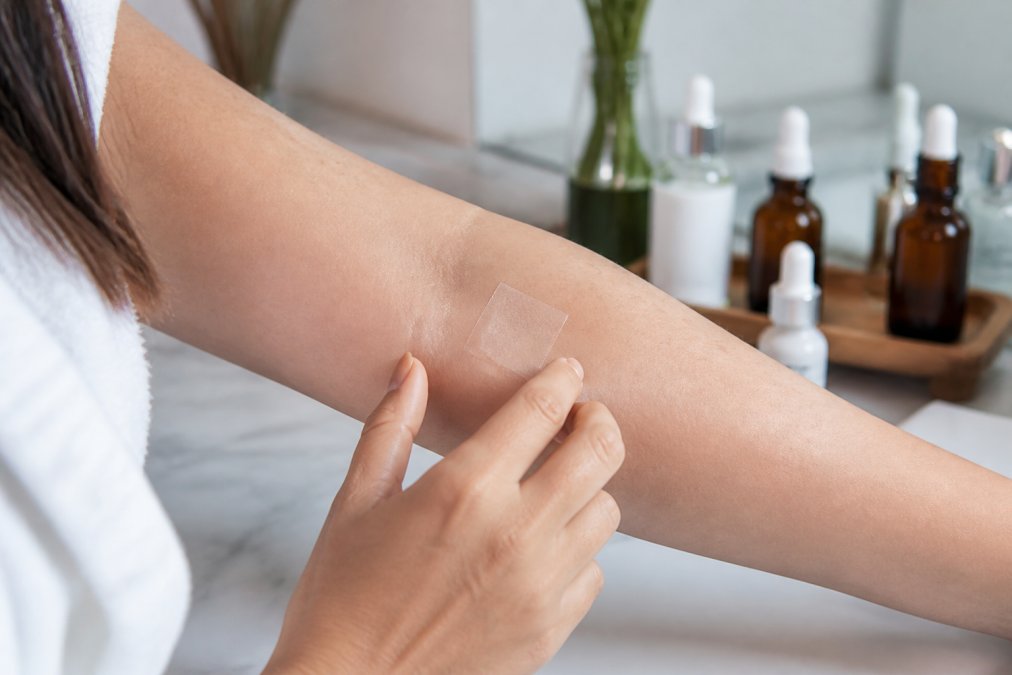
Here is how to run one properly:
- Clean and dry a patch behind your ear or on your inner forearm
- Apply a pea-sized amount
- Cover with a bandage for 24 to 48 hours
- Remove it and check for redness, swelling, or itching
- Wait another 24 hours to catch delayed reactions
For a compromised skin barrier, a gentle starting point makes testing easier. The Calm Foam Wash cleanses without stripping, and the Barrier Mist supports the barrier while you figure out what your skin tolerates.


| Ingredient Group | Why It Irritates | Safer Alternative |
|---|---|---|
| Sulfates (SLS) | Strips natural oils, disrupts pH balance | Low-lather, gentle cleansers |
| Parabens | Can trigger sensitization in reactive skin | Phenoxyethanol-based preservation |
| Synthetic fragrance | Leading cause of allergic contact dermatitis | Fragrance-free formulas |
| Essential oils | Natural does not mean non-irritating | Unscented botanical extracts |
| Synthetic dyes | Pigments can cause redness and itching | Uncolored formulations |
Frequently Asked Questions
What ingredients can cause skin irritation?
Common culprits include synthetic fragrances, essential oils, preservatives like parabens and formaldehyde-releasers, sulfates such as sodium lauryl sulfate, and chemical dyes. Even beneficial actives like glycolic acid and salicylic acid can trigger irritation if overused. Fragrance-free and hypoallergenic formulas reduce risk, but always check labels because 'unscented' products may still contain masking fragrances that trigger contact dermatitis.

How can I tell if a skincare product is causing irritation?
Watch for redness, itching, burning sensation, or inflammation within minutes to hours of topical application. Irritant contact dermatitis tends to appear quickly on the area of use, while allergic contact dermatitis may take 24 to 72 hours and spread beyond the application site. Stop using the product and patch test on your inner arm before trying it again, or consult a dermatologist if symptoms persist.
How do I repair a damaged skin barrier from irritation?
Strip your routine back to a gentle cleanser, a fragrance-free moisturizer, and sunscreen. Look for ceramides, hyaluronic acid, and prebiotics that support the skin barrier and restore pH balance. Avoid exfoliating acids, retinol, and essential oils until redness and itching subside. A product like Barrier Biome Serum delivers prebiotics and hyaluronic acid to help calm sensitization and rebuild resilience over several weeks.
Most people react to one or two ingredient families, not everything at once. If your skin is reactive, dry, or compromised, start with fragrance-free, barrier-supporting formulas and patch test every new addition. Aeran Skincare builds ceramide-based, Scandinavian-formulated products for exactly this kind of skin. Get started with Aeran Skincare and give your barrier the support it needs to stay calm.