
Why Your Face Stings When Applying Moisturizer
Table of Contents
- Why Your Face Stings When Applying Moisturizer
- Signs of a Damaged Skin Barrier
- How to Repair Your Skin Barrier and Stop the Stinging
- Frequently Asked Questions
Last Updated: September 29, 2026
Why Your Face Stings When Applying Moisturizer
When your face stings moisturizer application occurs, your skin barrier is compromised. This outermost layer protects against irritants and locks in moisture; when damaged, even gentle products cause burning, stinging, or redness.
Facial stinging stems from over-exfoliation, harsh products, environmental stress, or dehydration, all compromise your barrier and cause stinging when moisturizer is applied.
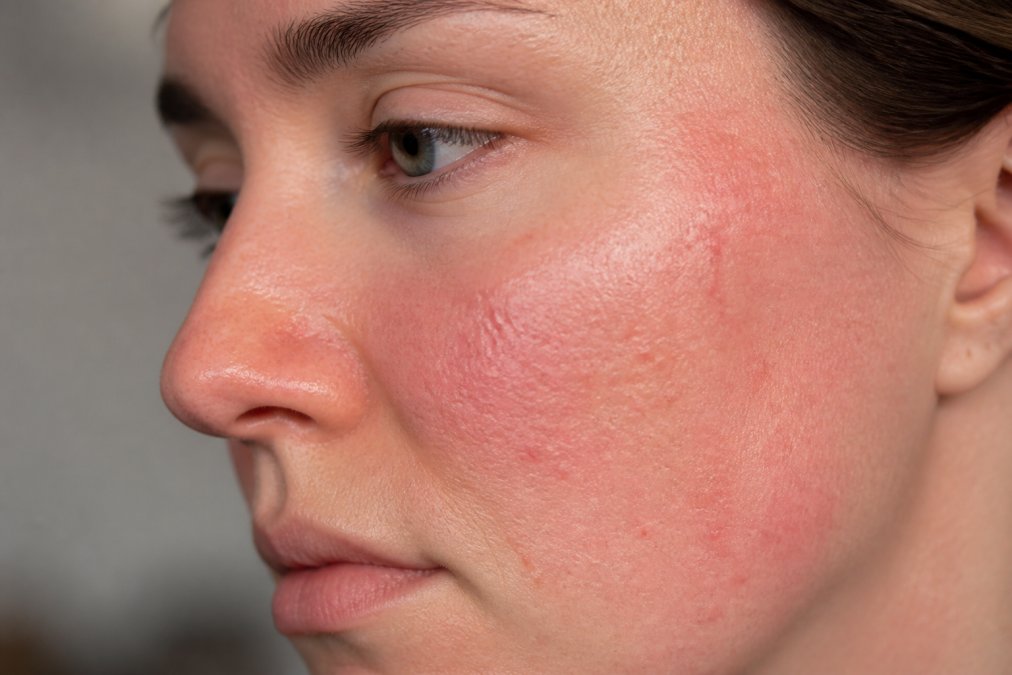
Signs of a Damaged Skin Barrier
A compromised barrier shows tightness, redness, burning, micro-tears, flaking, or a sandpapery texture.
Barrier irritation occurs immediately upon product application; allergic reactions develop over hours or days and include itching, hives, or swelling.
Transepidermal water loss increases when your barrier weakens, causing moisture to escape faster and triggering excess oil production that worsens the problem.
Environmental triggers, cold air, low humidity, wind, pollution, indoor heating, and sun exposure, stress a weakened barrier and compound product irritation.
How to Repair Your Skin Barrier and Stop the Stinging
Immediately stop all active ingredients, use fragrance-free gentle cleansers, apply moisturizer to damp skin, and skip exfoliation.
Ceramides are non-negotiable for barrier repair (pubmed.ncbi.nlm.nih.gov). These lipids form the foundation of your skin barrier. According to dermatological research on skin barrier function, ceramides restore the lipid layer that protects against irritation and water loss.

Hyaluronic acid, sodium PCA, and glycerin bind water to skin, plumping it and reducing micro-tears.
Ceramide Barrier Night Cream →
Soothing ingredients like aloe vera, marine algae, and botanical extracts reduce inflammation and stinging.
Apply moisturizer to damp skin in gentle upward motions with fingertips, using enough product to create a protective layer.
pH-balanced, fragrance-free formulas reduce stinging by respecting your skin's natural acidic pH (4.5-5.5).
After recovery, introduce active ingredients slowly.
If your face stings moisturizer use, your barrier is signaling for help. Stop using active ingredients immediately and focus on barrier repair with ceramides, hyaluronic acid, and soothing botanicals. Aeran Skincare's Ceramide Barrier Night Cream delivers the ceramides and fatty acids your barrier needs to rebuild. Pair it with the Barrier Mist for hydration throughout the day.

Frequently Asked Questions
Does burning mean my moisturizer is working?
No. A stinging or burning sensation when applying moisturizer signals irritation, not efficacy. Your skin barrier may be compromised, allowing the product to penetrate too deeply or triggering inflammation. Healthy skin should feel soothed, not inflamed, after moisturizer application. If stinging persists, switch to fragrance-free, barrier-repair formulas with ceramides and hyaluronic acid that calm rather than irritate.
What ingredients should I avoid if my skin stings?
When your skin barrier is damaged, avoid active ingredients like retinoids, alpha hydroxy acids, and vitamin C, which increase permeability and irritation. Skip fragranced products, essential oils, and alcohol-based formulas. Instead, choose fragrance-free moisturizers with soothing agents like aloe vera, ceramides, and hyaluronic acid. These support barrier repair without triggering sensitivity or additional stinging.
How do I know if my skin barrier is damaged?
A damaged skin barrier shows stinging or burning upon product application, persistent redness, increased sensitivity to mild ingredients, dehydration despite moisturizing, and flushing or erythema. You may also notice micro-tears, rough texture, or heightened reactivity to environmental triggers. These signs indicate compromised lipid barriers and increased transepidermal water loss, requiring immediate barrier-repair focus with ceramides and gentle hydration.