


Fragrance-Free vs Unscented Skincare: Key Differences
Table of Contents
- Fragrance-Free vs Unscented Skincare: What's the Real Difference?
- Benefits of Fragrance-Free Skincare for Sensitive Skin
- How to Identify Hidden Fragrances in Skincare
- Fragrance-Free vs Hypoallergenic Skincare: Not the Same Claim
- Patch Testing: The Step Most People Skip
- What to Look For in a Fragrance-Free Formula
- Our Fragrance-Free Picks for Reactive Skin
- Making the Switch Without Wrecking Your Barrier
- Frequently Asked Questions
Last Updated: September 15, 2026
Fragrance-Free vs Unscented Skincare: What's the Real Difference?
Is fragrance free the same as unscented skincare? No. Fragrance-free means no fragrance ingredients were added; unscented means a product may still contain fragrance chemicals formulated to smell like nothing (the FDA). At Aeran Skincare, we build every formula around that distinction.
The FDA treats fragrance as a trade secret under FDA cosmetic labeling guidance, so one word can legally hide dozens of compounds, meaning an unscented bottle can still deliver a known sensitizer to your face.
Benefits of Fragrance-Free Skincare for Sensitive Skin
Fragrance is one of the most common causes of allergic contact dermatitis in cosmetics, and the ingredient dermatologists advise removing first when skin turns reactive. The benefits: fewer reactions, a calmer barrier, no masking agents or phthalates, and easier patch testing, for eczema, rosacea, or a struggling barrier, that's damage control, not preference.
American Academy of Dermatology on fragrance and skin reactions
How to Identify Hidden Fragrances in Skincare
Read the ingredient list, not the front of the bottle. Fragrance hides under dozens of names, and essential oils, botanical extracts, and "natural" aroma compounds cause reactions as often as synthetic perfume.
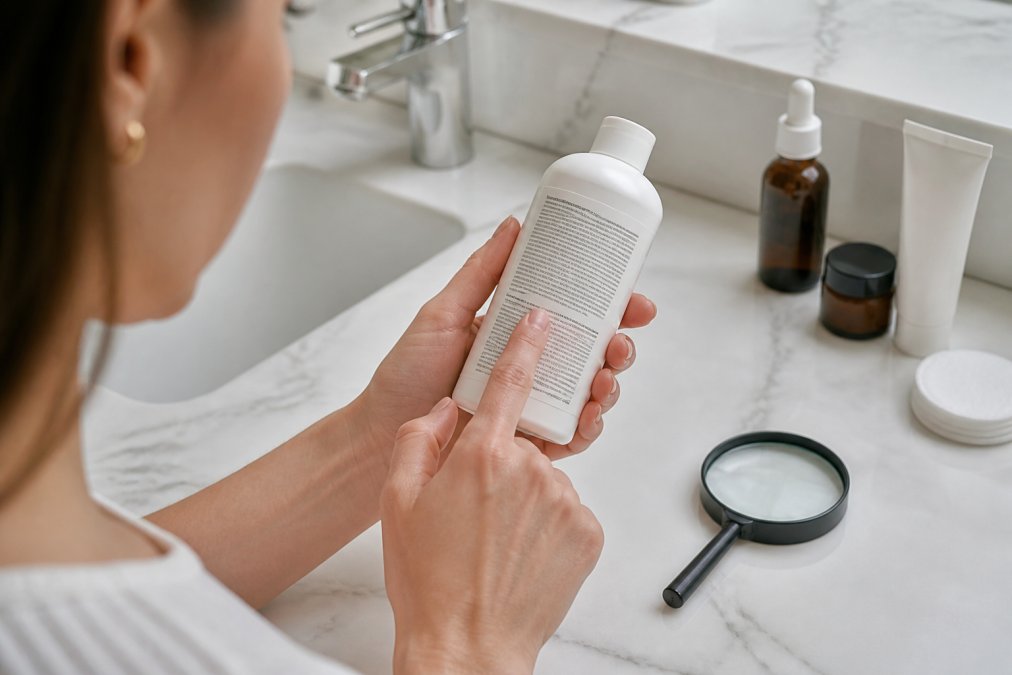
Watch for parfum/fragrance, essential oils (lavender, citrus, peppermint, eucalyptus, tea tree), botanical extracts (chamomile, rose, calendula), masking agents, and phthalates. Botanical does not mean non-irritating, if a product claims fragrance-free but lists any of these, it isn't.
Fragrance-Free vs Hypoallergenic Skincare: Not the Same Claim
Hypoallergenic means the manufacturer believes the product is less likely to cause a reaction; it is not a regulated standard. Fragrance-free is a specific, checkable claim, a product can be hypoallergenic and still contain fragrance, so for reactive skin, fragrance-free is the more useful label.
| Label | What It Actually Means | Regulated? | Best For |
|---|---|---|---|
| Fragrance-free | No fragrance ingredients added | Partially | Reactive, sensitive skin |
| Unscented | May contain masking fragrance | No | People who dislike scent only |
| Hypoallergenic | Maker claims lower reaction risk | No | General reassurance |
Patch Testing: The Step Most People Skip
Patch testing is the only reliable way to know how your skin responds to a formula. Clean and dry a small patch behind your ear or inner forearm, apply a pea-sized amount, leave it uncovered for 24 hours, check for a reaction, then wait another 24 hours. Introduce one new product at a time, if three go on your face the same night, you learn nothing about which one caused the reaction.
What to Look For in a Fragrance-Free Formula
Look for short ingredient lists, barrier-supporting actives, and a brand willing to name every component. Ceramides, hyaluronic acid, niacinamide, aloe, and centella repair without adding scent or irritation risk; avoid alcohol high on the list, added fragrance, or undisclosed "parfum."
Our Fragrance-Free Picks for Reactive Skin
Every formula below is fragrance-free and targets a different part of a barrier-repair routine: start with the serum for dullness or fine lines, add a toner for hydration, and finish with the night cream if your skin runs reactive.
| Product | Type | Price | Best For |
|---|---|---|---|
| Exosomes + Niacinamide Serum | Serum | $32.00 | Dullness, fine lines, barrier support |
| Rose Toner | Toner | $25.75 | Dehydration, dry and mature skin |
| Calm Night Cream | Moisturizer | $28.95 | Sensitive, redness-prone skin |
Exosomes + Niacinamide Serum pairs exosome technology with niacinamide, lactic acid, and hyaluronic acid to support renewal without irritation. Rose Toner uses rose water and hyaluronic acid to rebalance pH after cleansing; if you're avoiding all botanical extracts, patch test first. Salicylic Acid Toner handles oily and combination skin without added fragrance, exfoliating inside the pore where blemishes start. Calm Night Cream is the one I'd hand to anyone with reactive skin: aloe juice, hyaluronic acid, and marine algae calm redness overnight, free of added fragrance.

Making the Switch Without Wrecking Your Barrier
Switching to fragrance-free skincare is less about adding products and more about removing a variable: strip out anything with parfum, essential oils, or masking agents, patch test what's left, and introduce one product at a time.
Frequently Asked Questions
Which is better, unscented or fragrance-free?
Fragrance-free is generally better for sensitive skin because it contains no added fragrance or masking agents. Unscented products may use masking agents to neutralize odors, which can still trigger irritation. If your skin reacts easily, choose products labeled fragrance-free and check the ingredient list for terms like parfum or fragrance.
Is fragrance-free really fragrance-free?
Not always. Some products labeled fragrance-free may still contain essential oils or botanical extracts that act as fragrances. The FDA does not regulate the term fragrance-free, so always read the full ingredient list. Look for transparent brands that clearly state no added fragrance and list all components.
How can I tell if a product is truly fragrance-free?
Check the ingredient list for the words fragrance, parfum, aroma, or essential oils. If you see any of these, it is not truly fragrance-free. Also look for third-party certifications or brands that provide full ingredient transparency. When in doubt, patch test a small area before applying to your face.
Reactive skin doesn't need more products. It needs the right ones, and it needs them without hidden fragrance. Aeran Skincare builds barrier-first formulas with clean ingredients and ceramides, designed for sensitive, dry, and compromised skin. Start with the Calm Night Cream or the Exosomes + Niacinamide Serum, patch test it properly, and give your barrier the chance to recover. Get started with Aeran Skincare and build a routine your skin can actually tolerate.