


Fragrance-Free Skincare & Redness: What Actually Works
Table of Contents
- Can Fragrance-Free Skincare Prevent Redness?
- Common Skincare Ingredients That Cause Redness
- Unscented vs Fragrance-Free Skincare: The Critical Difference
- How to Calm Irritated Skin from Skincare Products
Last Updated: August 12, 2026
Can Fragrance-Free Skincare Prevent Redness?
Fragrance-free skincare doesn't prevent redness in the way you might think. It won't magically erase existing inflammation or reverse years of damage. What it does do is remove one of the most common triggers that keeps your skin in a state of constant irritation.
At Aeran Skincare, we've worked with many people whose skin turned red the moment they applied almost any product. The culprit wasn't always the active ingredients, it was the fragrance masking them. When they switched to truly fragrance-free formulations, their skin calmed down within days. That's not a cure. That's removing the obstacle.
The reality is this: your skin barrier function depends on stability. Every time you apply a product with fragrance, whether synthetic or essential oils, you're introducing volatile compounds that trigger inflammation. Your skin responds with redness, heat, and sometimes visible irritation. Remove the fragrance, and you remove that daily assault. What remains is a foundation you can actually build on.
Common Skincare Ingredients That Cause Redness
Beyond fragrance, several widely used skincare ingredients cause redness in sensitive skin. Understanding which ones affect you personally is the difference between a routine that works and one that leaves your face burning.

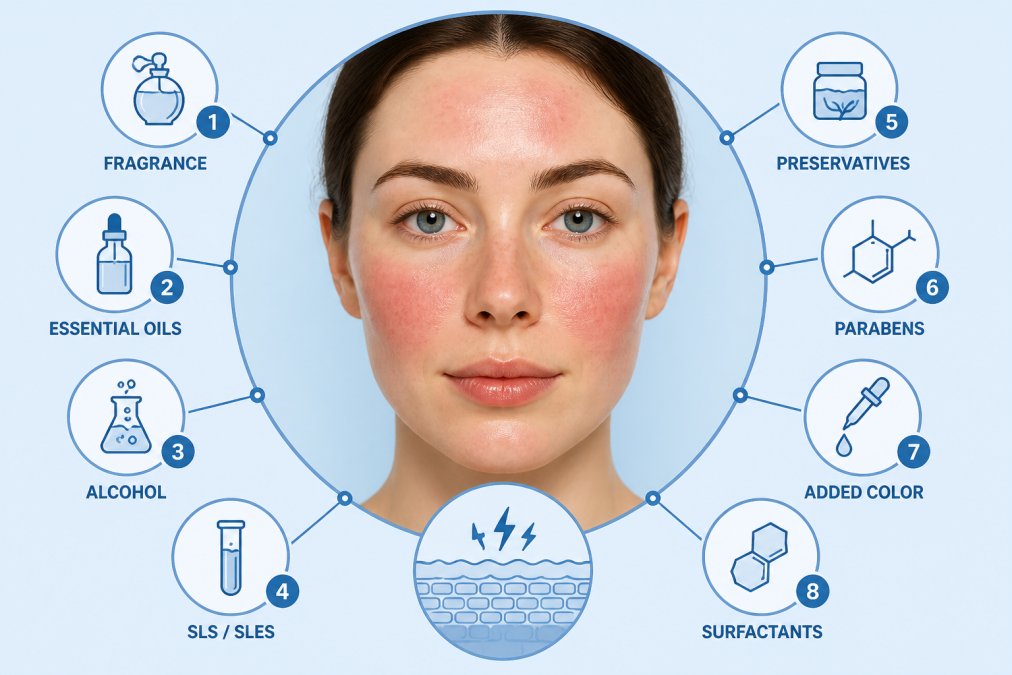
Essential oils are the first culprit people overlook. Lavender, tea tree, rose, these sound natural and calming, but they're volatile compounds that can trigger contact dermatitis and allergic reaction in reactive skin. The problem is that many "natural" skincare lines use them as fragrance without labeling them as such. You'll see them buried in ingredient lists under botanical extracts.
Alcohol denat (denatured alcohol) strips your skin barrier and causes transepidermal water loss. Products marketed as "purifying" or "clarifying" often contain this ingredient because it creates a temporary tightening sensation that feels like it's working. It's not. It's drying and irritating your skin barrier, which leads to more redness as your skin tries to compensate.
Fragrance masking agents deserve their own mention. Some brands label a product "unscented" while it actually contains fragrance designed to mask other odors. This is the loophole that catches most people. The fragrance is still there, still triggering inflammation, but the label doesn't say so.
Parabens and phthalates, while safe in the concentrations used, can trigger sensitivity in people with compromised skin barriers. They're not inherently dangerous, but they're also not necessary. Fragrance-free formulations often skip them entirely, which is one reason why switching to truly fragrance-free products makes such a visible difference.
The common thread: all of these ingredients trigger inflammation in different ways. Some damage your barrier directly. Others cause allergic reaction or irritant contact dermatitis. The result looks the same, redness, but the mechanism matters because it tells you what to avoid next.
Unscented vs Fragrance-Free Skincare: The Critical Difference
This distinction will change how you read ingredient lists forever. "Unscented" and "fragrance-free" are not synonyms, and the FDA doesn't require brands to use them consistently.
Fragrance-free means no fragrance was added to the formula. Period. Check the ingredient list, you won't find "fragrance," "parfum," or essential oils. What you see is what you get.
Unscented means the product contains fragrance, but it's been added specifically to mask other odors. The fragrance is still there. Your skin still reacts to it. The only difference is your nose doesn't notice it, which makes it even more dangerous because you won't realize what's triggering your redness.
This is why people say they tried "fragrance-free" products and still got red skin. They bought unscented products instead. The marketing language looked similar. The result was completely different.
When you're shopping, ignore the front label. Go straight to the ingredient list. Look for the word "fragrance" or "parfum." If it's there, the product is unscented, not fragrance-free. If it's not there, you've found something worth testing.
How to Calm Irritated Skin from Skincare Products
If your skin is already red and inflamed from a product reaction, the instinct is usually to layer on more products. That's backwards. Your first job is to stop the damage, then let your skin barrier repair itself.
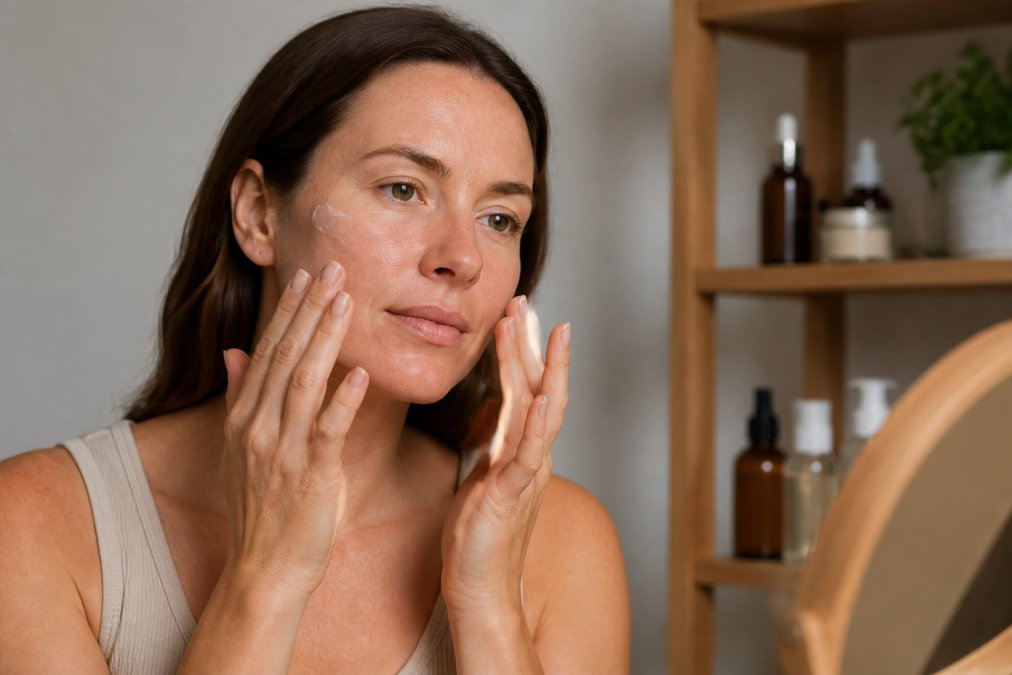
Step 1: Strip your routine to the absolute minimum. This means cleanser, moisturizer, and sunscreen only. Nothing else. No actives, no toners, no serums. Your skin barrier is compromised and needs stability, not complexity. Most people see significant improvement in redness within 3-5 days of this approach alone.
Step 2: Choose products specifically formulated for barrier repair. Look for ceramides, which are the structural components your skin barrier actually uses to rebuild itself. Avoid anything with fragrance, essential oils, or alcohol. Products like Aeran Skincare's Sensitive Skin Overnight Cream contain the algae and aloe juice your inflamed skin needs without the irritants that caused the problem in the first place.
Step 3: Use patch testing before reintroducing anything. Apply a new product to a small area of your inner arm or behind your ear first. Wait 24-48 hours. If there's no redness, burning, or itching, it's probably safe for your face. This simple protocol prevents most flare-ups.
Step 4: Be patient with hydration. Your skin barrier regulates skin hydration through transepidermal water loss. When it's damaged, your skin loses water faster and feels perpetually dry. A good hydrating toner followed by a fragrance-free moisturizer will help, but true barrier repair takes weeks, not days. Expect visible improvement in redness by week 2-3 if you're consistent.
The mistake most people make is assuming they need stronger actives to fix the problem. They don't. They need stability. A fragrance-free moisturizer with proper ceramide concentration will calm redness faster than any exfoliant or treatment serum ever could.
Frequently Asked Questions
Does fragrance-free skincare actually prevent redness?
Yes, fragrance-free skincare significantly reduces redness for people with fragrance sensitivity. Fragrances, both synthetic and essential oils, trigger contact dermatitis and allergic reactions in reactive skin. By removing these volatile compounds, fragrance-free formulations lower inflammation and support skin barrier function. Results vary by individual; some see improvement within days, others within weeks. The key is consistency and avoiding other irritants simultaneously.
What's the difference between unscented and fragrance-free skincare?
Unscented products contain masking agents that hide fragrance smell but still include fragrance chemicals. Fragrance-free products contain no fragrance or masking agents at all. For redness-prone and sensitive skin, fragrance-free is the safer choice. Unscented can still trigger irritant contact dermatitis and allergic reactions because the fragrance compounds remain in the formula, they're just masked.
Can I use fragrance-free skincare if I have oily skin?
Absolutely. Fragrance-free doesn't mean heavy or occlusive. Lightweight, fragrance-free serums and toners, like those formulated with hyaluronic acid, hydrate without clogging pores or creating shine. Many people with oily skin also experience sensitivity and redness from fragrance; removing it can actually balance skin better by reducing inflammation-driven sebum production.
How do I know if fragrance is causing my skin redness?
Patch test a fragrance-free product on a small area for 48 hours. If redness, stinging, or itching improves after removing fragranced products from your routine, fragrance is likely the culprit. Watch ingredient lists for essential oils, parfum, fragrance, and alcohol denat, these are common hidden fragrance sources. Consider dermatologist patch testing if sensitivity is severe or chronic.
The path to calm, non-reactive skin starts with understanding what's actually triggering your redness. In most cases, it's fragrance, either obvious or hidden. Remove it, support your barrier with the right ingredients, and you'll see the difference. Aeran Skincare's fragrance-free formulations are built specifically for this: barrier repair first, visible results second. Start with a simple routine, test carefully, and give your skin the stability it needs to heal.