


Skincare for Women Over 50: A Barrier-First Guide
Table of Contents
- Understanding Skin Changes and Sensitivity in Your 50s
- Best Skincare for Redness and Irritation: Core Ingredients That Work
- How to Repair Damaged Skin Barrier Over 50
- Build Your Skincare Routine for Menopausal Skin
Last Updated: August 28, 2026
Understanding Skin Changes and Sensitivity in Your 50s
Your skin at 50 functions differently than at 30. Hormonal fluctuations during menopause decrease estrogen production, reducing collagen synthesis and natural lipid production, which compromises your skin barrier (peer-reviewed research). This is why products you've used for years may suddenly cause redness or irritation.
The core issue is transepidermal water loss. As your barrier weakens, moisture escapes more easily, leaving skin dehydrated despite moisturizer application. Sensitive skin in your 50s isn't a separate condition, it's what happens when barrier function declines and your skin becomes reactive to previously tolerated ingredients.
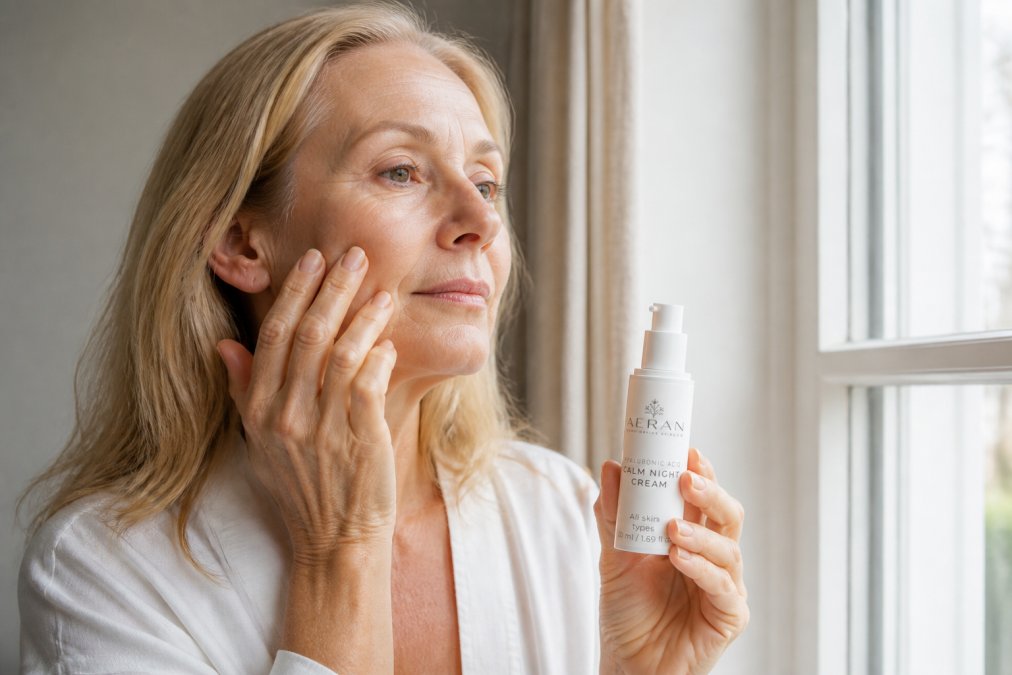
The barrier-first approach recognizes that rebuilding your skin's protective layer is foundational. Once restored, redness diminishes, irritation calms, and your skin absorbs beneficial ingredients. Dermatologists increasingly recommend focusing on barrier repair before adding active ingredients like retinol or vitamin C.
Best Skincare for Redness and Irritation: Core Ingredients That Work
Redness and irritation respond best to ingredients supporting barrier function. Ceramides are essential, these fatty acids are depleted as estrogen declines (peer-reviewed research). Niacinamide reduces inflammation and strengthens barrier integrity (peer-reviewed research). Hyaluronic acid pulls moisture into skin, but only if your barrier retains it; pair it with barrier-supporting actives.
Fragrance-free formulations matter now more than ever. Your permeable barrier makes fragrance compounds more likely to trigger irritation. Look for products labeled hypoallergenic and dermatologically tested.
A common mistake is layering too many active ingredients. Retinol, vitamin C, and exfoliating acids stress a compromised barrier. Start with barrier repair alone for 4-6 weeks, then introduce actives slowly. Many women see better anti-aging results from a stable, non-irritating routine than aggressive treatments that damage the barrier further.
How to Repair Damaged Skin Barrier Over 50
Barrier repair requires consistency and patience, the process takes weeks because your skin must synthesize new lipids and rebuild its protective structure. Signs of damage include tightness, flaking, sensitivity to temperature changes, and reactive redness.
Use a gentle, fragrance-free, pH-balanced cleanser with lukewarm water. Pat skin dry gently; rubbing irritates sensitive skin.
Apply a barrier-supporting moisturizer while skin is still slightly damp to lock in hydration and deliver ceramides. The Ceramide Barrier Night Cream from Aeran Skincare combines ceramides and hyaluronic acid to rebuild lipid layers overnight. Apply as your final step, allowing it to work while your skin's natural repair processes are most active.

Avoid these barrier-damaging habits: hot water, over-exfoliation, multiple actives in one routine, and products with alcohol or essential oils.
Build Your Skincare Routine for Menopausal Skin
A menopausal skin routine prioritizes barrier repair and gentle hydration. Most women over 50 need three core steps: cleanse, hydrate, and protect.
Morning routine: Gentle cleanser, followed by a lightweight hydrating serum like the Exosomes + Niacinamide Serum to support skin renewal and reduce dullness. Finish with fragrance-free moisturizer and broad-spectrum SPF 30 or higher.
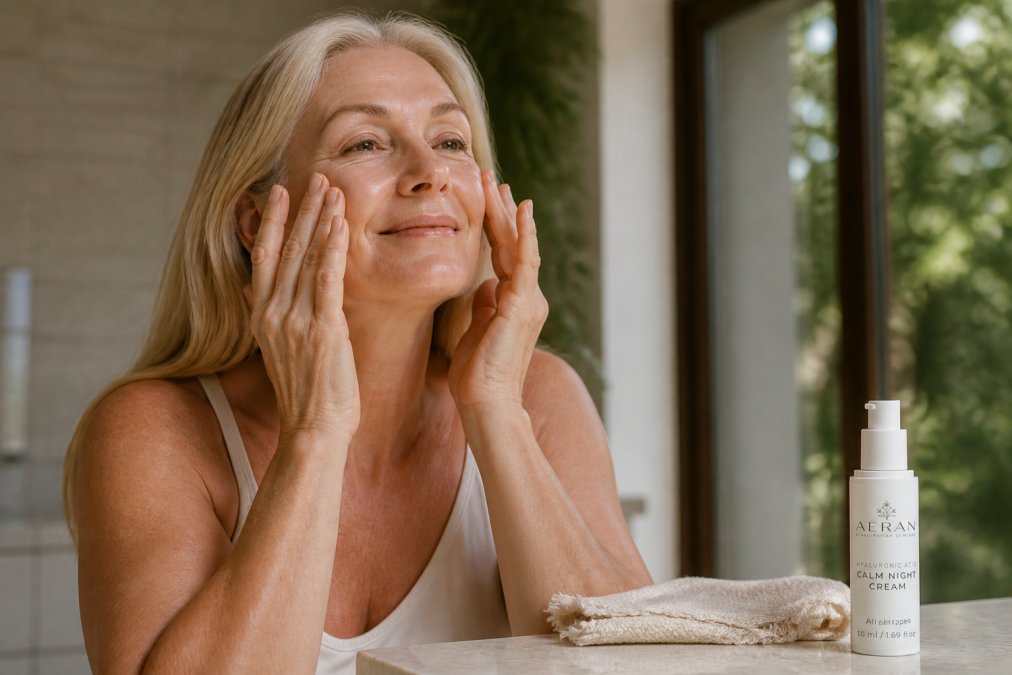
Evening routine: Same gentle cleanser, followed by a barrier-repair moisturizer. The Calm Night Cream works well for sensitive, reactive skin, while the Ceramide Barrier Night Cream targets deeper barrier restoration. Apply the Barrier Mist between steps if skin feels tight; its prebiotic formula helps restore your skin's natural microbiome balance.

Apply products to damp skin in this order: thinnest texture first (serums), then thicker creams. This allows proper absorption without layering products on top of each other. Consistency beats complexity, a simple routine used daily outperforms an elaborate one you skip on busy nights.
Sensitive skin in your 50s responds best when you support your skin's natural changes rather than fight them. A barrier-first approach using fragrance-free, ceramide-rich products addresses the root cause of irritation. Aeran Skincare's formulations are designed specifically for this phase of life, combining Scandinavian clean-ingredient standards with ceramides and hyaluronic acid to rebuild what menopause takes away. Start with a simple routine, be consistent for 6-8 weeks, and your skin will calm, strengthen, and improve over time.
Frequently Asked Questions
What ingredients should women over 50 avoid if they have sensitive skin?
Avoid fragrance (synthetic or natural), alcohol denat, essential oils, and high concentrations of acids if your skin is reactive. Strong retinoids can irritate sensitive skin barrier; start with gentler alternatives. Sulfates strip natural oils, worsening dryness. Look for fragrance-free products with ceramides, hyaluronic acid, and niacinamide instead, these support your barrier without triggering inflammation.
How does menopause affect skin sensitivity?
Menopause reduces estrogen, which thins the skin barrier and decreases collagen production. This makes your skin more prone to dryness, redness, and irritation. Your skin loses its ability to retain moisture and repair itself as quickly, which is why a barrier-first routine with ceramides and hydrating ingredients becomes essential during this phase.
What is the best skincare regimen for a 50-year-old woman with sensitive skin?
Start with a gentle, pH-balanced cleanser to avoid stripping your barrier. Apply a hydrating serum with hyaluronic acid and niacinamide, then follow with a ceramide-rich moisturizer. Use sunscreen daily, sun damage accelerates aging and irritation. At night, use a barrier-repair cream with ceramides and aloe. Keep it simple: cleanse, hydrate, protect, repair. Avoid layering multiple actives if your skin is compromised.