


Skincare for Sensitive Reactive Skin: A Complete Guide
Table of Contents
- Understanding Sensitive and Reactive Skin
- Best Ingredients for Reactive Skin That Calm Irritation
- How to Repair Damaged Skin Barrier and Restore Function
- Choosing a Gentle Ceramide Cleanser for Daily Use
Last Updated: August 18, 2026
Understanding Sensitive and Reactive Skin
Sensitive reactive skin is characterized by a compromised skin barrier that overreacts to environmental triggers, products, and irritants. Unlike naturally sensitive skin, which is genetic, reactive skin develops when the skin's protective lipid barrier breaks down. Your skin barrier depends on ceramides, fatty acids, and cholesterol working together to keep moisture in and irritants out. When this barrier fails, transepidermal water loss increases, inflammation follows, and even gentle products can trigger stinging or burning.
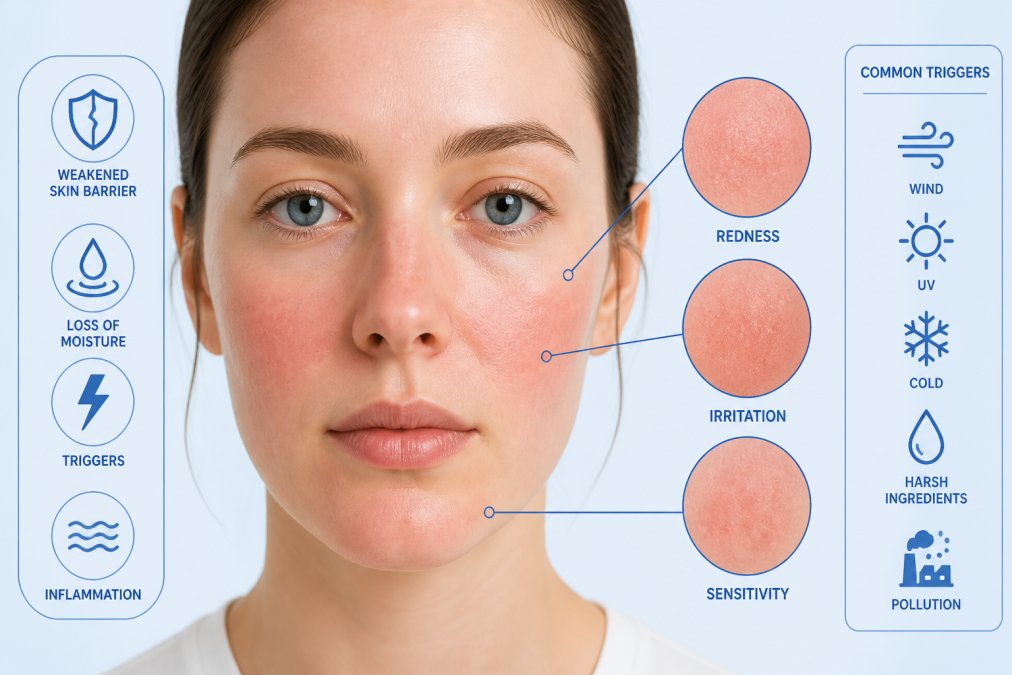
Chronic skin reactivity creates real stress. Constant flare-ups and unpredictability about which products will trigger a reaction cause legitimate anxiety. Environmental and seasonal changes compound this, winter heating strips moisture, summer humidity and sun exposure trigger different reactions. Understanding these patterns helps you anticipate flare-ups rather than react to them.
Best Ingredients for Reactive Skin That Calm Irritation
Ceramides are non-negotiable for reactive skin. These lipid molecules are literally part of your skin barrier's structure. When your barrier is compromised, ceramide levels drop. Look for ceramides NP, AP, and EOP, these are the ones your skin actually uses.
Niacinamide (vitamin B3) reduces inflammation and supports barrier repair without irritation. It strengthens the skin barrier, reduces redness, and improves moisture retention. Most reactive skin types tolerate it well because it works with your skin's natural processes.
Panthenol (provitamin B5) is a humectant that draws moisture into the skin and promotes healing. Beta-glucan from oat extract provides similar soothing benefits and has been shown to reduce erythema in clinical settings. Thermal spring water, particularly from volcanic sources, contains minerals that calm inflammation without active ingredients.
The real power comes from ingredient synergy. Ceramides work better when paired with fatty acids and cholesterol in the right ratios. Niacinamide amplifies the barrier-repair effect of ceramides. Panthenol enhances humectant function.
How to Repair Damaged Skin Barrier and Restore Function
Barrier repair starts with simplification. Your routine should have three components: cleanser, treatment serum, and moisturizer. Every additional product is a potential irritant. Once your barrier is stable, you can gradually introduce other actives.
A pH-balanced, sulfate-free cleanser preserves the skin's natural pH and doesn't disrupt the lipid barrier. Your cleanser should feel gentle, not squeaky. If your skin feels tight after cleansing, you're using something too strong.
Occlusives seal moisture into your skin. These heavier molecules like petrolatum or plant-based oils prevent water loss. At night, an occlusive is essential, your skin repairs itself while you sleep, and an occlusive locks in that repair process. The Aeran Skincare Ceramide Barrier Night Cream delivers ceramides and fatty acids to actively rebuild your barrier while you sleep.

Hydration and humectants pull water into the skin. Glycerin, hyaluronic acid, and panthenol are humectants. They work best when applied to damp skin, then sealed with an occlusive. This layering approach, humectant first, occlusive second, is the foundation of effective barrier repair.
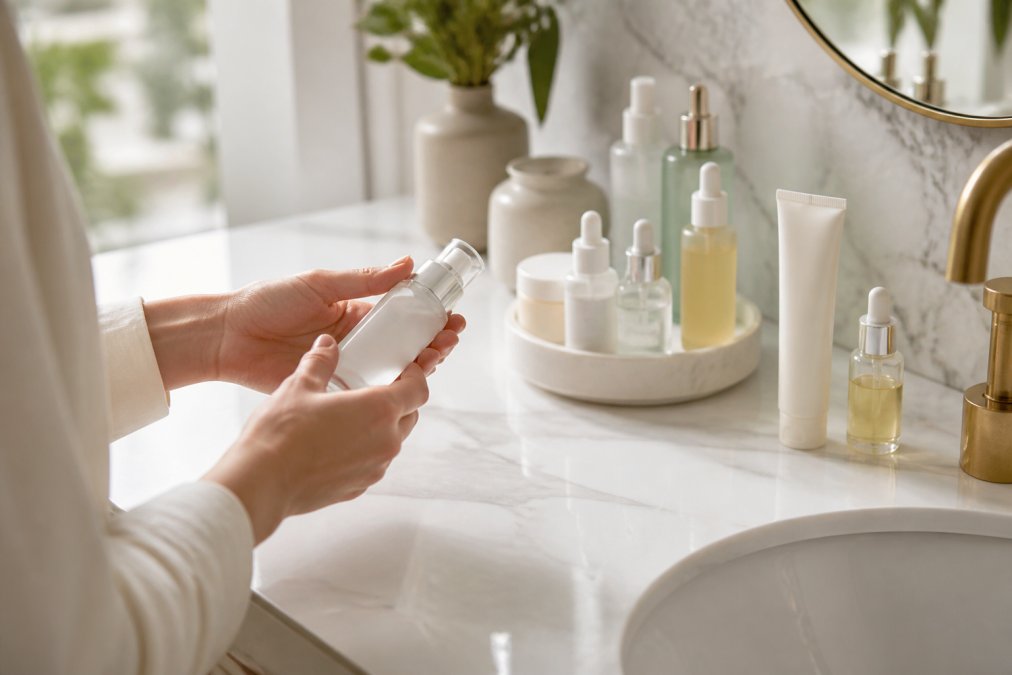
Patch testing isn't optional for reactive skin. Apply a small amount of new product to your inner arm or behind your ear and wait 24-48 hours. If no reaction occurs, apply it to a small area of your face and wait another 24 hours. Only after passing these tests should you incorporate it into your full routine.
The timeline for barrier repair varies. Some people see improvement in 2-3 weeks with consistent, gentle care. Others need 6-8 weeks. The key is consistency without escalation, don't add new products while your barrier is still healing.
Choosing a Gentle Ceramide Cleanser for Daily Use
A gentle ceramide cleanser should be sulfate-free, fragrance-free, and pH-balanced. Sulfates create lather by stripping oils from your skin, they're efficient cleaners but terrible for reactive skin. A non-sulfate cleanser is gentler and still removes makeup and daily grime without disruption.
The cleanser's pH should match your skin's natural pH (around 5.5). Alkaline cleansers feel more "clean" because they strip your skin, but they disrupt the acid mantle that protects your barrier. A pH-balanced cleanser preserves your skin's protective function.
Ceramides in a cleanser protect your skin during the cleansing process, while ceramides in a moisturizer rebuild your barrier after cleansing. You need both. Non-comedogenic formulations won't clog pores, which matters if you have oily patches alongside reactive skin.
The Sensitive Skin Overnight Cream from Aeran Skincare is designed for barrier repair at night, emphasizing barrier-first formulation with clean ingredients. When choosing your cleanser, apply the same standard. Look for products that prioritize barrier protection, not just cleansing power.
Price doesn't determine effectiveness for reactive skin, formulation does. A $15 sulfate-free, pH-balanced cleanser outperforms a $60 luxury cleanser with fragrance and stripping agents.
Managing reactive skin requires patience and consistency. Your barrier didn't break overnight, and it won't repair overnight either. The routine that works combines a gentle cleanser, a treatment serum with barrier-supporting ingredients like niacinamide and ceramides, and an occlusive moisturizer. Aeran Skincare's barrier-first formulations, including their Ceramide Barrier Night Cream and Bioactive Prebiotics Jelly Serum, are designed specifically for systematic barrier repair. Start with these foundations, patch test everything, and give your skin 6-8 weeks to respond.
Frequently Asked Questions
What's the difference between sensitive skin and reactive skin?
Sensitive skin is a skin type characterized by a naturally more fragile barrier and lower tolerance to irritants. Reactive skin develops when your skin barrier is compromised by environmental stress, overwashing, or harsh products. Both show similar symptoms, redness, stinging, burning, but reactive skin can improve once you repair the barrier, while sensitive skin requires ongoing gentle care. The key distinction: reactive skin is often temporary and reversible with proper barrier repair.
Which ingredients are best for calming reactive skin?
Ceramides, niacinamide, panthenol, and beta-glucan are proven to soothe reactive skin and strengthen your lipid barrier. Ceramides specifically fill gaps in a compromised barrier. Thermal spring water and aloe juice reduce inflammation and erythema. Avoid fragrance, essential oils, alcohol, and sulfates, these trigger irritation. Look for fragrance-free, pH-balanced formulas. Patch test any new product on a small area for 48 hours before full application to confirm tolerance.
How long does it take to repair a damaged skin barrier?
Most people see visible improvement in 2-4 weeks with consistent barrier-repair skincare. Full restoration typically takes 6-8 weeks. The timeline depends on barrier severity and product consistency. Use ceramide-rich moisturizers twice daily, avoid irritants, and don't switch products frequently, your skin needs stability to heal. If redness and stinging persist beyond 8 weeks, consult a dermatologist to rule out underlying conditions like rosacea.
What should I avoid if I have reactive skin?
Skip fragrance, essential oils, alcohol denat, sulfates, and exfoliants until your barrier heals. Avoid products with high concentrations of actives like vitamin C, retinol, or acids, these can worsen inflammation. Don't overwash or use hot water. Limit environmental triggers: harsh weather, pollution, and chlorine. Patch test everything, even gentle products. Once your barrier is stable, you can gradually reintroduce actives under professional guidance.