
7 Reasons to Avoid Silicones in Oily Skin Moisturizers
Last Updated: October 30, 2026
Quick Summary
Silicones in oily skin moisturizers form a smooth, water-resistant film that can smother oily skin by trapping sebum, leaving oil and sweat with nowhere to go. Choose by the full formula instead, looking for water-based formulas with humectants such as glycerin and hyaluronic acid.
- Silicones are synthetic ingredients that form a smooth, water-resistant film on the skin's surface.
- Dimethicone is often rated low on the comedogenic scale but is not a safe bet for everyone.
- Check for ingredients ending in -cone, -siloxane, or -conol on the label.
- Test one new moisturizer at a time for at least two weeks and note how your skin feels.
- The Renewal Moisturiser uses hyaluronic acid, aloe juice, and jojoba oil in a lightweight base.
Table of Contents
- Why Silicones in Oily Skin Moisturizers Cause Problems
- Is Dimethicone Bad for Acne-Prone Skin?
- Choosing a Silicone-Free Moisturizer for Oily Skin
- How to Test a New Moisturizer on Oily Skin
- The Bottom Line on Silicones and Oily Skin
- Frequently Asked Questions
Why Silicones in Oily Skin Moisturizers Cause Problems
If you have oily skin, by lunch your forehead is a mirror, often the formula, not your skin. Heavy, silicone-rich moisturizers can seal skin so completely that oil and sweat have nowhere to go.
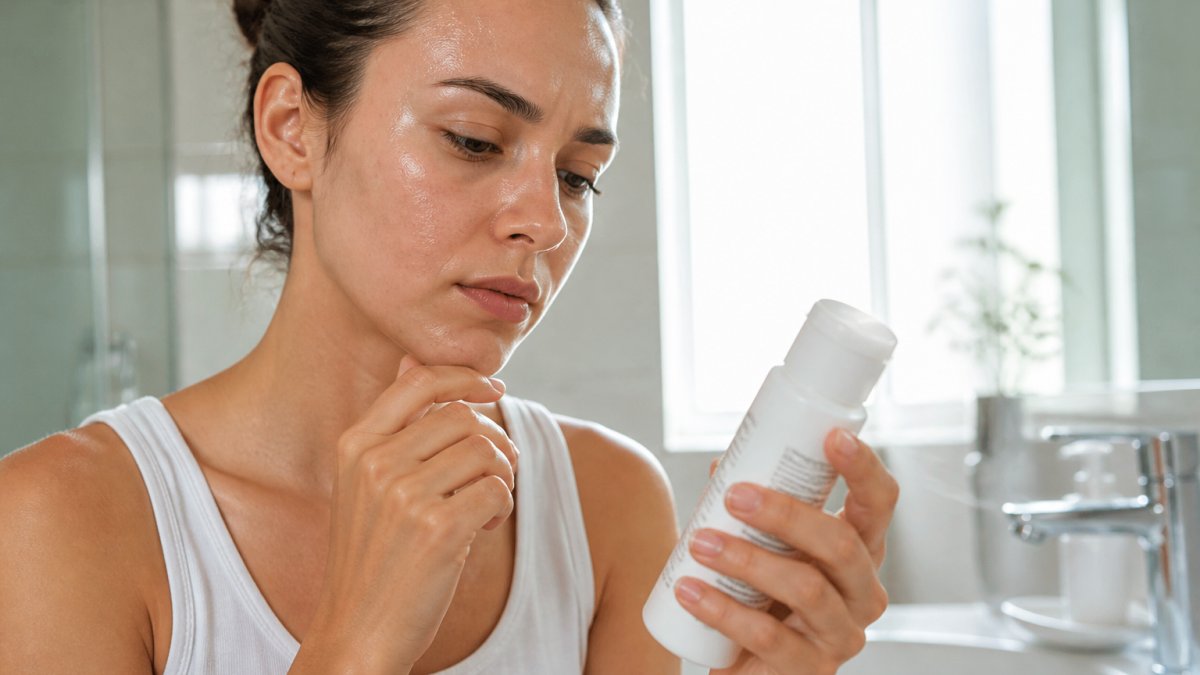
Silicones are synthetic ingredients that form a smooth, water-resistant film on the skin's surface. That film feels silky but can smother oily skin by trapping sebum. If a product ever leaves your skin stinging when applying moisturizer, that reaction is worth understanding. A common mistake is assuming a moisturizer is "lightweight" because it spreads easily, silicone spreads beautifully, but spread is not absorb.
Is Dimethicone Bad for Acne-Prone Skin?
Dimethicone, the most common silicone, is not automatically bad for acne-prone skin but is not a safe bet for everyone. Dimethicone is often rated low on the comedogenic scale, but alongside rich oils, waxes, and occlusive butters, the total effect can differ. For more on acne-prone skin and how ingredients fit together, explore the skincare search index.
Choosing a Silicone-Free Moisturizer for Oily Skin
Read the full ingredient list, not one villain: look for water-based formulas, lightweight oils like jojoba, and humectants such as glycerin, hyaluronic acid, and sodium PCA, then check for ingredients ending in "-cone," "-siloxane," or "-conol."
For a daily option, the Renewal Moisturiser uses hyaluronic acid, aloe juice, and jojoba oil in a lightweight base.

How to Test a New Moisturizer on Oily Skin
Test one new moisturizer at a time for at least two weeks and note how your skin feels over that period.
| What you notice | Likely cause | What to try |
|---|---|---|
| Shiny by midday | Occlusive film or too much product | Use less; switch to water-based |
| New bumps along jaw | Formula too rich for your skin | Simplify to one active |
| Tightness after applying | Not enough humectants | Add glycerin or hyaluronic acid |
The Bottom Line on Silicones and Oily Skin
Silicones are not poison, and dimethicone is not the enemy for everyone. But if your skin is oily or acne-prone, a silicone-rich moisturizer can work against you: it seals, it coats, and it can leave oil sitting on the surface. Choose by the full formula, not one ingredient. For more, see the official cosmetic ingredient safety reviews from CIR and the FDA's guidance on cosmetics.
Frequently Asked Questions
Can silicones make oily skin feel greasy or congested?
Yes. Silicones like dimethicone form a flexible film on the skin surface that can trap excess sebum, especially in oily skin. That film gives a smooth, slippery feel and can trap excess sebum on the skin surface. If you already produce a lot of oil, layering an occlusive silicone on top can feel heavy and increase the risk of clogged pores. A lightweight, silicone-free moisturizer lets skin breathe while still providing hydration.
Is dimethicone bad for acne-prone skin?
Dimethicone is not automatically the best choice for acne-prone skin. The issue is formulation: dimethicone sits on the skin surface and can seal in oil, sweat, and debris. For some people with acne-prone skin, that environment may worsen breakouts.
How can I tell if a moisturizer contains silicones?
Check the ingredient list for names ending in -cone, -conol, or -siloxane. Common ones include dimethicone, cyclopentasiloxane, dimethiconol, and cetearyl methicone. These are usually listed near the top or middle of the formula. If you want a silicone-free moisturizer for oily skin, look for products whose ingredient list relies on water, glycerin, hyaluronic acid, or lightweight plant oils instead of silicone compounds.
If your moisturizer leaves you shiny by noon, the formula is probably working against your skin. At Aeran Skincare, we build barrier-first, Scandinavian-formulated products with clean ingredients and ceramides, made to support oily, sensitive, and compromised skin without a heavy film. Browse our collection for oily skin and find a lightweight formula that lets your skin breathe. Get started with Aeran Skincare and give your skin a moisturizer that works with it, not against it.
