


Winter Skincare Routine for Sensitive Skin: 7 Steps
Table of Contents
- Why Skin Dries Out in Winter (And How to Fix It)
- The 3-Minute Rule and Other Shower Habits That Matter
- How to Repair Damaged Skin Barrier: The Core of Your Routine
- Your Winter Skincare Routine for Sensitive Skin
- Ingredients to Look For and What to Avoid
- Hydration, Diet, and Lifestyle Adjustments
- Exfoliation and Sun Protection in Winter
- Budget-Friendly vs. Luxury: Where Your Money Matters
- Frequently Asked Questions
Last Updated: September 7, 2026
Winter air pulls moisture from your skin, causing tightness, flaking, and itchiness. Preventing dry skin comes down to protecting the lipid barrier that locks water in your epidermis. This guide from Aeran Skincare breaks down the science into a practical, seven-step routine you can start tonight.
The core of any winter skincare routine for sensitive skin is repairing the skin barrier, not just coating the surface.
Why Skin Dries Out in Winter (And How to Fix It)
Cold air and indoor heating accelerate transepidermal water loss, weakening the skin barrier. The fix is twofold: slow water loss and replenish it. Humidifiers restore moisture to the air, while humectants like hyaluronic acid draw water in, and occlusives seal it there. According to guidance from the American Academy of Dermatology, keeping your environment humidified is highly effective.
The 3-Minute Rule and Other Shower Habits That Matter
Hot showers strip the lipid barrier. Keep showers under three minutes using lukewarm water. Pat skin dry, apply moisturizer within three minutes while damp, and use a creamy, fragrance-free cleanser.
How to Repair Damaged Skin Barrier: The Core of Your Routine
A damaged barrier, a matrix of ceramides, cholesterol, and fatty acids, is the root cause of winter skin misery. Ceramides fill gaps between skin cells; look for a night cream with ceramides and hyaluronic acid to rebuild the barrier while you sleep.
For mature or dehydrated skin, a facial oil like argan oil provides essential fatty acids without clogging pores.
Your Winter Skincare Routine for Sensitive Skin
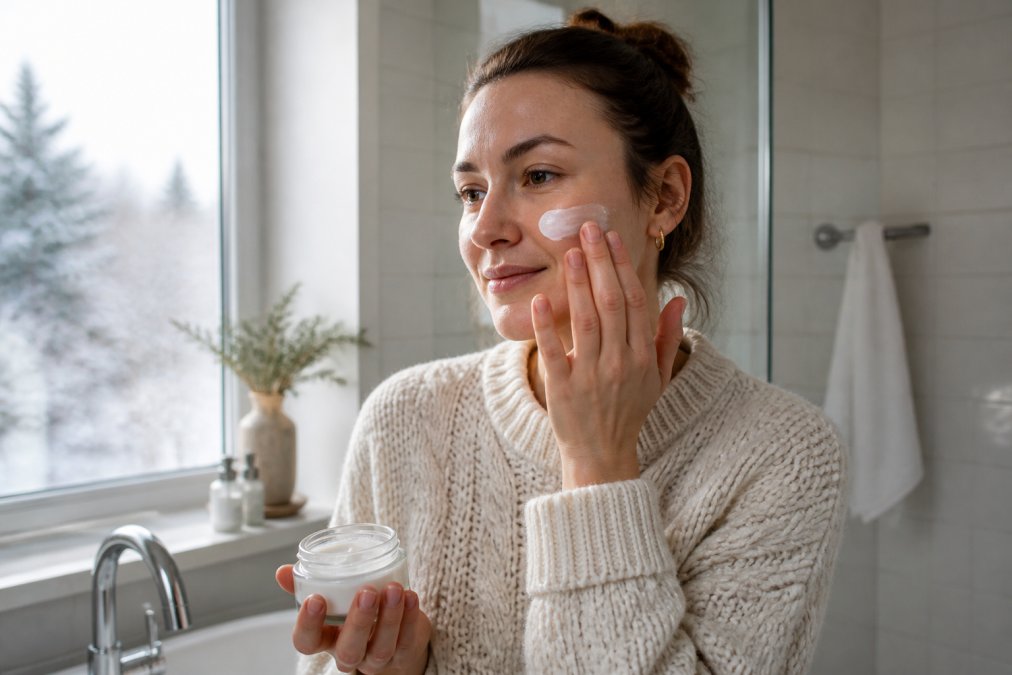
Building a winter skincare routine for sensitive skin means choosing fragrance-free, hypoallergenic products that support the barrier.
- Cleanse gently with lukewarm water and a fragrance-free cleanser.
- Apply a barrier mist with prebiotics and hyaluronic acid while damp.
- Use a hyaluronic acid serum to draw moisture in.
- Seal with a facial oil if skin is dry or mature.
- Finish with a ceramide-rich moisturizer to rebuild the barrier overnight.
Ingredients to Look For and What to Avoid
Prioritize three categories: humectants like hyaluronic acid and glycerin pull water in; occlusives like shea butter seal it; emollients like squalane smooth gaps between cells.

| Ingredient Category | Examples | Function | Best For |
|---|---|---|---|
| Humectants | Hyaluronic acid, glycerin | Draw water into the skin | All skin types, especially dehydrated |
| Occlusives | Shea butter, natural oils | Seal moisture in, prevent water loss | Dry and mature skin |
| Emollients | Squalane, ceramides | Smooth and repair the lipid barrier | Sensitive and compromised skin |
Avoid fragrances, harsh detergents, sulfates, and alcohol-based toners. research on skin barrier function from the National Institutes of Health confirms repeated barrier disruption increases sensitivity.
Hydration, Diet, and Lifestyle Adjustments
Drinking water helps, but reducing dehydrating habits matters more. Caffeine and alcohol dehydrate skin; omega-3s from fish and walnuts support natural ceramide production. Switch to fragrance-free, hypoallergenic detergent for bedding.
Exfoliation and Sun Protection in Winter
Use a gentle chemical exfoliant once a week; avoid harsh physical scrubs. Sun protection is non-negotiable, snow reflects up to 80% of UV radiation. Use broad-spectrum SPF 30 or higher daily. Persistent dry skin affects confidence and sleep, but the American Academy of Dermatology's patient resources on dry skin confirm consistent, gentle care resolves most cases.
Budget-Friendly vs. Luxury: Where Your Money Matters
Invest in your moisturizer and serum, which stay on skin longest. Spend the most on a ceramide-rich night cream and quality serum; save on cleansers that rinse off. The National Eczema Association's product directory guidance offers a benchmark for what "safe for sensitive skin" means.
Winter dry skin is fixable when you address the barrier. Start with gentler showers, add a humidifier, and build a routine around ceramides and hyaluronic acid. Aeran Skincare's barrier-first products, including the Ceramide Barrier Night Cream and Hyaluronic Acid Firm Serum, are designed for sensitive skin with clean, fragrance-free ingredients. Get started with Aeran Skincare to stay calm and hydrated all winter.
Frequently Asked Questions
What is the 3-minute moisturizer rule?
The 3-minute rule means applying moisturizer within three minutes of stepping out of the shower or bath. Your skin is still damp and pores are open, which helps lock in maximum hydration. Pat your skin dry gently with a towel rather than rubbing, then immediately apply a moisturizer with ceramides to trap that water in your skin barrier.
Why does my skin get so dry in winter?
Cold outdoor air holds less moisture, and indoor heating further reduces humidity levels. This combination pulls water from your skin's outer layer, increasing transepidermal water loss. Your skin barrier weakens, leading to flaking, itchiness, and tightness. Using a humidifier and adjusting your winter skincare routine for sensitive skin helps counteract this environmental stress.
How do I hydrate extremely dry skin?
Start with a gentle cleanser, then layer a hyaluronic acid serum on damp skin to draw in moisture. Follow with a ceramide-rich cream to rebuild your lipid barrier, and finish with a facial oil to seal everything in. Avoid hot showers, skip harsh exfoliants, and always use a humidifier in your bedroom to support skin hydration overnight.