


Is Hyaluronic Acid Good for Very Dry Skin?
Table of Contents
- Why Hyaluronic Acid Can Backfire on Very Dry Skin
- Hyaluronic Acid vs Ceramides for Dry Skin: What Your Barrier Needs
- How to Apply Hyaluronic Acid for Maximum Hydration
- How to Seal in Moisture with Occlusives
- Frequently Asked Questions
Last Updated: September 4, 2026
Hyaluronic acid is a humectant that draws water into the skin, yet for very dry skin this can backfire if the barrier is compromised. When the lipid layer is weak, it pulls moisture from deeper layers toward the surface, where it evaporates, a process known as transepidermal water loss (TEWL), leaving skin tighter and flakier. At Aeran Skincare, we pair humectants with barrier-repairing ceramides so hydration stays where it belongs.
Yes, hyaluronic acid is good for very dry skin, but only when applied correctly and sealed with an occlusive. It can hold up to 1,000 times its weight in water, but this works against you in dry air or when the barrier is damaged. This guide explains why it fails for some people, how it compares to ceramides, and the exact application method that delivers results.
Why Hyaluronic Acid Can Backfire on Very Dry Skin
Very dry skin (xerosis) comes with a compromised barrier. Hyaluronic acid is hygroscopic, pulling water from wherever it can find it, often from your own skin rather than the environment. In arid or heated indoor air, the result is increased TEWL, tightness, and dullness instead of a plump finish.
The severity depends on the molecular weight of the hyaluronic acid in your product. Low molecular weight formulas penetrate deeper and can trigger irritation in sensitive skin, while high molecular weight versions sit on the surface. Many dermatological sources note that the National Institutes of Health's research on topical hyaluronic acid confirms that molecular weight directly influences how the ingredient behaves on compromised skin.
Hyaluronic Acid vs Ceramides for Dry Skin: What Your Barrier Needs
Hyaluronic acid vs ceramides is not either-or; your barrier needs both. Hyaluronic acid draws water into the upper layers; ceramides rebuild the barrier's physical structure. Think of hyaluronic acid as filling a bucket and ceramides as repairing the cracks.
For compromised barriers, ceramides take priority because they restore the lipid matrix that prevents moisture loss. Once stronger, hyaluronic acid becomes more effective. Products combining both, like the Ceramide Barrier Night Cream, deliver ceramides and fatty acids while hyaluronic acid provides surface hydration.

| Ingredient | Primary Role | Best For | How It Works |
|---|---|---|---|
| Hyaluronic Acid | Humectant | Dehydrated skin | Draws water into the upper skin layers |
| Ceramides | Barrier repair | Dry, compromised skin | Rebuilds the lipid matrix that prevents moisture loss |
| Occlusives | Sealing agent | Very dry, flaky skin | Forms a protective film that blocks TEWL |
A common mistake is reaching for a pure hyaluronic acid serum when the real issue is a damaged skin barrier. If your skin stings, turns red, or feels tight after cleansing, the barrier is compromised and ceramide-focused repair should come first. The American Academy of Dermatology's guidance on dry skin care emphasizes that moisturizers containing ceramides are particularly effective for restoring the skin barrier in people with very dry skin.
How to Apply Hyaluronic Acid for Maximum Hydration
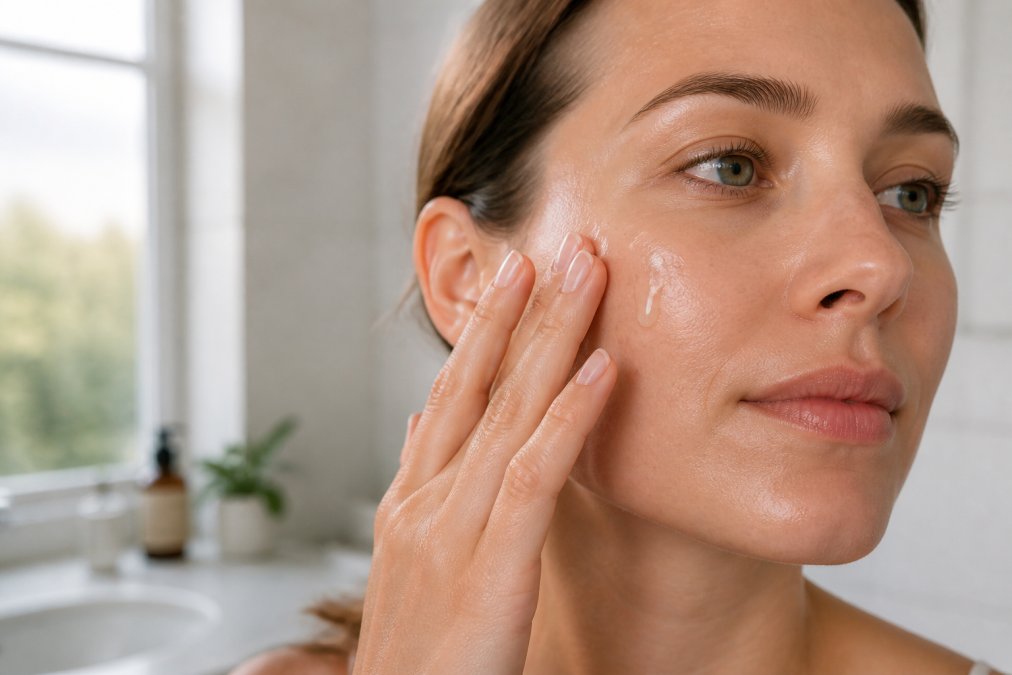
Hyaluronic acid must go on damp skin, never dry. Applying it to a dry face gives it nothing to grab except moisture from deeper layers. After cleansing, leave skin slightly damp or mist with the Barrier Mist, which layers prebiotics and hyaluronic acid to prep the skin.

The full application sequence matters as much as the products themselves. Follow these steps in order for maximum hydration:
- Cleanse gently with lukewarm water and pat skin dry, leaving it slightly damp
- Apply a few drops of hyaluronic acid serum, like the Hyaluronic Acid Firm Serum, and press it into the skin rather than rubbing
- Wait 30 to 60 seconds for the serum to absorb
- Layer a ceramide moisturizer on top while the skin is still slightly tacky
- Finish with an occlusive cream if your skin is very dry or you are in a low-humidity environment
The timing between steps matters because each layer needs to absorb before the next goes on. Pressing the serum into damp skin rather than rubbing it improves penetration and reduces the chance of irritation on sensitive skin. Dermatology research published through PubMed Central shows that the order of product application directly affects how well humectants and emollients perform on compromised skin.

How to Seal in Moisture with Occlusives
Sealing with occlusives is the step most people skip, and it is the difference between hydration that lasts and hydration that evaporates. Occlusives form a physical film on the skin, blocking TEWL. Common ones include petrolatum, shea butter, squalane, and fatty acids.
For very dry skin, the occlusive layer is non-negotiable. A ceramide-rich night cream functions as both an emollient and semi-occlusive. The Ceramide Barrier Night Cream combines ceramides with fatty acids to rebuild the lipid layer overnight.
Humectants pull water in; occlusives keep it there. Layering hyaluronic acid under a ceramide moisturizer without an occlusive finish leaves it vulnerable to moisture loss. In arid or heated environments, a richer cream is necessary to maintain elasticity and prevent dullness.
Very dry skin needs a system that pulls moisture in, repairs the barrier, and seals it in place. Aeran Skincare builds that system with barrier-first, Scandinavian-formulated products. Start with the Hyaluronic Acid Firm Serum on damp skin, follow with the Ceramide Barrier Night Cream, and use the Barrier Mist throughout the day. Get started with Aeran Skincare.
Frequently Asked Questions
Why does my skin feel tighter after using hyaluronic acid?
This happens when hyaluronic acid is applied to completely dry skin or in a very arid climate. As a humectant, it draws moisture from its surroundings. If there is no water in the air and your skin isn't damp, it pulls water from the deeper dermal layers, increasing transepidermal water loss (TEWL). To prevent this, always apply it to damp skin and follow with an occlusive moisturizer to seal the hydration in.
Which is better for older skin, retinol or hyaluronic acid?
They serve different purposes. Hyaluronic acid is a hydrating humectant that plumps and smooths the skin's surface, targeting dryness and dullness. Retinol is an active that speeds up cell turnover to address fine lines and wrinkles. For older, dry skin, you often need both. Use hyaluronic acid in the morning and on damp skin, and apply retinol only at night, always layered over a barrier-repairing moisturizer to prevent irritation.
Can hyaluronic acid cause transepidermal water loss?
Yes, if used incorrectly. Hyaluronic acid is hygroscopic, meaning it binds water. If you apply it to bone-dry skin in a low-humidity environment without sealing it in, it can pull moisture from the deeper layers of your skin to the surface, where it evaporates. This increases transepidermal water loss (TEWL) and leaves skin feeling tighter. Always apply it to damp skin and seal it with an occlusive or ceramide-rich cream.