


Best Fragrance Free Body Lotion for Eczema in 2026
Table of Contents
- What to Look for in a Fragrance Free Body Lotion for Eczema
- Ingredients to Avoid for Eczema and How to Repair the Skin Barrier
- Eczema Flare-Up Triggers and Daily Maintenance
- Frequently Asked Questions
Last Updated: September 13, 2026
What to Look for in a Fragrance Free Body Lotion for Eczema
Finding the best fragrance free body lotion for eczema starts with reading the label, not the marketing. A fragrance free body lotion for eczema should be free of added perfume, dye, and drying alcohols, and built around barrier-repair ingredients like ceramides, colloidal oatmeal, and glycerin (nationaleczema.org). At Aeran Skincare, we formulate barrier-first products with ceramides because reactive skin needs lipid replenishment, not scent.
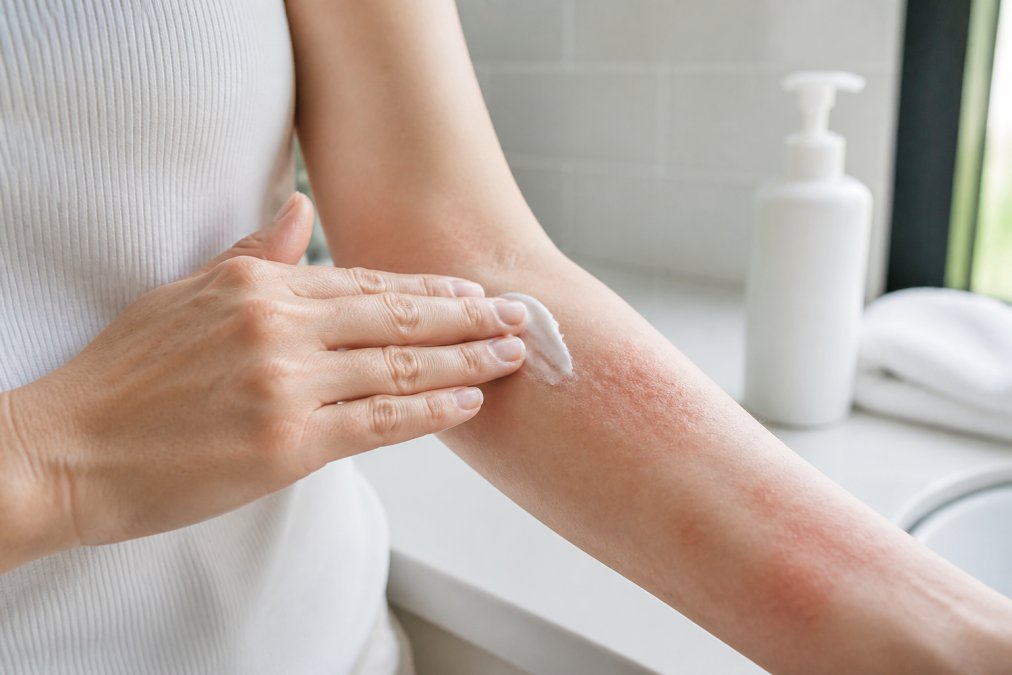
Look for fragrance-free (not "unscented"), hypoallergenic, non-comedogenic, pH-balanced, dermatologist-tested formulas that are paraben-free and sulfate-free, with emollients, humectants, and occlusives.
| Feature | What It Does | Look For |
|---|---|---|
| Emollients | Soften rough patches | Shea butter, ceramides |
| Humectants | Pull in water | Glycerin, hyaluronic acid |
| Occlusives | Seal moisture in | Petrolatum, dimethicone |
Texture matters: creams suit dry, flaky patches, lotions spread thinner for daily maintenance, and ointments seal best but feel heavy.
Ingredients to Avoid for Eczema and How to Repair the Skin Barrier
Skip added fragrance, denatured alcohol, parabens, sulfates, and essential oils, which strip the skin barrier and worsen inflammation (the American Academy of Dermatology). Then focus on how to repair skin barrier for eczema: replenish lipids, retain moisture, and reduce transepidermal water loss.
Colloidal oatmeal, ceramides, hyaluronic acid, glycerin, and shea butter are the ingredients dermatologists reach for most. Ceramides rebuild the lipid layer eczema weakens, colloidal oatmeal calms itch, glycerin and hyaluronic acid draw water in, and shea butter and petrolatum lock it in. Beyond topical hydration, minimizing friction against sensitive skin remains essential, which makes choosing the right clothing for eczema a critical component of any comprehensive management strategy.
Patch testing is non-negotiable for reactive skin. Apply a small amount to your inner forearm, wait 24 to 48 hours, and watch for redness or stinging before using it broadly (the American Academy of Dermatology).
Aeran Skincare builds its formulas around this repair logic, using clean ingredients and ceramides to support compromised skin rather than just coat it.
Eczema Flare-Up Triggers and Daily Maintenance
Eczema flare-up triggers usually fall into two buckets: environmental and lifestyle. Dry indoor air, hot showers, harsh soaps, scratchy fabrics, stress, and sweat can all set off reactive skin.
Daily maintenance beats reactive treatment. Apply lotion within three minutes of showering, while skin is still damp, and use lukewarm water, a gentle non-soap cleanser, and a soft towel patted rather than rubbed. Reapply through the day, especially to hands and legs.
For flare-ups, switch to a thicker cream or ointment, cut back on exfoliants, and keep the routine simple.
Frequently Asked Questions
What is a good fragrance-free moisturizer for eczema?
A good fragrance-free moisturizer for eczema should contain skin-barrier-repairing ingredients like ceramides, colloidal oatmeal, glycerin, and shea butter. It should be hypoallergenic, non-comedogenic, and free from fragrance, alcohol, parabens, and sulfates. Look for products labeled 'fragrance-free' rather than 'unscented,' as unscented products may still contain masking fragrances. Dermatologist-tested formulas with a pH-balanced composition are ideal for reactive skin.
What ingredients should I avoid in body lotion if I have eczema?
Avoid fragrances (both natural and synthetic), alcohol, parabens, sulfates, and essential oils. These can strip the skin barrier, trigger inflammation, and worsen eczema. Check labels for 'fragrance-free' and 'paraben-free' claims, and patch test any new product on a small area before full application.
How often should you apply lotion to eczema-prone skin?
Apply lotion at least twice daily, and more often during flare-ups. The best times are immediately after a lukewarm shower or bath, within three minutes, to lock in moisture while skin is still damp. Reapply throughout the day whenever skin feels dry or itchy.
Eczema care rewards patience and the right formula, not the loudest label. Aeran Skincare builds barrier-first, Scandinavian-formulated products with clean ingredients and ceramides to support sensitive, dry, and compromised skin. If reactive skin has burned you before, start with a patch test and a fragrance free body lotion designed for daily maintenance. Get started with Aeran Skincare and give your skin the barrier support it needs to settle.