


Is Fragrance-Free Skincare Actually Better?
Table of Contents
- What Fragrance-Free Skincare Actually Means
- Fragrance-Free vs. Unscented: Understanding the Difference
- Signs of Fragrance Allergy in Skin and When to Switch
- How to Read Skincare Labels for Fragrance and Hidden Irritants
Last Updated: August 14, 2026
What Fragrance-Free Skincare Actually Means
Fragrance-free skincare refers to products formulated without added fragrances, whether synthetic or natural, no perfumes, essential oils used for scent, or fragrance compounds. Fragrance is one of the most common irritants in skincare, triggering reactions in people with sensitive, reactive, or compromised skin.
Many products labeled "unscented" actually use masking agents to hide unpleasant odors while still technically avoiding fragrance. This is where confusion starts. At Aeran Skincare, we focus on barrier-first formulations that eliminate common irritants like fragrance entirely, allowing products to work with your skin's natural defenses rather than against them.
The science is straightforward: fragrance molecules are volatile compounds that penetrate the skin's outer layer. For those with reactive skin, this triggers inflammation, contact dermatitis, or allergic reactions. Removing fragrance removes one major source of unnecessary irritation.
Fragrance-Free vs. Unscented: Understanding the Difference
The difference between fragrance-free and unscented is the single most misunderstood distinction in skincare labeling, and it matters for anyone with sensitive skin.

Fragrance-free means the product contains no added fragrance of any kind, no synthetic scents, no essential oils for aroma, and no masking agents. What you smell is the raw ingredients, which typically isn't pleasant.
Unscented is where the trap lies. A product labeled "unscented" may still contain fragrance ingredients, but they're masked with other compounds that neutralize the smell. The fragrance is still there, still capable of triggering reactions. The FDA doesn't require companies to disclose masking agents on ingredient lists, treating them as "trade secrets." So an "unscented" product can contain fragrance compounds without listing them as fragrance.
For reactive skin, this distinction is critical. If you've tried "unscented" products and still experienced irritation, fragrance-free is your answer.
FDA guidance on fragrance labeling and ingredient disclosure
Signs of Fragrance Allergy in Skin and When to Switch
Fragrance reactions show up differently depending on your skin type and sensitivity level. Some people experience immediate burning or stinging; others develop redness and inflammation hours later. Common signs include contact dermatitis (red, itchy patches), persistent redness, itching or burning sensations that intensify, and small bumps or hives on application areas.
Fragrance sensitivity can develop over time. Repeated exposure can sensitize your skin barrier, making it increasingly reactive. Once that threshold is crossed, even low concentrations trigger visible irritation.
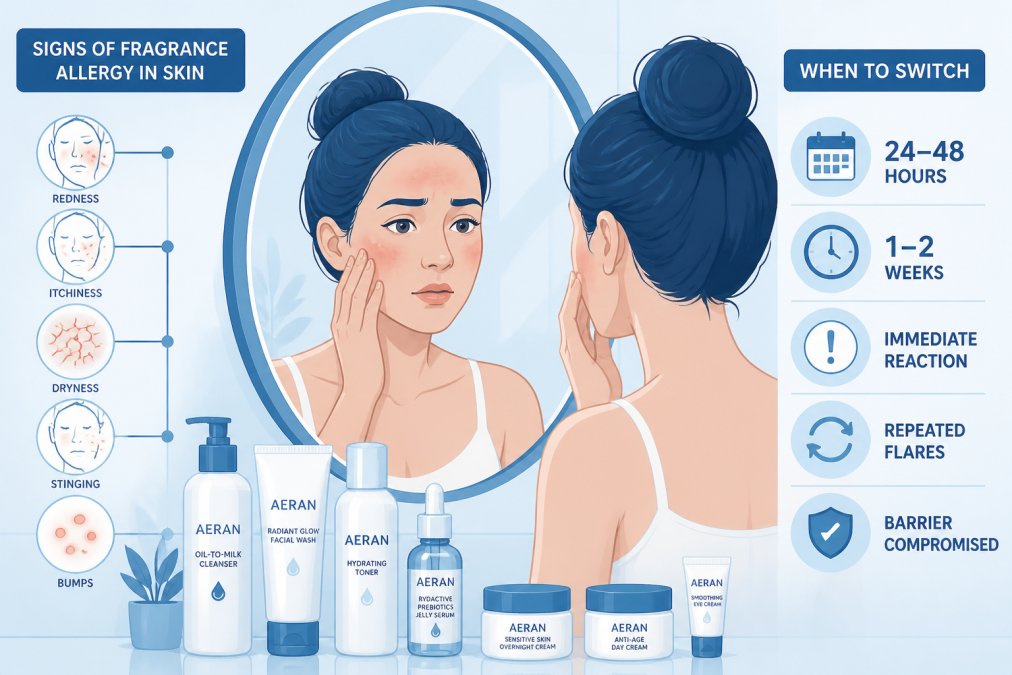
If you're experiencing these signs, switch to fragrance-free skincare immediately. Give it at least two weeks, your skin barrier needs time to calm down and recover. Fragrance sensitivity often improves rapidly once you eliminate the irritant. Within 3-7 days, many people notice reduced redness. Within 2-3 weeks, the skin barrier begins visibly repairing itself.
How to Read Skincare Labels for Fragrance and Hidden Irritants
Reading skincare labels correctly is the only way to guarantee you're actually getting fragrance-free products. Marketing claims mean nothing; the ingredient list is your only reliable source.
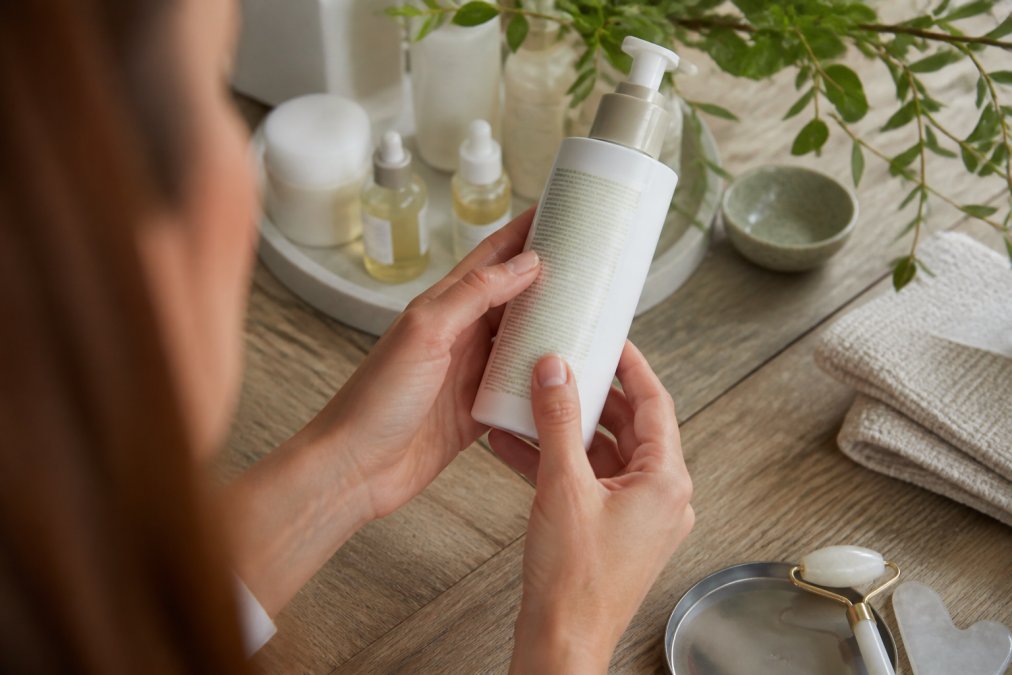
Start by looking for the word "fragrance" or "parfum" anywhere on the ingredient list. If either appears, the product contains fragrance, regardless of front label claims. Next, check for essential oils. Companies often market them as "natural fragrance alternatives," but they're volatile compounds that trigger the same reactions as synthetic fragrance. Look for ingredient names like lavender oil, rose oil, or lemon oil listed primarily for scent rather than function.
Masking agents are harder to spot because they're not always labeled as such. The safest approach: if you don't recognize an ingredient and can't find a clear functional purpose for it, research it. Look at ingredient order too, ingredients are listed by concentration. If fragrance or essential oils appear in the first ten ingredients, that product has a significant fragrance load.
The term "natural fragrance" has no regulatory meaning, it's marketing language. Natural fragrance can be just as irritating as synthetic fragrance. The source doesn't matter; the effect on your skin does.
Cosmetics ingredient labeling requirements under FDA regulations
When you find a truly fragrance-free product, the ingredient list will be shorter overall and dominated by functional ingredients: moisturizers like glycerin or hyaluronic acid, barrier-supporting ingredients like ceramides, preservatives, and active ingredients like niacinamide or peptides.
Switching to fragrance-free skincare isn't about deprivation, it's about removing a barrier to healing. If your skin reacts to fragrance, no amount of beneficial ingredients can overcome that irritation. Fragrance-free products let your skin focus on actual repair and maintenance instead of fighting inflammation.
Aeran Skincare's fragrance-free products, like the Sensitive Skin Overnight Cream, are designed with this principle in mind. By combining ceramides with clean, functional ingredients and eliminating fragrance entirely, these formulations support your skin's natural barrier repair without unnecessary irritants. For anyone with sensitive or compromised skin, this approach delivers visible results that come from addressing root causes rather than masking symptoms.
Frequently Asked Questions
Why should you avoid fragrance in skincare products?
Fragrance is one of the most common skin irritants, triggering contact dermatitis, allergic reactions, and inflammation in sensitive skin. Synthetic fragrance compounds and masking agents can compromise your skin barrier function, leading to redness, itchiness, and increased reactivity. Fragrance-free formulations eliminate this irritation risk entirely, making them essential for anyone with dermatological sensitivity, eczema-prone skin, or a compromised barrier.
What is the difference between unscented and fragrance-free skincare?
Unscented products contain masking agents that hide fragrance odor but still include fragrance compounds that can irritate skin. Fragrance-free products contain neither fragrance nor masking agents, making them genuinely safe for reactive skin. When reading labels, look for 'fragrance-free' or 'no added fragrance' rather than 'unscented', this distinction matters significantly for anyone with sensitivity or a compromised skin barrier.
How do I know if my skin is reacting to fragrance?
Common signs include redness, itchiness, burning sensation, tightness, and unexpected breakouts appearing 24-48 hours after application. If you experience contact dermatitis symptoms or notice inflammation worsening despite using 'sensitive skin' products, fragrance is likely the culprit. Patch testing fragrance-free alternatives for one week can confirm whether fragrance is your primary irritant. Keep a simple routine during this period to isolate the variable.
Can fragrance in skincare cause long-term skin damage?
Repeated fragrance exposure can weaken your skin barrier function over time, increasing sensitivity to other ingredients and environmental irritants. Chronic inflammation from fragrance irritation may accelerate visible aging and worsen conditions like eczema or rosacea. Switching to fragrance-free formulations with barrier-supporting ingredients like ceramides can reverse this damage and restore skin health, though recovery typically takes 4-6 weeks of consistent use.